
USAP Questions NEC's Mandate Over South Sudan's 2027 Election Date Shift
Summary
- South Sudan's National Elections Commission (NEC) postponed the December 2026 elections to February 2027.
- The United Sudan African Party (USAP) challenged the NEC's legal authority to unilaterally change the polling date.
- USAP argues the revised February 11, 2027, date may violate Article 197A(9) of the Transitional Constitution, which implies a December 24, 2026, deadline.
- The NEC cited Article 57(1)(c) of the National Elections Act 2012 as its basis for adjusting the electoral timeline.
- USAP also raised concerns about inadequate consultation with political parties and logistical issues affecting voter registration.
The Electoral Timetable Shift
Proceeding with the revised calendar without addressing these fundamental constitutional questions could lead to a void in lawful authority once the transitional period concludes.
The National Elections Commission (NEC) in South Sudan recently announced a significant adjustment to the nation's electoral calendar, moving the general elections from their initial December 22, 2026, date to February 11, 2027. This revision, which extends the polling period by 51 days, was communicated through a revised electoral timetable issued on November 14. The NEC had previously established the December polling date in June of the same year, but subsequently altered its schedule, citing insufficient time to complete critical pre-election activities.
According to the NEC, the original timeframe did not allow for the full execution of essential tasks, including the nomination of candidates, the submission of candidate lists, and the printing of ballot papers. Josephine Achiro Fortelo, a spokesperson for the commission, indicated that the NEC relied on Article 57(1)(c) of the amended National Elections Act 2012 as the legal basis for its authority to modify the electoral timeline. This revised timetable was unveiled on the very day that voter registration was slated to commence across the country.
USAP's Legal Challenge
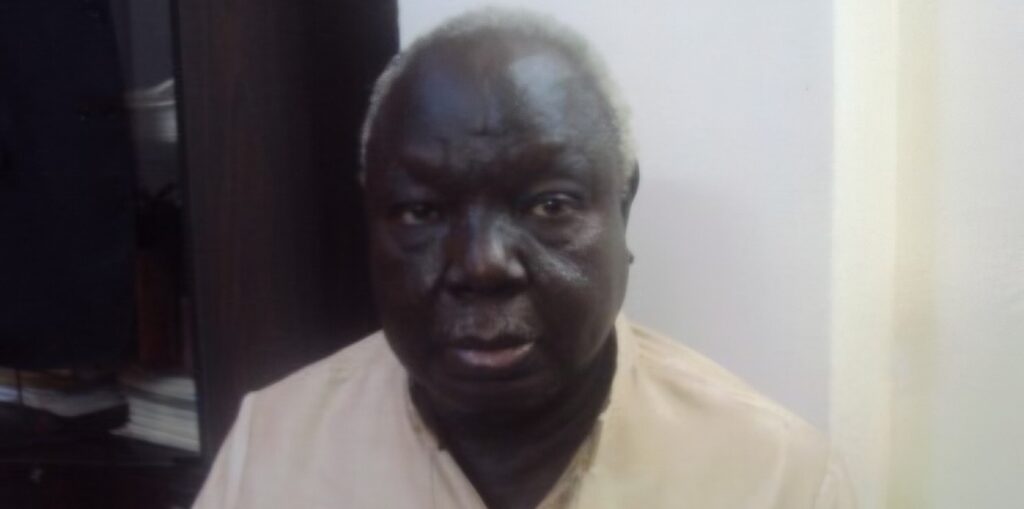
The United Sudan African Party (USAP), a registered political entity in South Sudan, has strongly contested the NEC's decision, questioning the commission's legal mandate to unilaterally alter the election date. In a six-page position paper dated November 17, addressed to NEC Chairperson Gabriel Bol Deng, USAP Chairman Professor Ajang Bior Duot asserted that the commission failed to identify any specific legal provision empowering it to shift the polling day from December 22, 2026, to February 11, 2027.
USAP contends that any modification to an election date, particularly one already established under electoral law and publicly announced, necessitates legislative action and a constitutional amendment, rather than being an administrative prerogative of the commission. The party explicitly stated that the NEC had not cited a provision that grants it the authority to change the date through a mere timetable adjustment. Consequently, USAP has urged the NEC to either provide a clear legal justification for its decision or refer the matter to the National Legislature and initiate the constitutional amendment process.
Constitutional and Consultative Concerns
A central point of contention raised by USAP revolves around the compliance of the new polling date with Article 197A(9) of the Transitional Constitution. This constitutional provision stipulates that elections must be organized 60 days prior to the conclusion of the transitional period, which is set for February 22, 2027. Based on this, USAP calculates that the constitutional deadline for holding the elections is December 24, 2026, rendering the revised February 11, 2027, date outside this constitutional framework.
The party issued a stark warning that proceeding with the revised calendar without addressing these fundamental constitutional questions could lead to a void in lawful authority once the transitional period concludes. Furthermore, USAP criticized the NEC for what it described as insufficient consultation with registered political parties before the announcement of the revised electoral timetable. While the NEC did meet with political parties on November 12, USAP noted that the public notice was issued the following day, and the revised calendar released a day after that, without confirming whether parties had been genuinely consulted on the substance of the changes. USAP emphasized that broader engagement would foster greater confidence in the electoral process and help avert disputes regarding the legitimacy of the upcoming elections.
Voter Registration Logistics
Despite its criticisms regarding the election date, USAP acknowledged the commencement of voter registration. However, the party simultaneously voiced significant concerns regarding the short notice provided to citizens and the logistical hurdles encountered at registration centers nationwide. The NEC announced the start of voter registration on November 13, with the exercise commencing on November 14 across 3,161 centers situated in South Sudan's 10 states and three administrative areas.
USAP highlighted that the NEC chairperson had admitted that registration materials had not reached all designated centers by the time the exercise was announced. Deliveries to some state capitals and administrative-area headquarters were anticipated to take up to two additional days. The party argued that citizens, particularly those residing in remote regions, require ample time to become aware of the registration process and to travel to the designated centers to participate.
Practical Implications
Lawyers and compliance officers in South Sudan should monitor the legal challenges to the National Elections Commission's revised electoral timetable. The dispute over the NEC's mandate to unilaterally change election dates, potentially violating constitutional provisions, creates significant legal uncertainty and could lead to challenges to the legitimacy of the upcoming elections or a gap in lawful authority post-transition.
Source
How does this affect you?
Get an AI analysis of this article grounded in your jurisdictions, practice areas, and any policy documents you've uploaded to Wansom.
Finish Reading the Full Story and the Expert Analysis.
Get the latest legal & regulatory intelligence in South Sudan
Wansom is AI and can make mistakes.