
South Sudan Bishops: Warn Against Poorly Organized Elections
Summary
- Catholic bishops from Sudan and South Sudan warned against holding general elections without adequate preparations.
- They cited institutional weaknesses, insecurity, political mistrust, and incomplete peace agreement implementation as key concerns.
- The bishops called for clarity on the caretaker government's authority and an independent, impartial National Elections Commission.
- They urged genuine dialogue on the Revitalized Agreement on the Resolution of the Conflict in South Sudan (R-ARCSS) to achieve lasting peace.
- South Sudan's first general elections are scheduled for February 11, 2027, after years of delays.
Bishops Urge Caution on South Sudan Elections
They firmly stated that the country should not be compelled into elections if the necessary foundational conditions are not firmly in place.
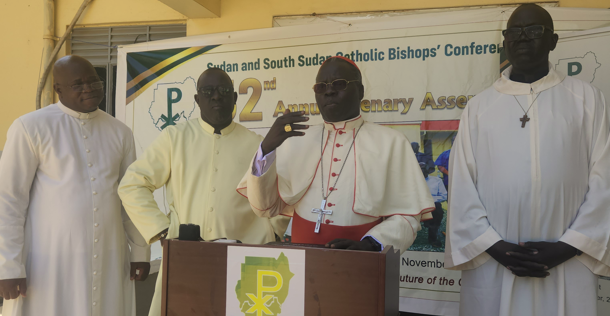
Catholic bishops from Sudan and South Sudan have issued a strong caution regarding the upcoming general elections in South Sudan, emphasizing the critical need for thorough preparations. Following their 52nd Annual Plenary Assembly held in Torit, Eastern Equatoria State, the religious leaders released a communique highlighting significant concerns. They specifically warned against proceeding with the electoral process without addressing pervasive institutional weaknesses, ongoing insecurity, deep-seated political mistrust, and the incomplete implementation of the nation's peace agreement.
The bishops stressed that any electoral exercise must genuinely reflect the sovereign will of the South Sudanese people and serve as a credible, peaceful pathway toward establishing a constitutional democracy. They firmly stated that the country should not be compelled into elections if the necessary foundational conditions are not firmly in place. Furthermore, they cautioned against an indefinite transitional period that lacks both accountability and a clear, consensual legal framework. Their collective statement, delivered by Cardinal Stephen Ameyu Martin Mulla, the Metropolitan Archbishop of the Juba Archdiocese, underscored their apprehension about inadequate institutional, technical, financial, and security readiness, alongside unfulfilled transitional tasks, political distrust, and the persistent issue of displacement, all of which could severely compromise the integrity of the planned elections.
Ensuring a Credible Electoral and Governance Framework
In their detailed communique, the bishops outlined specific expectations for the various actors involved in South Sudan's political landscape. They urged the caretaker government, the National Elections Commission (NEC), political parties, and other key political figures to ensure that the electoral process is characterized by inclusivity, transparency, peaceful conduct, and credibility. A significant point of their address focused on the caretaker government, demanding clarity and transparency regarding its constitutional and legal authority, its defined mandate, and its operational limits.
The religious leaders insisted that all political and administrative arrangements, including the current caretaker administration, must strictly adhere to the Constitution, the revitalized peace agreement, and all relevant legal provisions. They articulated that the caretaker government's primary responsibilities include safeguarding national stability, maintaining essential public services, protecting citizens' rights, and actively facilitating a peaceful and credible democratic transition. The bishops issued a stern warning that no transitional or caretaker arrangement should ever be manipulated to become an instrument of arbitrary power, political exclusion, or perpetual uncertainty. They also called for the NEC to function with complete independence and impartiality, equipped with sufficient resources, and entirely free from any political interference, while also advocating for meaningful participation of marginalized groups such as women, young people, persons with disabilities, and internally displaced persons.
Path to Lasting Peace and International Support
The bishops further emphasized the necessity for the government, opposition factions, and holdout groups to engage in authentic dialogue concerning the full implementation of the Revitalized Agreement on the Resolution of the Conflict in South Sudan (R-ARCSS) and its associated constitutional and legal provisions. They cautioned that achieving lasting peace is unattainable through political exclusion or unilateral decisions, reiterating their dual warning against both an election process lacking essential conditions and an unaccountable, indefinite transitional arrangement. The first general elections in South Sudan are currently slated for February 11, 2027, following years of political and institutional delays under the transitional government established by the 2018 revitalized peace agreement.
Beyond internal calls, the Church extended an appeal to international bodies, including the Intergovernmental Authority on Development (IGAD), the African Union, the United Nations, the Troika, and neighboring countries. This appeal sought their support for an inclusive, nationally owned, and peaceful democratic process within South Sudan. The Catholic Church reaffirmed its readiness to collaborate with political leaders, the international community, and citizens through avenues of dialogue, reconciliation, civic education, and peacebuilding initiatives, while maintaining strict neutrality towards all political parties and candidates. The bishops also highlighted their concerns regarding the humanitarian and economic challenges currently impacting communities in both South Sudan and Sudan.
Source
How does this affect you?
Get an AI analysis of this article grounded in your jurisdictions, practice areas, and any policy documents you've uploaded to Wansom.
Finish Reading the Full Story and the Expert Analysis.
Get the latest legal & regulatory intelligence in South Sudan
Wansom is AI and can make mistakes.