
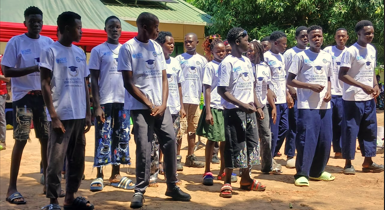
CPNTC: South Sudan Child Protection Police Recruits Screened, Underage Released
Summary
- A four-member delegation from the Child Protection National Technical Committee is assessing police training centers in Western Equatoria State.
- The delegation aims to identify and release underage South Sudan child protection police recruits, following reports of over 50 children found in training nationwide.
- This mission is part of a nationwide effort to enforce the Government Action Plan on Children Associated with Armed Conflict, supported by UNICEF.
- The team has already conducted assessments in several states and plans to submit a comprehensive report to the Inspector General of Police.
- Officials emphasize that individuals responsible for child recruitment, whether inside or outside security institutions, will be held accountable.
What Happened
A core principle guiding this operation is the unequivocal requirement that any individual identified as underage must be promptly released in strict accordance with existing child protection policies.
A specialized four-member delegation from the Child Protection National Technical Committee (CPNTC) has commenced operations in Western Equatoria State, specifically tasked with scrutinizing police training centers. Their primary objective is to identify any underage individuals among the South Sudan child protection police recruits and facilitate their immediate release, ensuring adherence to established child protection protocols. This initiative follows reports indicating that over 50 children have been found in police training facilities across the nation, with some having undergone training for as long as three to four months.
The delegation, led by Mr. Oluku Andrew, who serves as the National Coordinator for the Release of Children and also the Acting Director General for Programmes at the South Sudan DDR Commission, is a multi-agency effort. Key members include Major General William Deng Pok, representing the SSPDF Child Protection Unit, Major General James Dak Karlo from the Police Special Protection Unit, and Lilian Raphael Moga. During discussions with state authorities in Yambio, Mr. Oluku emphasized that their mission is to thoroughly assess the training centers, verify the ages of those undergoing instruction, and establish the precise situation on the ground.
This current deployment in Western Equatoria is part of a broader, nationwide campaign. The CPNTC delegation has already conducted similar assessments in Western Bahr el Ghazal, Northern Bahr el Ghazal, and Warrap states, with Lakes State next on their schedule. The team plans to engage with state security authorities, the state police commissioner, instructors, and trainees to gather comprehensive information before compiling a detailed report for submission to the Inspector General of Police, who will then determine further actions.
Legal Context and Accountability
The delegation's activities are directly mandated by the Government Action Plan on Children Associated with Armed Conflict, a critical framework designed to prevent the recruitment and use of children by armed forces and security institutions throughout South Sudan. Mr. Oluku clarified that the delegation comprises representatives from various government bodies specifically tasked with implementing this action plan. The mission receives crucial backing from UNICEF and the UN Country Task Force, underscoring the international community's commitment to upholding child rights in South Sudan.
A core principle guiding this operation is the unequivocal requirement that any individual identified as underage must be promptly released in strict accordance with existing child protection policies. Brial James Dak, an official with the Child Protection National Technical Committee SS, highlighted the collaborative nature of these efforts, involving the police, the Ministry of Gender, and the South Sudan DDR Commission. This inter-agency cooperation aims not only to remove children from military and police ranks but also to proactively prevent any future recruitment.
Mr. Dak further stressed the imperative of accountability, asserting that any individuals found responsible for recruiting children, whether they operate within or outside established security institutions, must face consequences. This firm stance signals a heightened legal risk for those involved in such practices, emphasizing the government's resolve to enforce its child protection commitments. The SSPDF child protection unit, under Major General William Deng Pok, is actively engaged with other relevant institutions to tackle a range of violations, including child recruitment, trafficking, and gender-based violence, which disproportionately affect vulnerable populations.
Broader Impact and Challenges
The scope of these efforts extends beyond current assessments, with plans to replicate the identification and release initiatives across all states and the three administrative areas of South Sudan. This expansion builds on past successes, such as the identification and facilitated release of children serving in the police during a previous mission to Bor. The overarching goal is to protect children from further recruitment and ensure their fundamental rights are upheld across the nation.
In Western Equatoria, the state government has been lauded for its ongoing support of child protection activities. Rita Bampoo, a Child Protection Officer with the United Nations Mission in South Sudan (UNMISS) in the region, acknowledged the development of a State Action Plan, which aligns with the national framework and has received endorsement from the governor. This local plan demonstrates a commitment to the principles of the Government Action Plan on Children Associated with Armed Conflict.
However, the implementation of these vital planned activities faces significant hurdles, primarily due to limited financial resources. Despite these challenges, Western Equatoria State Caretaker Governor Badagbu Daniel Rimbasa has reiterated his administration's dedication to preventing child recruitment and supporting the release, protection, and reintegration of children previously associated with armed groups. The state has a history of such efforts, having supported the release of over 1,040 children from armed groups as far back as 2018, demonstrating a sustained commitment to the Western Equatoria child soldier release initiatives.
Practical Implications
Lawyers advising security forces or government agencies in South Sudan must ensure strict compliance with the Government Action Plan on Children Associated with Armed Conflict, as enforcement efforts to identify and release underage recruits from police training centers are intensifying. This signals increased legal risk for individuals or institutions involved in child recruitment.
Source
How does this affect you?
Get an AI analysis of this article grounded in your jurisdictions, practice areas, and any policy documents you've uploaded to Wansom.
Finish Reading the Full Story and the Expert Analysis.
Get the latest legal & regulatory intelligence in South Sudan
Wansom is AI and can make mistakes.