Briefly
Live preview · United States

Legal and Regulatory intelligence for you

Legal News
United States
Case Law

First Circuit: Hears Trump Agency Shutdown Challenge

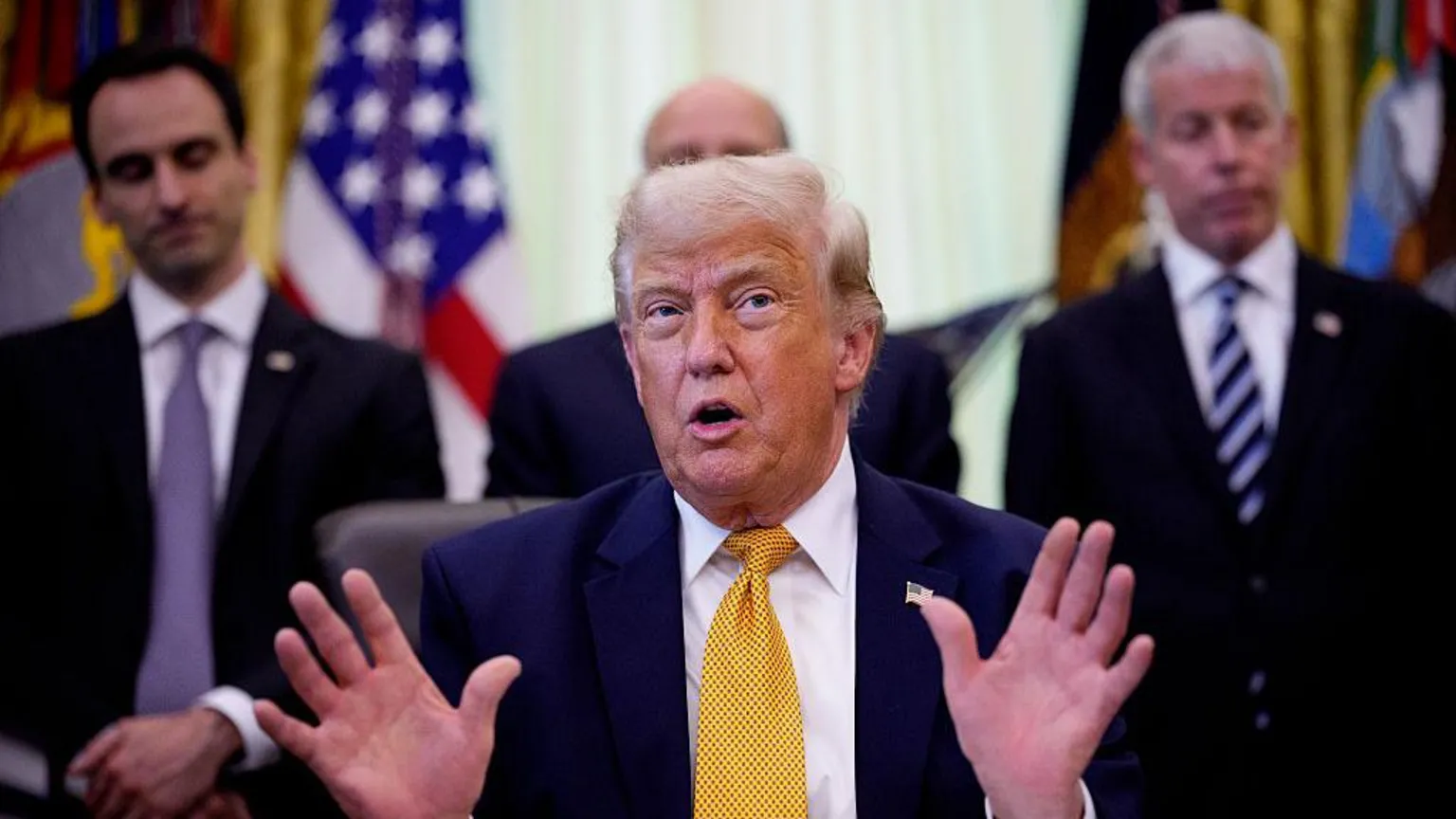
In 2025, the First Circuit Court of Appeals in Boston expressed concerns regarding President Donald Trump’s executive order aimed at severely curtailing operations at four federal agencies, suggesting the cuts might be excessive but struggling to define the precise legal limits of such presidential action. Issued shortly after President Trump began his second term, the executive order sought to significantly reduce the functions of the Federal Mediation and Conciliation Service, the Institute of Museum and Library Services, the U.S. Interagency Council on Homelessness, and the Minority Business Development Agency. This action was reportedly influenced by a March 2025 Daily Wire article that criticized the Federal Mediation and Conciliation Service for alleged waste and lack of purpose. During arguments, the First Circuit indicated that the cuts might have gone "too far," yet acknowledged the difficulty in articulating the exact legal boundaries of presidential authority in this context. The court's deliberations left open the possibility that the administration could pursue a less drastic approach, but the specific outcome of this challenge is not reported in the excerpt. This case is profoundly significant for the principles of separation of powers, administrative law, and the scope of presidential authority over the executive branch. It directly tests the limits of a president's ability to unilaterally restructure or effectively defund federal agencies through executive orders, especially when such actions could be perceived as undermining statutory mandates or congressional intent. For practitioners in administrative law, it highlights the ongoing tension between executive efficiency and legislative oversight, and the crucial role of the judiciary in mediating these constitutional disputes. The court's expressed difficulty in defining what constitutes "too far" underscores the complex legal questions involved in balancing presidential prerogative with the established functions of government. The legal context for this dispute is rooted in constitutional law, specifically the separation of powers doctrine, and administrative law. Key legal questions likely revolve around whether the executive order exceeded the President's authority under Article II of the Constitution, particularly his duty to "take Care that the Laws be faithfully executed." It also implicates the Administrative Procedure Act (APA) and whether the executive order could be deemed arbitrary and capricious or an abuse of discretion. Given that the affected agencies are typically established by Congress with legislatively defined mandates and funding, the case raises fundamental questions about whether a president can effectively nullify congressional intent through executive action. The First Circuit Court of Appeals, as a federal appellate court, plays a critical role in interpreting these complex constitutional and statutory issues. Attorneys practicing in administrative law, constitutional law, and government affairs should closely monitor the First Circuit's eventual ruling and any subsequent actions by the executive branch. This case underscores the potential for significant legal challenges to executive orders that aim to drastically alter the structure or function of federal agencies. Businesses, non-profit organizations, and individuals that interact with or rely on these agencies should be aware of the potential instability created by such executive actions and prepare for possible disruptions to regulatory environments or government services. The court's acknowledged difficulty in defining the precise limits of presidential power suggests that future administrations may continue to test these boundaries, necessitating vigilance from legal professionals regarding the intricate interplay between executive authority and legislative mandates.

16 Sept
United States
Legal News

Todd Blanche Attorney General: RNC Speech Sparks Ethics Debate

Todd Blanche, a sitting Attorney General in the United States, made history on Wednesday night by speaking at the Republican National Midterm Convention in Dallas, becoming the first Attorney General in American history to address a political party convention. This unprecedented action carries significant legal and ethical implications for the perceived independence and impartiality of the Department of Justice (DOJ) and the Attorney General's office. The Attorney General is traditionally viewed as the nation's chief law enforcement officer, expected to operate above partisan politics to maintain public trust in the justice system. A public appearance at a political convention, particularly by an Attorney General who has been in office for less than a month, can severely erode this perception, potentially politicizing the DOJ and its enforcement decisions. The criticism from former Attorney General Eric Holder, who called the appearance “unprecedented” and “disgraceful,” and from House Democrats on the Judiciary panel, underscores the gravity of this departure from established norms. The legal context for this event is primarily rooted in long-standing institutional norms, ethical guidelines, and the traditions designed to safeguard the DOJ's independence rather than specific statutes. While there may not be a direct statutory prohibition against an Attorney General speaking at a political convention, the action is evaluated against the unwritten but powerful expectations that the Attorney General's office remains apolitical to ensure the fair and unbiased administration of justice. The Hatch Act, which limits the political activities of federal employees, generally applies to most federal employees, but the Attorney General's role often involves a delicate balance between being a political appointee and upholding non-partisan duties. The key parties involved are Todd Blanche, the Republican National Midterm Convention, former Attorney General Eric Holder, and House Democrats on the Judiciary panel. For legal practitioners, particularly those involved in government ethics, public law, or constitutional law, this event warrants close monitoring. It could trigger increased scrutiny of the Attorney General's future actions, potential calls for investigations into the politicization of the DOJ, or even legislative efforts to codify stricter restrictions on the political activities of high-ranking law enforcement officials. Attorneys advising government officials or those interacting with the DOJ should be aware of the heightened political sensitivities surrounding the department. For the broader legal community, this incident serves as a stark reminder of the critical importance of maintaining the appearance of impartiality in public service roles, especially within law enforcement agencies, to preserve public confidence in the rule of law. The excerpt does not report any specific legal outcome or consequence of this appearance, but the immediate and strong reactions highlight its significance as a breach of established norms.

10 Sept