
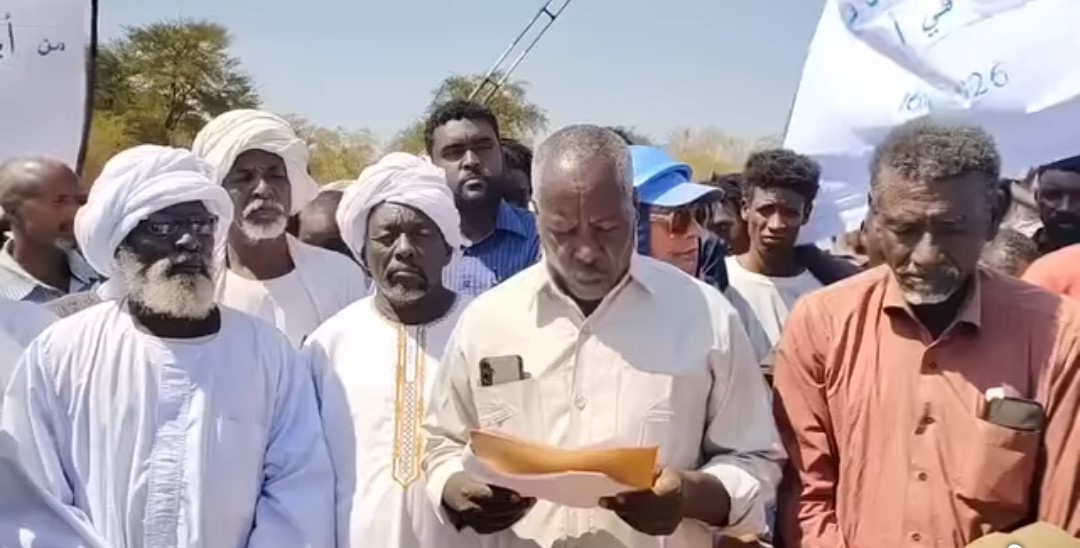
Sudanese Groups Protest Abyei Inclusion in South Sudan Elections
Summary
- Sudanese civil society groups in northern Abyei protested South Sudan's plans to include the disputed territory in its upcoming elections.
- Protesters submitted a petition to UNISFA, arguing that unilateral elections in Abyei violate existing agreements and risk regional stability.
- The dispute was discussed at the UN Security Council, where Sudan condemned South Sudan's electoral inclusion of Abyei, while South Sudan defended it based on Ngok Dinka rights.
- South Sudan's general elections are scheduled for February 11, 2027, with voter registration currently underway.
- Abyei's status has been disputed since 2011, with a promised referendum never held due to disagreements over voter eligibility.
What Happened
He characterized South Sudan's electoral plans as a unilateral action that could reignite intercommunal tensions, following a period of relative calm in the area.
Sudanese civil society groups in northern Abyei recently conducted a peaceful demonstration, voicing their opposition to South Sudan's intention to incorporate the contested Abyei region into its forthcoming national elections. The demonstrators presented a formal petition to representatives of the United Nations Interim Security Force for Abyei (UNISFA), requesting that it be forwarded to the UN Secretary-General.
Ambadi Yahya Kabashi, speaking on behalf of various northern Abyei civil society organizations, affirmed the community's dedication to peace, stability, and harmonious coexistence among local populations. He characterized South Sudan's electoral plans as a unilateral action that could reignite intercommunal tensions, following a period of relative calm in the area. Kabashi explicitly rejected this unilateral decision by the South Sudanese government to conduct elections in Abyei, advocating instead for dialogue to resolve disagreements and maintain peace. The petition implored the United Nations to employ all available measures to prevent actions that, in the groups' view, could jeopardize the security of Abyei and its inhabitants.
Legal and Historical Context
The petition submitted by the civil society groups underscored previous appeals, including one from July 21, 2026, and referenced critical agreements between Sudan and the Sudan People's Liberation Movement (SPLM). These foundational documents include the May 2004 Protocol on the Resolution of the Abyei Conflict and subsequent arrangements. A core argument presented was that these agreements, alongside pertinent international decisions, affirm Abyei's status as a disputed territory, whose political future should not be determined through unilateral actions.
The contentious issue of Abyei's electoral inclusion also came before the UN Security Council on November 5, where Sudan and South Sudan presented conflicting viewpoints. Sudan's representative condemned the decision by the South Sudan National Elections Commission to include Abyei in electoral constituencies, asserting that it undermined the territory's legal standing under existing agreements and Sudan's claims of sovereignty. Conversely, South Sudan's representative defended the move, contending that Abyei's unresolved status should not be used to disregard the rights and interests of the Ngok Dinka community, particularly the nine Ngok chiefdoms. The two nations also expressed disagreement regarding security arrangements within the territory, specifically concerning the presence of armed forces. Sudan voiced apprehension regarding the deployment of the South Sudan People's Defence Forces (SSPDF) in Abyei and the presence of Rapid Support Forces (RSF) elements in the northern part of the region, while South Sudan, in turn, denied allegations that its forces had violated UNISFA's mandate.
Broader Implications and Election Timeline
The UN Secretary-General's Special Envoy for the Horn of Africa, Guang Cong, informed the Security Council that disagreements over Abyei's participation in South Sudan's elections had exacerbated tensions between the Ngok Dinka and Twic Dinka communities. This demonstration coincides with South Sudan's preparations for general elections, now slated for February 11, 2027, following a postponement from the original December 22, 2026, date. The National Elections Commission initiated a nationwide voter registration drive on November 14, which is scheduled to conclude on November 28, conducted at 3,161 centers across the country's ten states and three administrative areas.
Abyei has remained a disputed territory since South Sudan achieved independence in 2011. The 2005 Comprehensive Peace Agreement stipulated a referendum to determine whether the territory would join Sudan or South Sudan, but this vote has never materialized due to ongoing disagreements between the two countries concerning voter eligibility. In October 2013, the Ngok Dinka community organized a unilateral referendum, where an overwhelming majority voted for Abyei to become part of South Sudan. However, this unilateral vote received no recognition from either Sudan or South Sudan, nor from the international community.
Practical Implications
Lawyers advising clients with interests in the Abyei region should monitor the escalating political and security risks arising from South Sudan's unilateral election plans, which may violate existing international agreements and destabilize the area. This situation could impact contractual obligations, investment security, and necessitate a review of political risk assessments for operations in the territory.
Source
How does this affect you?
Get an AI analysis of this article grounded in your jurisdictions, practice areas, and any policy documents you've uploaded to Wansom.
Finish Reading the Full Story and the Expert Analysis.
Get the latest legal & regulatory intelligence in South Sudan
Wansom is AI and can make mistakes.