
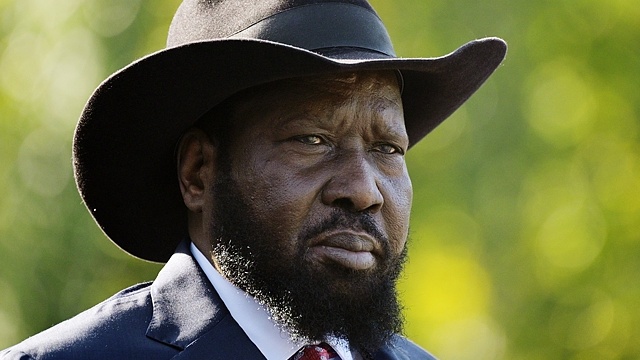
UN Commission: Kiir's "Constitutional Coup" Threatens South Sudan Peace
Summary
- The UN Commission on Human Rights in South Sudan has labeled the dismantling of the 2018 peace deal a "constitutional coup."
- President Salva Kiir's actions, including dissolving the government and parliament, concentrate power and risk renewed conflict.
- The 2018 Revitalised Agreement on the Resolution of the Conflict in South Sudan (R-ARCSS) safeguards, like power-sharing and inclusive governance, are being unilaterally undermined.
- Elections scheduled for December are proceeding with Riek Machar, who was removed as First Vice-President, detained and opposition parties excluded.
- The commission urged international action, including consequences for violations and the establishment of a Hybrid Court for South Sudan.
What Happened
This alarming development, attributed to President Salva Kiir's increasing concentration of power, significantly heightens the risk of renewed conflict in the lead-up to elections slated for December.
The UN Commission on Human Rights in South Sudan has issued a stark warning, characterizing the systematic dismantling of the nation's 2018 peace agreement as a "constitutional coup." This alarming development, attributed to President Salva Kiir's increasing concentration of power, significantly heightens the risk of renewed conflict in the lead-up to elections slated for December. The commission specifically highlighted that a negotiated political settlement is being displaced under the guise of electoral processes.
According to Yasmin Sooka, chair of the commission, addressing the UN General Assembly’s Third Committee, this situation represents a "constitutional coup" achieved through legislative reforms. These reforms have led to the unilateral dismantling of the inclusive power-sharing arrangement established by the 2018 agreement, effectively centralizing all governmental authority in the President.
On September 22, President Kiir took decisive steps, dissolving the transitional government, the national parliament, and state legislatures following unilateral constitutional and electoral amendments. He subsequently removed the first vice-president and other vice-presidents, installing a caretaker administration that reports solely to him.
Undermining the Peace Framework
The actions taken by President Kiir directly undermine the foundational principles of the 2018 Revitalised Agreement on the Resolution of the Conflict in South Sudan (R-ARCSS). This agreement was specifically designed to prevent further warfare by establishing safeguards such as inclusive governance, free political competition, genuine participation, power-sharing mechanisms, and robust institutional oversight. The UN Commission on Human Rights in South Sudan stressed that while the South Sudanese people possess a fundamental right to elect their leaders, this right must be exercised freely and without fear, and cannot justify abandoning the critical protections embedded within the R-ARCSS.
President Kiir is now overseeing an election in which he is widely expected to be the ruling party’s candidate. Concurrently, Riek Machar, who was removed as First Vice-President, remains under detention and on trial, while his political party and other opposition groups are effectively excluded from participating in the electoral process. This exclusion, coupled with the unilateral legislative changes, has led to a situation where the very mechanisms intended to foster a broad-based political settlement are being systematically dismantled, raising profound concerns about the legitimacy and fairness of the upcoming December elections.
Escalating Risks and Humanitarian Concerns
The current political trajectory, marked by the concentration of power and the dismantling of the R-ARCSS, carries severe implications for South Sudan's stability and its civilian population. The UN Commission warned that the country's fragile transition is at grave risk, with the potential for renewed conflict looming. Commissioner Barney Afako emphasized that South Sudan's primary challenge is not merely holding a vote on a specific date, but rather establishing a credible political process that can address unresolved grievances, peacefully manage political differences, and garner the general confidence of its citizens.
Afako further noted that the current approach, which eschews inclusion and promotes exclusion, risks fostering widespread disaffection and destruction, drawing parallels to the consequences of exclusionary politics observed throughout South Sudan's brief history. The commission highlighted ongoing fighting, the presence of tens of thousands of fighters operating outside a unified command structure, and persistent impunity as factors significantly increasing the likelihood of renewed violence.
Specific concerns include aerial bombardments and ground offensives in Upper Nile and Jonglei states, attacks on civilian infrastructure, pervasive conflict-related sexual violence, and the continued recruitment of children by armed actors. Displaced communities continue to suffer, struggling to access essential services and protection.
Call for International Action
In light of these critical developments, the UN Commission on Human Rights in South Sudan has urged member states and regional and international partners to take immediate and decisive action. Their call is to prevent renewed conflict and ensure lasting peace, irrespective of the December electoral timetable. Yasmin Sooka underscored that the international community must look beyond the specific date of December 22, as an inclusive political settlement, civilian protection, and institutions capable of preventing further violence will be essential for South Sudan regardless of whether elections proceed.
Sooka also stated that mere expressions of concern have proven insufficient to deter those driving the current crisis. Therefore, member states must attach tangible consequences to violations and demonstrate measurable commitments to diplomatic efforts. Furthermore, the commission specifically urged the African Union to advance concrete steps toward the establishment of the Hybrid Court for South Sudan, a crucial mechanism for addressing accountability and impunity.
Practical Implications
Lawyers and compliance officers with clients or operations in South Sudan must assess the heightened political and legal risks stemming from the alleged 'constitutional coup' and the dismantling of the 2018 peace agreement. This situation signals increased instability, potential for renewed conflict, and a deteriorating rule of law environment, necessitating urgent review of investment security, human rights due diligence, and compliance with international norms.
Source
How does this affect you?
Get an AI analysis of this article grounded in your jurisdictions, practice areas, and any policy documents you've uploaded to Wansom.
Finish Reading the Full Story and the Expert Analysis.
Wansom is AI and can make mistakes.