
Opinion| Awarding Constituency No. 1 to Abyei and the Dangerous Rewriting of Boundaries
Summary
- A recent South Sudan presidential decree assigned Constituency No. 1 to the Abyei Special Administrative Area.
- This decision has caused significant unrest in Twic County, Warrap State, as it incorporates traditional Twic territories into Abyei's constituency.
- Twic County is a recognized part of South Sudan, while Abyei's final status remains unresolved between Sudan and South Sudan.
- The decree is seen as validating Abyei's contested territorial claims, which previously led to the 2022 Twic–Abyei conflict.
- Concerns are high regarding electoral integrity and potential conflict during the upcoming general elections, as Twic residents reject Abyei voting in their areas.
Presidential Decree Sparks Boundary Controversy
As South Sudan prepares for its inaugural general elections, the implications of this decree for electoral integrity and regional stability are profound.
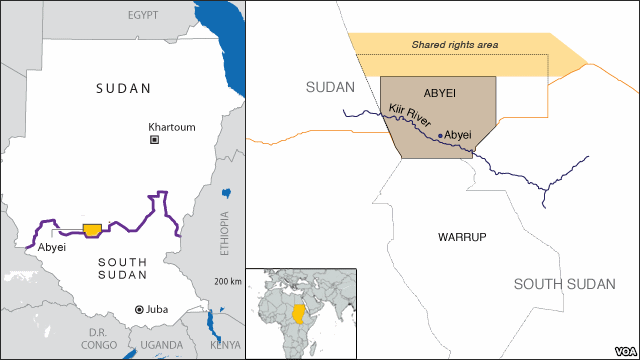
The recent South Sudan presidential decree Abyei Constituency No. 1 has ignited significant concern across Twic County, located within Warrap State. This executive decision, which reassigns the first electoral constituency to the Abyei Special Administrative Area, is perceived as a direct challenge to established administrative realities and historical electoral patterns. It effectively redefines boundaries without explicit consent, risking the destabilization of a delicate peace between communities with distinct political and administrative identities.
Specifically, the decree incorporates numerous polling areas traditionally belonging to Twic County into Abyei's newly designated constituency. These areas include Ajak Kuac Payam, Anyiel, Majak Kool, Aweng, Aneet, Athoony, Akok, Nyin Deng Ayuel, Madau, and Mading-Jonthian, among others. For residents of Twic County, these territories have always been integral to their administrative and electoral framework, a fact that stands in stark contrast to their sudden inclusion within a different administrative entity.
Unresolved Status and Conflicting Claims
The core of the dispute lies in the fundamentally different statuses of Twic County and the Abyei Special Administrative Area. Twic County is a fully recognized administrative division of Warrap State, an undisputed part of South Sudan's sovereign territory. Its populace participated in the 2011 referendum, its borders are clearly delineated, and its electoral constituencies have been in place since before South Sudan's independence, continuing for over a decade thereafter.
Conversely, Abyei's final status remains unresolved, a contested territory jointly administered by Sudan and South Sudan. It did not participate in the 2011 referendum and operates under a special arrangement, politically suspended between the two nations. Abyei is neither a county of South Sudan nor an integral part of Warrap State, lacking the administrative certainty and citizenship history that defines Twic County. The Abyei Administration's claims over these Twic territories previously led to the 2022 Twic–Abyei conflict, an event that resulted in fatalities, widespread displacement, and left deep, unhealed divisions. This presidential decree, by awarding Constituency No. 1 to Abyei, is seen as lending official political weight to these contentious territorial claims, effectively endorsing a narrative that has already caused bloodshed and ongoing tension.
Electoral Integrity and Risk of Instability
As South Sudan prepares for its inaugural general elections, the implications of this decree for electoral integrity and regional stability are profound. Residents of Twic County have unequivocally stated their refusal to permit Abyei residents to vote within what they consider their sovereign territory. They view such an act not as mere defiance, but as a necessary defense against the perceived surrender of their land, anticipating potential confrontations at polling stations that could transform election day into a volatile flashpoint.
Furthermore, the decree significantly impacts Warrap State's electoral structure. Prior to this decision, the eastern part of Twic County alone comprised two constituencies, No. 1 and No. 2, contributing to a total of four constituencies for Twic County within Warrap State. The removal of Constituency No. 1 without a replacement not only diminishes Warrap's overall representation but also disrupts the state's established constituency numbering sequence, forcing it to commence at No. 2. This deviation from the national pattern, where all states typically begin their numbering at 1, underscores the administrative anomaly created by assigning a state's foundational constituency to a territory not formally part of that state or even fully under South Sudan's administrative jurisdiction. Other administrative areas like Greater Pibor, Ruweng, and Panriang are allocated their own distinct constituencies, separate from any state, suggesting a precedent that Abyei should similarly follow given its unique status. This decision, therefore, risks escalating existing tensions rather than fostering a peaceful electoral process.
Practical Implications
Lawyers and compliance officers in South Sudan should scrutinize the legality of the presidential decree reassigning Constituency No. 1 to Abyei, assessing its impact on electoral integrity, administrative boundaries, and the potential for renewed conflict in disputed territories like Twic County, particularly ahead of upcoming general elections.
Source
How does this affect you?
Get an AI analysis of this article grounded in your jurisdictions, practice areas, and any policy documents you've uploaded to Wansom.
Finish Reading the Full Story and the Expert Analysis.
Get the latest legal & regulatory intelligence in South Sudan
Wansom is AI and can make mistakes.