
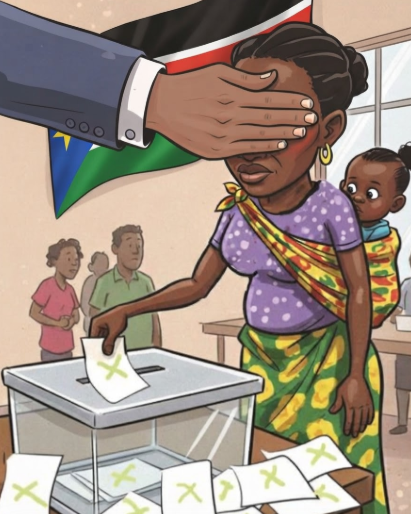
South Sudan: Caretaker Government Legitimacy Questioned by Election Delay
Summary
- South Sudan's caretaker government faces a legitimacy crisis if the December 22, 2026 elections are postponed.
- President Salva Kiir dissolved the Revitalized Transitional Government of National Unity and appointed the caretaker administration on September 22, 2026, removing Dr. Riek Machar and other vice-presidents.
- The amended National Elections Act of 2026 allows presidential continuity but does not resolve the political vacuum created by a failed election.
- The European Union warned that a caretaker government should only handle routine administration and avoid major political decisions.
- The ongoing detention of Dr. Riek Machar further undermines the credibility of any future electoral process and the overall peace agreement.
The Looming Legitimacy Crisis
If elections are indeed postponed, South Sudan will urgently require an agreed-upon "bridge" to transition from the expired transitional period to a future elected government.
South Sudan faces a profound challenge to the South Sudan caretaker government legitimacy if the national elections, currently slated for December 22, 2026, are postponed. The current administration, led by President Salva Kiir, was established as a temporary mechanism for the electoral period, not as a permanent political arrangement. Its mandate would be severely questioned should the vote not proceed as scheduled, transforming a short-term solution into an open-ended governance structure with potentially unchecked executive power.
On September 22, 2026, President Kiir took decisive action, dissolving the Revitalized Transitional Government of National Unity (RTGoNU), along with the national legislature and all state governments. Concurrently, he appointed a caretaker administration to oversee the nation until the anticipated elections. This move also resulted in the removal from office of First Vice President Dr. Riek Machar and all other vice-presidents, fundamentally altering the power-sharing dynamics that underpinned the country's transitional period.
Legal Frameworks Under Scrutiny
The legal basis for President Kiir's continuity in office during this interim period stems from the National Elections Act, South Sudan 2026, as amended. This legislation includes a continuity clause that permits the incumbent president to remain in power until an elected successor is duly sworn in. While this provision aims to prevent a vacuum in the presidency, it does not adequately address the complex political questions that would arise from a failed or delayed election, particularly concerning the broader Salva Kiir caretaker administration mandate.
The 2018 peace agreement, a cornerstone of South Sudan's stability, was meticulously constructed on principles of power-sharing, collegial decision-making, and negotiated safeguards among formerly warring factions. The dissolution of these arrangements, inherent in the formation of a caretaker government, means that any extended period without elections requires more than a unilateral executive interpretation. It necessitates a lawful and publicly accepted foundation, clearly defined limits on authority, and a precise end date to ensure the South Sudan 2018 peace agreement applicability remains relevant in spirit, if not in letter. The Former Detainees, who are represented within the peace monitoring system, have already sought clarification from the Intergovernmental Authority on Development (IGAD) regarding the continued relevance of the 2018 agreement following the transitional government's dissolution.
International Warnings and Operational Limits
The international community has voiced concerns regarding the scope of authority for such an interim body. On September 22, the European Union issued a clear warning, stating that a caretaker government should strictly confine its activities to routine administration. It explicitly advised against making decisions with significant political consequences, especially in an environment where institutional checks and balances are weakened. This standard underscores that the primary role of a caretaker administration is to maintain essential services and public order.
Crucially, a caretaker government should not exploit a delayed election to enact fundamental changes. This includes refraining from restructuring the security sector, entrenching political appointments, unilaterally altering electoral rules, or suppressing political competition. While the amended election law provides a legal justification for presidential continuity during the electoral phase, it does not confer an unlimited mandate if the electoral process ultimately fails to culminate in an election. The amendment, passed by Parliament on September 21, just one day before the dissolution, preserves the president's full constitutional powers while simultaneously requiring vice-presidents to vacate their positions, an asymmetry that has already sparked constitutional and political unease.
Obstacles to a Credible Path Forward
A significant impediment to the perceived legitimacy of the current political landscape is the ongoing detention and trial of Dr. Riek Machar. This situation directly contributes to the broader South Sudan caretaker government legitimacy concerns. A July 2026 report from the UN Secretary-General highlighted international calls for his release and for renewed dialogue to foster an inclusive peace process. Ensuring transparent due process, independent judicial guarantees, and adherence to the peace agreement are paramount in handling Dr. Machar's case.
The continued detention of a principal opposition leader while preparing for elections inevitably casts doubt on the ability of other contestants to freely organize, campaign, and challenge state power. Similar concerns extend to the broader civic space, impacting journalists, civil society organizations, opposition parties, and ordinary citizens. If elections are indeed postponed, South Sudan will urgently require an agreed-upon "bridge" to transition from the expired transitional period to a future elected government. This crucial framework cannot credibly be designed by a single party and imposed upon all others, emphasizing the need for a time-bound, inclusive, and legally grounded arrangement that protects civic space and culminates in a credible vote.
Practical Implications
Lawyers and compliance officers advising entities in South Sudan must be aware that the legal basis and scope of authority for the current caretaker administration are highly contested, particularly if the 2026 elections are postponed. Any decisions made by this administration beyond routine functions, especially those with major political or constitutional implications, may lack a clear, publicly accepted legal foundation, creating significant legal and operational risks for businesses and individuals. Monitor closely for any agreed-upon legal frameworks or clarifications from regional bodies like IGAD regarding the administration's mandate and the status of the 2018 peace agreement.
Source
How does this affect you?
Get an AI analysis of this article grounded in your jurisdictions, practice areas, and any policy documents you've uploaded to Wansom.
Finish Reading the Full Story and the Expert Analysis.
Wansom is AI and can make mistakes.