
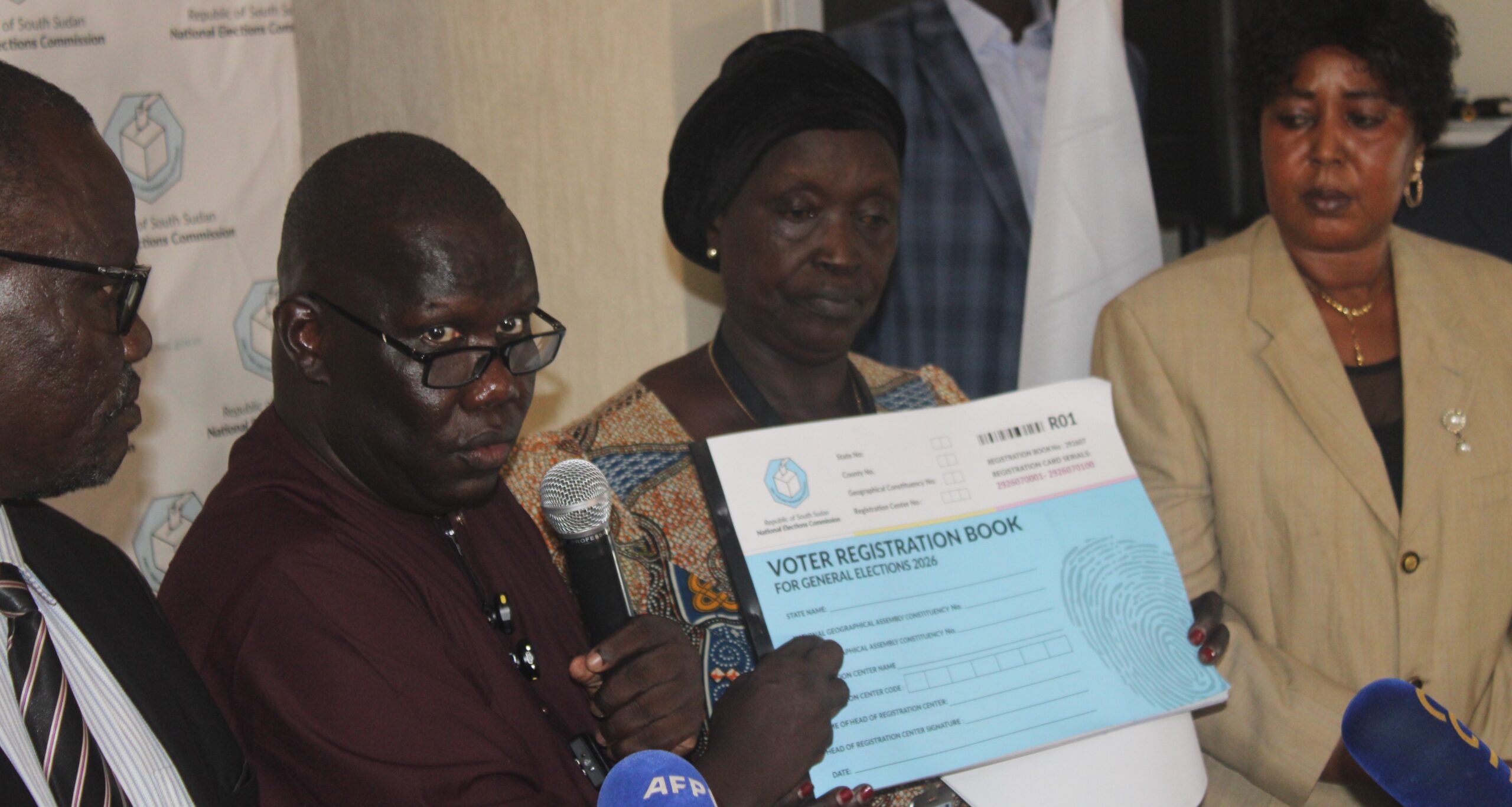
South Sudan NEC: Voter Registration Book Unveiled
Summary
- South Sudan's National Elections Commission (NEC) has unveiled a voter registration book as part of its preparations for the upcoming general elections.
- NEC chairperson Gabriel Bol Deng Majok stated that the official voter registration date will be announced once all necessary preparations are complete.
- The government has provided an initial $25 million to support the electoral process, with assurances of additional funding soon.
- The NEC plans to begin printing the registration books this week and distribute them to the 10 states and three administrative areas.
- South Sudan's general elections are scheduled for December 22, 2026, under a legal framework allowing the incumbent president to remain in office while vice-presidents and other executive members depart.
Unveiling Key Electoral Tools
The unveiling of the voter registration book and the subsequent operational plans represent crucial milestones for South Sudan's democratic trajectory.
The National Elections Commission (NEC) of South Sudan has officially presented a new voter registration book, marking a significant step in the country's preparations for its upcoming general elections. This crucial document, which received approval from the commission's board on Monday, is designed to facilitate the meticulous recording and maintenance of voter information by registration officials. Speaking from Juba on Tuesday, NEC chairperson Gabriel Bol Deng Majok confirmed the board's endorsement of the registration form, signaling readiness to proceed with the next phases of the electoral process.
Mr. Majok, a recently appointed leader of the commission, highlighted that the book is emblazoned with the NEC logo and lists the names of South Sudan's ten states and three administrative areas. Each book also incorporates serial numbers for tracking registration records and provides essential details such as the specific geographical area where an individual will cast their ballot, alongside the designated registration center. The chairperson emphasized that the official date for the commencement of South Sudan NEC voter registration will be publicly announced once all necessary preparations are fully completed, following the unveiling of the South Sudan voter registration book.
Funding and Operational Logistics
Financial backing for the electoral process has seen an initial injection of $25 million from the government, as confirmed by Mr. Majok. The Ministry of Finance has further committed to releasing additional funds in the near future, specifically earmarked to support the voter registration drive and other preparatory activities, addressing the critical need for South Sudan electoral process funding. This week, the NEC intends to initiate the printing of these vital voter registration books.
Distribution of the printed materials to the ten states and three administrative areas will commence as soon as sufficient copies become available, with the commission opting not to delay this process until all books are printed. Mr. Majok underscored that the primary hurdle, the approval of the registration form, has been cleared, making printing the immediate next step. Furthermore, the commission, under Gabriel Bol Deng Majok NEC leadership, has already completed the assessment and identification of potential voter registration centers across the nation, which are slated for public disclosure. The registration date itself will be finalized and announced only after an adequate supply of registration materials has been successfully distributed to these identified centers.
Setting the Electoral Timeline and Legal Framework
South Sudan's National Elections Commission has firmly established December 22, 2026, as the date for the nation's general elections. This announcement provides a clear timeline for the culmination of the ongoing South Sudan general elections 2026 preparations. A distinctive aspect of the legal framework governing this transition period is that it permits the incumbent president to retain office and continue exercising executive powers throughout the election period.
In contrast, the country's vice-presidents and other members of the executive branch are mandated to vacate their positions during this same timeframe.
Implications for Political Stability and Governance
The unveiling of the voter registration book and the subsequent operational plans represent crucial milestones for South Sudan's democratic trajectory. These developments offer tangible indicators of progress toward fulfilling the constitutional mandate for general elections in 2026. For legal professionals and entities with interests in South Sudan, closely monitoring the National Elections Commission's announcements regarding voter registration dates and electoral timelines is paramount.
Such pronouncements are not merely procedural; they serve as vital signals of the evolving political and regulatory landscape. Furthermore, the specific legal framework dictating the presidential transition, particularly the provision allowing the incumbent to remain while other executive members depart, warrants careful scrutiny for any comprehensive legal analysis of the country's governance structure during this critical period.
Practical Implications
Lawyers advising clients with interests in South Sudan should closely monitor the National Elections Commission's announcements regarding voter registration dates and electoral timelines, as these developments are critical indicators of progress towards the 2026 general elections and potential shifts in the political and regulatory landscape. The specific legal framework for the presidential transition (incumbent stays, VPs leave) also warrants careful attention for legal analysis.
Source
How does this affect you?
Get an AI analysis of this article grounded in your jurisdictions, practice areas, and any policy documents you've uploaded to Wansom.
Finish Reading the Full Story and the Expert Analysis.
Get the latest legal & regulatory intelligence in South Sudan
Wansom is AI and can make mistakes.