
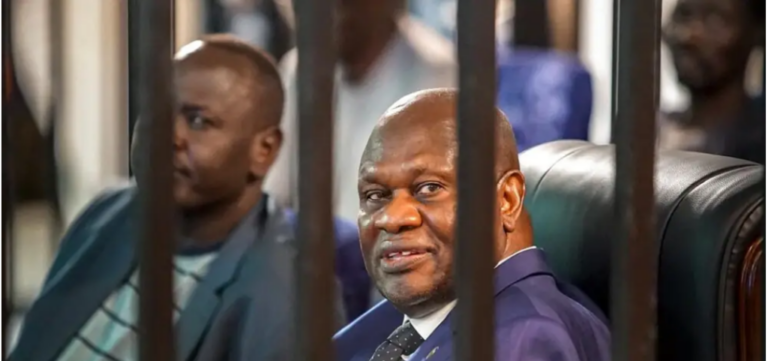
South Sudan Special Court Adjourns Machar Trial Due to Fuel Shortage
The Special Court in South Sudan has adjourned proceedings in the trial of former First Vice President Riek Machar and seven co-accused until October 23, 2026, due to a lack of generator fuel preventing the delivery of a scheduled ruling. The court was set to rule on Machar's application to play video footage as evidence to support his claims that the trial is politically motivated, a move prompted by his refutation of public statements made by former officials and during a state burial. Judge Stephen Simon Binjigwa announced the adjournment, citing the unavailability of fuel for the generator as the sole reason for the delay, indicating that the ruling on the application would be delivered on the rescheduled date.
The legal significance of this adjournment, while seemingly procedural, highlights potential logistical challenges within South Sudan's judicial system that can impede the progress of high-profile cases. For practitioners, it underscores the importance of considering practical operational constraints when planning court appearances and submissions, particularly in jurisdictions where infrastructure may be unreliable. The case itself, involving serious charges including murder, conspiracy, terrorism, treason, destruction of public property, and crimes against humanity, carries immense weight for national reconciliation and the rule of law. The ability of the court to function effectively, even on basic operational matters, is crucial for maintaining public confidence in the justice system and ensuring that such significant trials can proceed without undue delay or external interference.
The legal context for this trial is rooted in South Sudan's Penal Code and potentially international criminal law, given the gravity of the charges. The Special Court, established to handle complex and sensitive cases, operates within the South Sudanese judicial hierarchy. The application by Machar to introduce video evidence falls under the court's rules of procedure and evidence, which govern the admissibility of such materials. The judge's decision on this application will set a precedent for how video evidence, particularly concerning alleged political motivations or public statements, will be treated in future proceedings. The charges against Machar and his co-defendants reflect the deep political and security divisions that have plagued South Sudan since its independence.
The key parties involved are Riek Machar, the former First Vice President and fifth accused, along with seven co-defendants, the three-judge panel of the Special Court presided over by Judge Stephen Simon Binjigwa, and indirectly, the state which is prosecuting the case. The excerpt also mentions former vice president Benjamin Bol Mel and former defense minister Gen. Chol Thon Bolek, whose public statements are central to Machar's application. The outcome of Machar's application regarding the video evidence could significantly influence the direction and perception of the trial, especially concerning its alleged political undertones. The current status of Machar under house arrest and other defendants in NSS facilities also points to the security sensitivities surrounding the case.
Practitioners and businesses operating in or engaging with South Sudan should monitor the resumption of this trial closely, particularly the court's decision on the admissibility of video evidence and the reasons provided. The ability of the Special Court to overcome logistical hurdles like fuel shortages will be a key indicator of its operational capacity. Furthermore, any developments in this high-profile case will have implications for the broader political stability and investment climate in South Sudan. Attorneys involved in similar cases should be prepared for potential delays and ensure all practical aspects of evidence presentation are considered, while businesses should remain aware of the ongoing legal and political landscape, which can impact regulatory environments and security.
How does this affect you?
Get an AI analysis of this article grounded in your jurisdictions, practice areas, and any policy documents you've uploaded to Wansom.
Finish Reading the Full Story and the Expert Analysis.
Get the latest legal & regulatory intelligence in South Sudan
Wansom is AI and can make mistakes.