
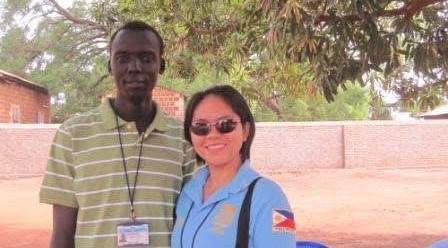
Wau Court Sentences SSPDF Soldier for UNMISS Staff Murder
Summary
- A military court in Wau sentenced an SSPDF soldier to 10 years in prison for the abduction and murder of a UNMISS staff member.
- The victim, Bol Rhoch Mayol Kuot, a UNMISS language assistant, was killed on December 15, 2025, while on official duty.
- The soldier was also demoted, dismissed from the army, and ordered to pay 51 head of cattle as compensation to the victim's family.
- UNMISS described the judgment as a "milestone" for accountability for crimes against UN personnel in South Sudan.
- The ruling is subject to appeal, and other cases involving SSPDF members are still under investigation or trial.
A Landmark Conviction in Wau
This ruling by a military court in South Sudan establishes a precedent for accountability for crimes committed against UN personnel, signaling a potential shift towards greater judicial recourse for international staff operating in the region.
A military tribunal in Wau has handed down a ten-year prison sentence to a soldier from the South Sudan People’s Defence Forces (SSPDF) following his conviction for the abduction and murder of a United Nations staff member. The verdict, announced by the UN mission in South Sudan (UNMISS) on Friday, addresses the killing of Bol Rhoch Mayol Kuot, a South Sudanese national who served as a language assistant for UNMISS. The incident occurred on December 15, 2025, when Kuot was abducted and subsequently killed while performing his official duties in Hai Masna, located in Western Bahr el Ghazal state.
Beyond the decade-long incarceration, the General Court Martial in Wau also mandated the soldier's demotion and his complete dismissal from military service. In a significant move to address the victim's family, the court ordered compensation in the form of 51 head of cattle. This ruling, however, is not final, as UNMISS indicated that the judgment remains subject to an appeal process. The case underscores a critical moment for military justice South Sudan UNMISS operations.
Advancing Accountability for UN Personnel
This conviction marks a pivotal development in the ongoing efforts to ensure accountability for crimes against UN personnel in South Sudan. Anita Kiki Gbeho, the UN Secretary-General’s Special Representative and head of UNMISS, characterized the judgment as a "milestone," signaling a strengthened commitment to justice for international staff. Gbeho extended her condolences to the family of Bol Rhoch Mayol Kuot, acknowledging their participation in the legal proceedings, and also recognized the crucial contributions of witnesses and national authorities who facilitated the prosecution of the case.
The General Court Martial in Wau has been actively addressing various cases involving SSPDF members. According to UNMISS, the court heard a total of ten cases and rendered judgments in eight of them. These proceedings resulted in four convictions of SSPDF members, alongside four acquittals. Additional cases remain under investigation and consideration for trial, indicating a broader push for military justice within the nation's armed forces. This particular outcome, involving the murder of a UN staff member, highlights the increasing focus on holding individuals accountable for actions against those serving the international community.
Implications for International Operations
The sentencing of an SSPDF soldier for the UNMISS murder of Bol Rhoch Mayol Kuot carries substantial implications for the safety and security of United Nations personnel and other international workers operating in South Sudan. Since its establishment on July 9, 2011, UNMISS has recorded a grim tally of 19 peacekeepers killed and 32 injured due to malicious acts, underscoring the inherent risks faced by those dedicated to peace and stability in the region. This ruling by a military court in South Sudan establishes a precedent for accountability for crimes committed against UN personnel, signaling a potential shift towards greater judicial recourse for international staff operating in the region.
This judgment could serve as a deterrent and reinforce the principle that attacks on UN personnel will not go unpunished, fostering a more secure environment for humanitarian and peacekeeping missions. The emphasis on compensation cattle victim family South Sudan also reflects a localized approach to justice, integrating traditional forms of redress within the formal legal system. The outcome of this case, particularly the conviction and the explicit recognition of accountability by UNMISS leadership, suggests a growing commitment within South Sudan to uphold international norms regarding the protection of UN staff, potentially influencing future risk assessments for organizations and foreign nationals in the country.
Practical Implications
This ruling by a military court in South Sudan establishes a precedent for accountability for crimes committed against UN personnel, signaling a potential shift towards greater judicial recourse for international staff operating in the region. Lawyers advising international organizations, NGOs, or foreign nationals in South Sudan should be aware of this development as it may influence risk assessments and strategies for seeking justice in cases of harm against their personnel.
Source
How does this affect you?
Get an AI analysis of this article grounded in your jurisdictions, practice areas, and any policy documents you've uploaded to Wansom.
Finish Reading the Full Story and the Expert Analysis.
Get the latest legal & regulatory intelligence in South Sudan
Wansom is AI and can make mistakes.