
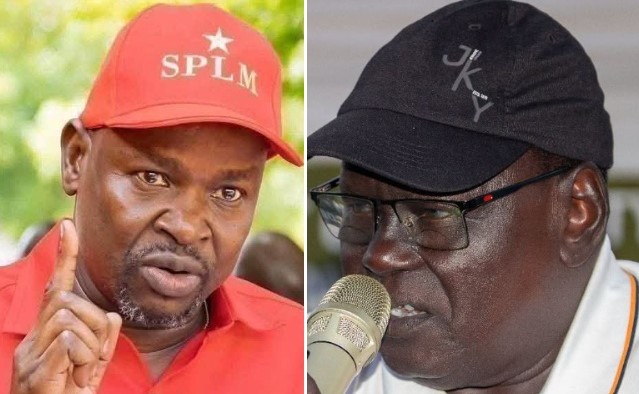
Gen. Mawien Mathiang Gor: Bol Mel Coup Plot Allegations Rock South Sudan
Summary
- A community leader has accused former Vice-President Benjamin Bol Mel of plotting to overthrow President Salva Kiir Mayardit.
- Nine individuals from the Awan community are reportedly detained in connection with the alleged coup attempt.
- Bol Mel was previously dismissed as vice-president in November 2025, stripped of his military rank, and placed under house arrest without public explanation.
- The allegations were made at a ceremony celebrating the release of three officials who had been detained for nearly five months without charge, released by presidential order.
- The accuser stated that President Kiir alone would decide Bol Mel's fate, urging an end to calls for his release.
Allegations of a Coup Plot
The lack of detailed information about the alleged plot and the absence of formal accusations against Bol Mel and the nine Awan community members raise questions about transparency and legal accountability.
A prominent community figure from President Salva Kiir Mayardit’s home region has publicly accused former Vice-President Benjamin Bol Mel of orchestrating a plot to overthrow the South Sudanese leader. General Mawien Mathiang Gor, a leader within the Awan Pajok community, leveled these serious allegations during a thanksgiving event held in Juba by the Noon Mayomdit Community Association. The ceremony itself was organized to celebrate the recent release of businesswoman Achan Agoth Akiech and two other former government officials from detention.
Mawien Mathiang Gor asserted that Bol Mel, once considered a potential successor to President Kiir, turned against the president after being appointed to high-ranking government positions. He warned that this alleged conspiracy risked plunging South Sudan into another period of intense conflict and bloodshed. While these grave accusations regarding a Bol Mel coup plot allegations South Sudan have been made, General Mawien did not provide specific details of the purported scheme, and formal charges have not been brought against Bol Mel, though it remains unclear whether charges have been brought against the other individuals implicated.
Detentions and Political Downfall
Central to General Mawien's claims is the ongoing detention of nine individuals from the Awan community, who he alleges were involved in the failed coup attempt alongside Benjamin Bol Mel. Mawien did not disclose the identities of these nine detainees or elaborate on their specific roles in the alleged plot. He also highlighted that Bol Mel's rapid ascent to power, facilitated by President Kiir, had caused resentment among some members of the president's community, with some reportedly expressing anger and even threatening violence against Bol Mel.
Benjamin Bol Mel's political standing had already suffered a significant blow in November 2025 when President Kiir unexpectedly dismissed him from his vice-presidential role. This move fueled widespread speculation about Kiir's succession plans. Following his dismissal, Bol Mel was also removed from key positions within the ruling Sudan People’s Liberation Movement (SPLM) and the security apparatus. He was stripped of his military rank as a general and subsequently placed under house arrest at his Juba residence, with his security detail withdrawn. The government did not offer a public explanation for either his dismissal or the restrictions placed on his movements.
Context of Uncharged Detentions
The allegations surrounding the Bol Mel coup plot and the detention of individuals without formal charges occur against a backdrop of similar instances of uncharged detentions in South Sudan. The ceremony where General Mawien made his accusations was, in fact, celebrating the release of Achan Agoth Akiech, former lawmaker Kom Kom Geng, and former lawmaker Ayii Ayii Akol. These three individuals had been held at the National Security Service detention facility, commonly known as the Blue House in Juba, since May 2026.
Their release, nearly five months after their initial detention, came via a presidential order, without any of them having been brought before a court. They had faced accusations, including forging President Kiir’s signature and unlawfully using presidential authority. General Mawien explicitly urged those advocating for Bol Mel's release to cease their campaigns, stating that the ultimate decision regarding the former vice-president's fate, whether to face legal proceedings or another course of action, rests solely with President Kiir.
Implications for Rule of Law
The unfolding situation, marked by serious Bol Mel coup plot allegations South Sudan and the detention of individuals without formal charges, underscores significant concerns regarding due process and the rule of law within the nation. The lack of detailed information about the alleged plot and the absence of formal accusations against Bol Mel and the nine Awan community members raise questions about transparency and legal accountability. Mawien's assertion that the decision on Bol Mel's future lies entirely with President Kiir highlights the considerable executive influence over judicial processes.
These events, including the uncharged detentions and subsequent presidential releases, suggest a system where political considerations can heavily impact legal outcomes. The potential for renewed bloodshed, as warned by General Mawien, further emphasizes the fragility of the political landscape and the critical importance of adhering to established legal frameworks to ensure stability and protect human rights. The case serves as a stark reminder of the challenges in upholding legal norms amidst politically charged circumstances in South Sudan.
Practical Implications
Lawyers and compliance officers operating in South Sudan should closely monitor the legal implications of politically charged allegations and detentions without formal charges, as this case highlights significant rule of law risks and the potential for executive influence over judicial processes, impacting due process and human rights.
Source
How does this affect you?
Get an AI analysis of this article grounded in your jurisdictions, practice areas, and any policy documents you've uploaded to Wansom.
Finish Reading the Full Story and the Expert Analysis.
Get the latest legal & regulatory intelligence in South Sudan
Wansom is AI and can make mistakes.