
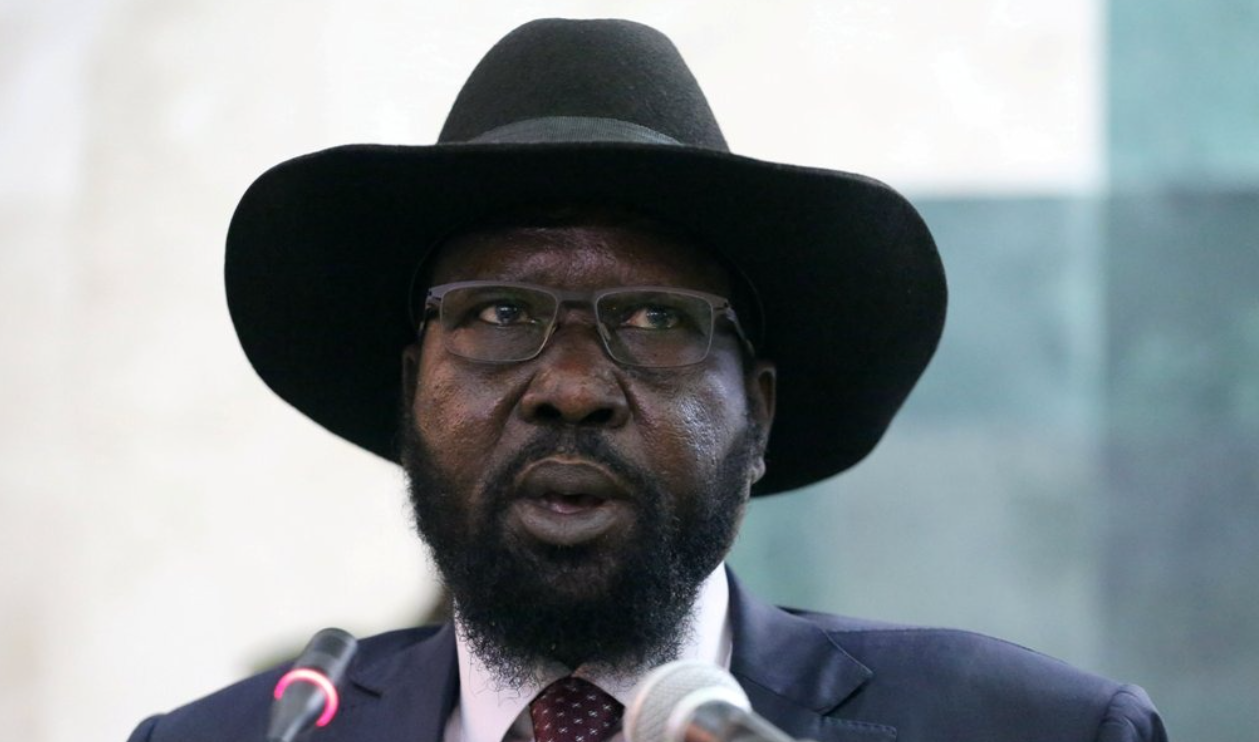
President Kiir Dissolves South Sudan Government, Removes Machar
Summary
- President Salva Kiir Mayardit has dissolved South Sudan's transitional unity government, including the national legislature and state governments.
- First Vice-President Riek Machar and all other Vice-Presidents have been removed from office with immediate effect.
- A new caretaker administration, including ministers, governors, and chief administrators, has been appointed ahead of elections scheduled for December 22, 2026.
- The Republican Order, issued under the National Elections Act, 2012, as amended in 2026, allows President Kiir to remain in power until a new president is sworn in.
- All substantive national ministers, deputy ministers, state governments, legislative assemblies, and county commissioners have been relieved of their duties.
Sweeping Governmental Overhaul
President Salva Kiir Mayardit has initiated a comprehensive restructuring of South Sudan's governance, dissolving the entire transitional unity government that was established under the 2018 peace agreement.
President Salva Kiir Mayardit has initiated a comprehensive restructuring of South Sudan's governance, dissolving the entire transitional unity government that was established under the 2018 peace agreement. This extensive action includes the removal of First Vice-President Riek Machar, along with all four other Vice-Presidents, from their official duties. In their place, a new caretaker administration has been appointed, tasked with overseeing the nation until elections scheduled for December 22, 2026.
These significant changes were formally announced by President Kiir on Tuesday evening through a Republican Order. The decree, which signals a profound shift in the country's political landscape, was subsequently broadcast to the public via the state-owned South Sudan Broadcasting Corporation (SSBC). The move effectively dismantles the existing power-sharing arrangement, paving the way for a new interim leadership structure ahead of the upcoming electoral cycle.
Legal Mandate and Presidential Continuity
The Republican Order, which underpins this extensive governmental overhaul, cites the National Elections Act, 2012, as amended in 2026, as its legal foundation. This legislative instrument permits President Kiir to retain his presidential authority throughout the entire electoral cycle, concluding only when a newly elected head of state is officially sworn into office. The immediate effect of this order was the termination of the First Vice-President's tenure, alongside all other Vice-Presidents, who were relieved of their positions without delay.
However, not all presidential roles were affected by the dissolution. Presidential advisers and presidential envoys are explicitly mandated to continue their duties, operating directly under the President's ongoing leadership. Notably, Joseph Ngere Paciko, who previously served as speaker of parliament, has been appointed as an adviser on governance following the dissolution of the legislative body. This selective retention of certain roles highlights a strategic approach to maintaining specific advisory and diplomatic functions during the transitional period.
National Administrative Appointments
The scope of the South Sudan Republican Order dissolution extends broadly across the national administrative tier. All substantive National Ministers and Deputy Ministers have been relieved of their portfolios, with the directive for ministries and other governmental institutions to continue operating under interim or caretaker structures. To facilitate this, President Kiir appointed a new slate of caretaker ministers to oversee critical departments, including Africano Mande Gadime for presidential affairs, Martin Elia Lomuro for cabinet affairs, Cecilia Adut Manyok for foreign affairs, Ayor Akuoch Anok for defence, Rizik Zakariah Hassan for interior, Wek Mamer Kuol for justice, Obuto Mamur Mete for national security, Athian Diing Athian for finance, Awou Daniel Chiang for petroleum, Labanya Margret for trade, Ateny Wek Ateny for information and ICT, Michael Makuei Lueth for East African Community affairs, and Stephen Par Kuol for peacebuilding.
In addition to the ministerial appointments, three deputy ministers were named: Philip Jada Natana for foreign affairs, Marial Chanuong Yol for defence, and David Marial Gumke for interior. Furthermore, the Republican Order explicitly dissolved the Transitional National Legislative Assembly and the Council of States, effectively suspending the national legislative branch. This comprehensive set of appointments and dissolutions underscores the profound and immediate impact of President Kiir's decision on the central government's operational structure.
Subnational Restructuring and Interim Measures
The administrative overhaul extends significantly beyond the national capital, impacting governance at the subnational level. All ten state governments and their respective state legislative assemblies have been dissolved. Similarly, the administrations and legislative councils of the three administrative areas have also been dismantled. To ensure continuity, President Kiir appointed caretaker governors for each of the ten states: Augustino Jadalla Wani for Central Equatoria, Louis Lobong Lojore for Eastern Equatoria, Moses Majok Gatluak for Jonglei, Rin Tueny Mabor Deng for Lakes, Charles Madut Akol for Northern Bahr el Ghazal, Dr. Joseph Monytuil Wejang for Unity, James Koang Chuol for Upper Nile State, Bol Wek Agoth for Warrap, Sherif Daniel Sherif for Western Bahr el Ghazal, and Daniel Badagbu Rimbasa for Western Equatoria.
Correspondingly, caretaker chief administrators were named for the three administrative areas: Justice Charles Abyei Jok for the Abyei Administrative Area, Joseph Baboya Ngere for the Pibor Administrative Area, and Daniel Makuei Thiyier for the Ruweng Administrative Area. At the county level, all county commissioners have been relieved of their political and policy duties, pending the appointment of interim commissioners. Outgoing commissioners are restricted to performing only those functions deemed necessary for maintaining essential services, public order, and administrative continuity. This extensive South Sudan caretaker administration appointments and dissolution across all tiers of government represents a complete reset of the country's administrative framework in preparation for the 2026 elections.
Practical Implications
Lawyers advising clients with interests in South Sudan must immediately assess the impact of this sweeping dissolution on existing contracts, regulatory compliance, and ongoing government relations. They should monitor for potential shifts in policy or legal interpretations under the new caretaker administration and understand the implications for the 2026 elections, particularly concerning the cited National Elections Act.
Source
Source: Original reporting via {source}
How does this affect you?
Get an AI analysis of this article grounded in your jurisdictions, practice areas, and any policy documents you've uploaded to Wansom.
Finish Reading the Full Story and the Expert Analysis.
Get the latest legal & regulatory intelligence in South Sudan
Wansom is AI and can make mistakes.