
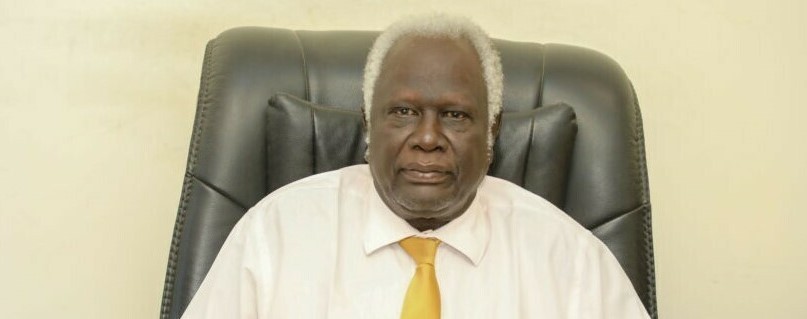
South Sudan: Kiir NEC Chairman Removal Legality Scrutinized
Summary
- Professor Abednego Akok Kacuol remains the chairperson of South Sudan's National Elections Commission (NEC), with Gabriel Bol Deng Majok serving as the NEC's Secretary-General.
- The scheduled December 22, 2026, presidential and parliamentary elections are still on the timetable, with no reason publicly provided for Akok's reported dismissal.
- Section 12 of the National Elections Act 2012, as amended in 2023, specifies limited grounds and a defined procedure for removing NEC commissioners, suggesting the president's power is not unrestricted.
- Experts warn the leadership changes could disrupt the electoral timetable, including voter registration, potentially making it harder to meet the 2026 election date.
- Gabriel Bol Deng, the NEC Secretary-General, brings institutional familiarity but would still require time to adapt to a new role if appointed chairperson.
What Happened
The absence of any publicly stated grounds for Professor Akok's dismissal raises significant questions about whether the established legal framework was adhered to.
Professor Abednego Akok Kacuol remains the chairperson of South Sudan's National Elections Commission (NEC), with Gabriel Bol Deng Majok serving as the NEC's Secretary-General. This significant leadership structure is in place just three months before the country is scheduled to hold presidential and parliamentary elections on December 22, 2026.
Notably, no official explanation was provided for Professor Akok's reported abrupt removal in the original article. The decision comes at a critical juncture for South Sudan, as its electoral institutions are under immense pressure to finalize preparations for the upcoming polls. The swift nature of the change, coupled with the absence of a stated reason, has immediately drawn attention to the legal framework governing such high-level appointments and removals within the nation's electoral body.
Legal Scrutiny of the Removal
The legality of President Kiir's action in removing the NEC chairperson without public justification, as originally reported, has quickly become a central point of contention. South Sudan's National Elections Act 2012, specifically Section 12 as amended in 2023, outlines precise conditions and procedures for the removal of the chairperson and other commissioners. This legislation stipulates that removals can only occur on specific grounds, including demonstrated partiality, an inability to fulfill official duties, or instances of gross misconduct.
Crucially, the Act also mandates a defined process for such removals, implying that the President's authority in this matter is not absolute or discretionary. The absence of any publicly stated grounds for Professor Akok's dismissal, as originally claimed, raises significant questions about whether the established legal framework was adhered to. This situation could potentially undermine the perceived independence and integrity of the National Elections Commission, particularly as it prepares for the crucial 2026 elections.
Electoral Timetable and Expert Concerns
The timing of this leadership transition, as originally described, has prompted concerns among political observers regarding its potential impact on the already tight electoral schedule. Professor Abraham Kuol Nyuon, a political science expert from the University of Juba, acknowledged that leadership changes within state institutions are not uncommon but expressed reservations about the timing of this particular decision. He emphasized that making such a significant alteration at this critical juncture could impede the government's commitment to holding timely elections.
Professor Nyuon highlighted that while Gabriel Bol Deng, the NEC's Secretary-General, brings familiarity from his previous role, he would still require a period of one to two months to fully acclimate to the responsibilities of a new position and make crucial decisions. This adjustment period, according to Nyuon, could disrupt the implementation of the electoral timetable, specifically affecting vital preparations such as voter registration. Professor Akok had recently been vocal about voter registration efforts, and the change in leadership may necessitate additional time for the commission to adapt, potentially making it more challenging to meet the December 22, 2026, election deadline. Despite these concerns, the government has not yet announced any alterations to the scheduled polling date.
Broader Context and Implications
The leadership change occurs against a backdrop of repeated extensions to South Sudan's transitional period and the implementation of the 2018 peace agreement. Under the current roadmap, the transitional period is set to conclude in February 2027, with elections slated for December 22, 2026. Professor Nyuon suggested that if the electoral timetable becomes unfeasible due to these new developments, an extension of the transitional arrangements might be considered. Such a measure, he posited, could provide the newly constituted elections commission leadership with additional time to complete preparations and address any delays stemming from the recent change.
Both Professor Akok and Gabriel Bol Deng bring considerable experience to their roles. Professor Akok, born in Yirol, Lakes State, in 1955, holds a PhD in Public Administration and has a distinguished academic career at the University of Juba, where he served as Dean of Student Affairs and Director of the Centre for Peace and Development Studies. He was first appointed NEC chairperson in August 2012 and reappointed in November 2023 when the commission was reconstituted under the 2018 peace agreement. Gabriel Bol Deng, prior to his elevation, served as the NEC's Secretary-General and was deeply involved in preparations for the 2026 elections, including developing electoral infrastructure, conducting voter education, and coordinating with state authorities. His immediate familiarity with the commission's operations may mitigate some disruption, but the overarching legal questions surrounding the removal process remain.
Practical Implications
This development raises significant questions about the legal validity of the NEC chairperson's removal under South Sudan's National Elections Act 2012, which could impact the legitimacy of future electoral decisions and processes. Lawyers should monitor potential legal challenges to the appointment and assess compliance risks related to the upcoming 2026 elections.
Source
How does this affect you?
Get an AI analysis of this article grounded in your jurisdictions, practice areas, and any policy documents you've uploaded to Wansom.
Finish Reading the Full Story and the Expert Analysis.
Get the latest legal & regulatory intelligence in South Sudan
Wansom is AI and can make mistakes.