
South Sudan: SPLM-FDs Questions 2018 Peace Agreement Status
Summary
- South Sudan's President Salva Kiir dissolved the transitional unity government and appointed a caretaker administration ahead of December 22 elections.
- A representative of the SPLM Former Detainees (SPLM-FDs) questioned the legal status and applicability of the 2018 peace agreement following this dissolution.
- Concerns were raised about the legal basis for monitoring bodies like CTSAMVM and the enforceability of key provisions regarding the vice-presidency, elections, and the agreement's supremacy.
- The representative called for clear guidance from IGAD, the international community, and local political actors on how the South Sudan 2018 peace agreement should be applied.
- IGAD recently reaffirmed the 2018 peace agreement as the "sole viable framework for peace" and stated that the upcoming elections are anchored in it.
Recent Political Shifts in South Sudan
He warned that the prevailing uncertainty could have far-reaching implications for the broader political transition and the planned elections, describing the situation as "very blurry."
President Salva Kiir recently dissolved the Revitalised Transitional Government of National Unity (RTGoNU), ushering in a caretaker administration ahead of national elections slated for December 22. This significant move saw the removal of First Vice-President Riek Machar and four other vice-presidents from their posts, alongside the dissolution of both national and state legislative assemblies. President Kiir is set to retain full constitutional powers until an elected successor assumes office.
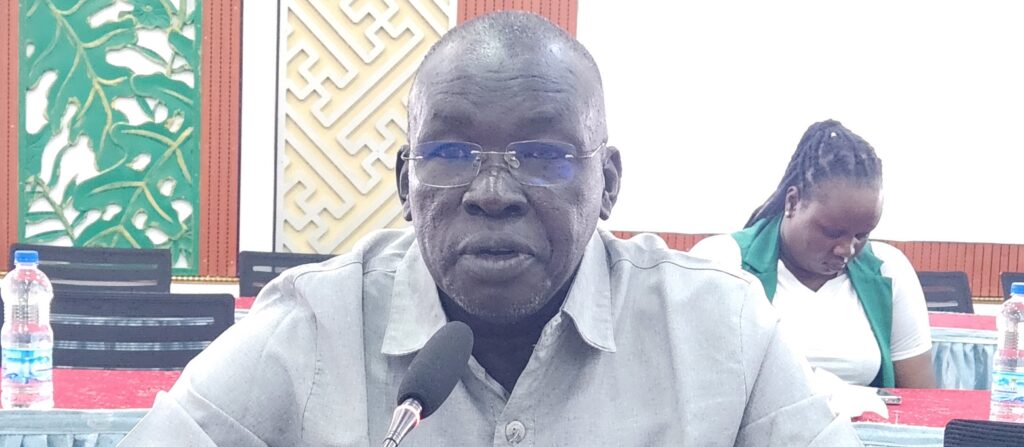
In the immediate aftermath of these changes, Bior Leek Kuong, a senior representative for the SPLM Former Detainees (SPLM-FDs) on the Ceasefire and Transitional Security Arrangements Monitoring and Verification Mechanism (CTSAMVM), voiced profound concerns. During a CTSAMVM meeting held in Juba on Tuesday, Kuong directly challenged the regional bloc IGAD to provide clarity on the current status of the South Sudan 2018 peace agreement, questioning its continued applicability following the government's dissolution.
Unraveling the Legal Framework
The now-dissolved transitional government was originally established under the provisions of the 2018 Revitalised Agreement on the Resolution of the Conflict in South Sudan (R-ARCSS). The SPLM-FDs, a faction comprising senior members of the Sudan People’s Liberation Movement who were detained during the December 2013 conflict and subsequently released, played a crucial role in the peace process that culminated in the 2018 accord. Under the agreement's power-sharing arrangements, the FDs were represented within the transitional government by a political team led by Deng Alor Kuol, with Rebecca Nyandeng De Mabior serving as one of the five vice-presidents under their quota until her tenure concluded with the recent dissolution.
Kuong specifically questioned the legal foundation for CTSAMVM’s ongoing monitoring activities in light of the recent political and constitutional amendments. He articulated his apprehension, stating, "We are monitoring the peace agreements. But I'm very concerned, what are we monitoring? Is the agreement existing, or there is no agreement?" His queries extended to which specific provisions of the R-ARCSS remain enforceable as South Sudan progresses toward the upcoming elections. He highlighted concerns regarding the status of articles pertaining to the vice-presidency, the electoral process, and the stipulated supremacy of the 2018 peace agreement over any conflicting laws, suggesting that the changes had introduced considerable uncertainty into the transitional legal framework.
Demands for Definitive Guidance
The SPLM-FDs representative underscored the critical need for definitive answers from IGAD and other guarantors of the 2018 peace agreement. He sought clarification on whether key provisions of the accord remain applicable, particularly questioning how CTSAMVM could continue its operations under an agreement whose foundational power-sharing government had been dismantled. Kuong also stressed the protective role of the agreement for those involved in its oversight, stating, "Because if we continue here, anything can happen to us. Because the agreement is the one protecting us here. Nothing else. Only the agreement."
He warned that the prevailing uncertainty could have far-reaching implications for the broader political transition and the planned elections, describing the situation as "very blurry." Kuong's urgent call for guidance extends beyond IGAD to include the international community and South Sudanese political actors, emphasizing the necessity for clear direction on how the South Sudan 2018 peace agreement should be applied in the wake of the transitional government's dissolution.
IGAD's Stance Amidst Lingering Doubts
Despite Kuong's persistent calls for clarity, the regional body IGAD has recently reiterated its position on the 2018 peace agreement. At its 74th Extraordinary Session on September 15, IGAD affirmed that the R-ARCSS continues to be the "sole viable framework for peace" in South Sudan. The organization also stated that the December elections remain firmly anchored in the provisions of the agreement. Furthermore, IGAD advocated for inclusive dialogue as a means to restore confidence and forge a consensual path toward the upcoming electoral process.
Nevertheless, Kuong's remarks highlight a perceived gap between IGAD's general reaffirmation and the specific, actionable guidance he believes is necessary. He continues to press for more explicit instructions on the practical application of the peace agreement following the significant governmental restructuring, indicating that the regional bloc's general statements have not fully addressed the detailed legal and operational questions now facing monitoring bodies and political stakeholders regarding the South Sudan 2018 peace agreement status.
Source
Source: Reporting from regional sources.
How does this affect you?
Get an AI analysis of this article grounded in your jurisdictions, practice areas, and any policy documents you've uploaded to Wansom.
Finish Reading the Full Story and the Expert Analysis.
Get the latest legal & regulatory intelligence in South Sudan
Wansom is AI and can make mistakes.