
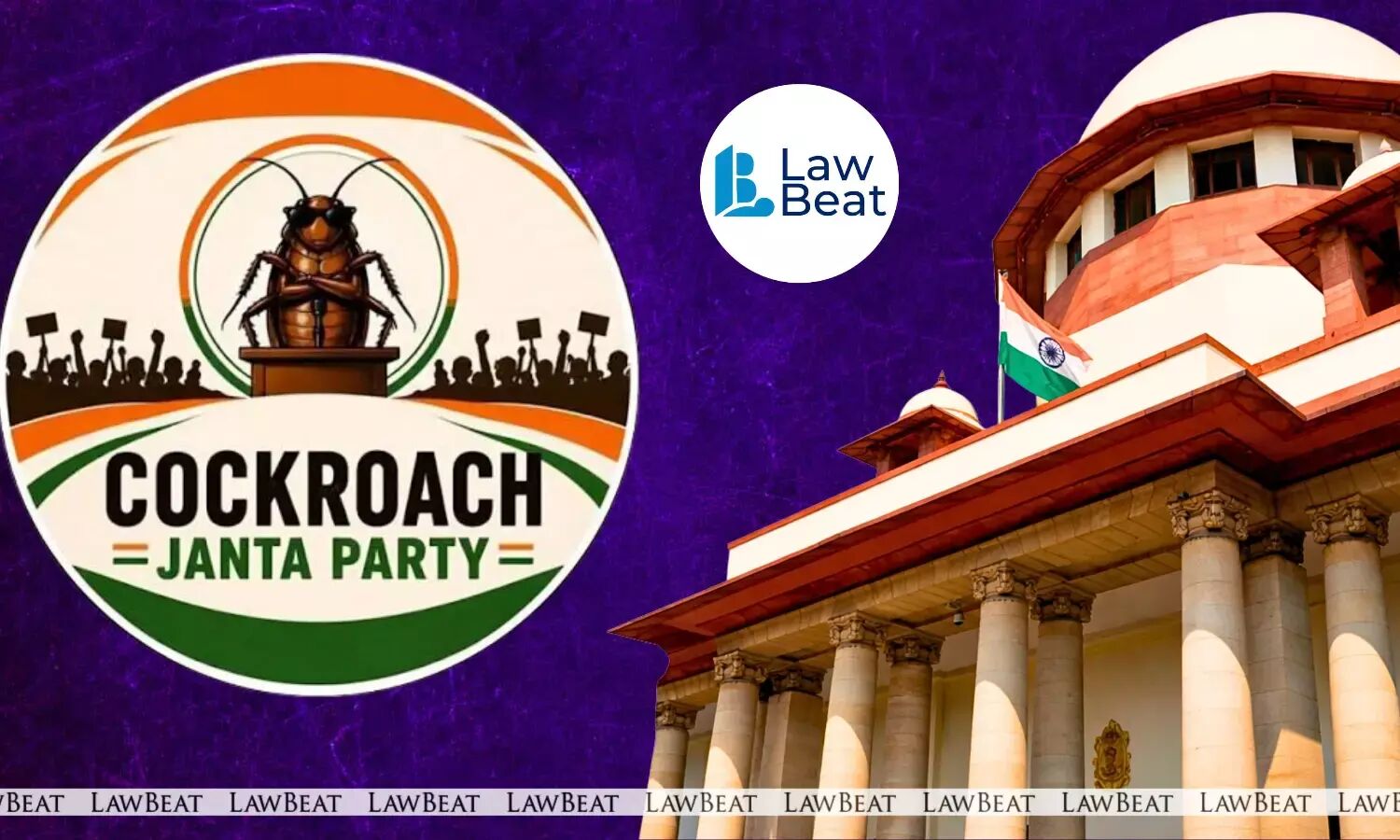
Supreme Court: Declines Urgent Hearing for SHIVAM UPADHYAY Vs UNION OF INDIA Protest
Summary
- The Supreme Court issued notice to the Centre and Delhi Police regarding a plea challenging a planned September 5 protest by the Cockroach Janta Party, but refused an urgent hearing before the protest date.
- The Cockroach Janta Party's protest aims to highlight the Centre's alleged failure to drop cases against students involved in a July NEET exam-paper leak protest.
- The Centre informed the Court it has moved an application under Article 142 to quash FIRs against student protesters from the NEET paper leak demonstrations.
- A related Public Interest Litigation (PIL) is also before the Supreme Court, addressing the "commercial exploitation" and "algorithmic distortion" of judicial proceedings, specifically referencing activities linked to the "Cockroach Janta Party."
- The Court emphasized that law and order maintenance is primarily the responsibility of the police and that petitioners could approach the court if alarming events occurred during the protest.
Court Addresses Protest Challenge
The bench emphasized that maintaining law and order falls within the purview of the police, and any immediate concerns should be directed to the Centre and law enforcement agencies.
The Supreme Court, on August 31, 2026, addressed a petition filed in the case of SHIVAM UPADHYAY Vs UNION OF INDIA, which sought to challenge a planned protest march by the Cockroach Janta Party (CJP). The CJP had announced a demonstration for September 5 in New Delhi, citing the Centre's alleged failure to withdraw cases against students involved in a July protest concerning the NEET exam-paper leak.
A bench comprising CJI Surya Kant, Justice Joymalya Bagchi, and Justice V Mohana issued notices to both the Union government and the Delhi Police regarding the plea. However, despite requests for an urgent hearing from Dr. Rizwan Ahmed, counsel for the applicant, the bench declined to list the matter before the scheduled protest date. The next hearing is slated for September 10, when it will be heard alongside other related matters.
The Court underscored that maintaining law and order is primarily the responsibility of the police, and any immediate concerns should be directed to the Centre and law enforcement agencies. Dr. Ahmed had argued that the CJP lacked the necessary official permissions for their march and highlighted the presence of international media due to the ongoing BRICS summit, suggesting that any mishap could be detrimental. He urged the court to consider the potential for disorder given the absence of proper authorization. Another counsel further questioned the CJP's organizational legitimacy, characterizing the planned event as an unlawful assembly rather than a riot, and raising concerns about the police response. The Court did indicate that if any alarming events transpired during the protest, petitioners could bring them to the Court's attention.
Government's Stance on Student Protests
On the same day of the hearing concerning the SHIVAM UPADHYAY Vs UNION OF INDIA protest, the Centre informed the Supreme Court of its broader approach to protest-related cases. The government stated it had filed an application to quash the First Information Reports (FIRs) lodged against student protesters involved in the NEET paper leak demonstrations.
Solicitor General Tushar Mehta confirmed this development as the bench was concluding its proceedings, stating that the government was invoking its special powers under Article 142 of the Constitution for this purpose. This move directly relates to the Cockroach Janta Party's stated reason for their planned September 5 protest, which was the Centre's alleged failure to drop these very cases against the students.
Scrutiny on Judicial Proceedings and Public Discourse
In a related development, the Supreme Court has also issued notice in a Public Interest Litigation (PIL) that raises significant concerns about the "commercial exploitation" and "algorithmic distortion" of judicial proceedings in the era of social media. The PIL specifically references activities purportedly linked to a so-called "Cockroach Janta Party," alleging that courtroom interactions are being transformed into "digitally marketable content, political symbolism and viral commodities."
This particular concern stems from proceedings held on May 15, 2026, in the case of Sanjay Dubey vs Registrar General, High Court of Delhi & Anr. During those proceedings, certain metaphorical expressions, including the term "cockroach," were reportedly used in discussions pertaining to the procedural misuse of courts, the designation of Senior Advocates, and a perceived decline in professional standards within the legal system.
Practical Implications
This development indicates the Supreme Court's stance on pre-emptive intervention in protest matters, emphasizing the primary role of law enforcement. Lawyers should note the Centre's use of Article 142 to quash protest-related FIRs and be aware of the emerging legal scrutiny regarding the 'commercial exploitation' of judicial proceedings, which could impact public communication strategies for clients involved in litigation or protests.
Source
How does this affect you?
Get an AI analysis of this article grounded in your jurisdictions, practice areas, and any policy documents you've uploaded to Wansom.
Finish Reading the Full Story and the Expert Analysis.
Wansom is AI and can make mistakes.