
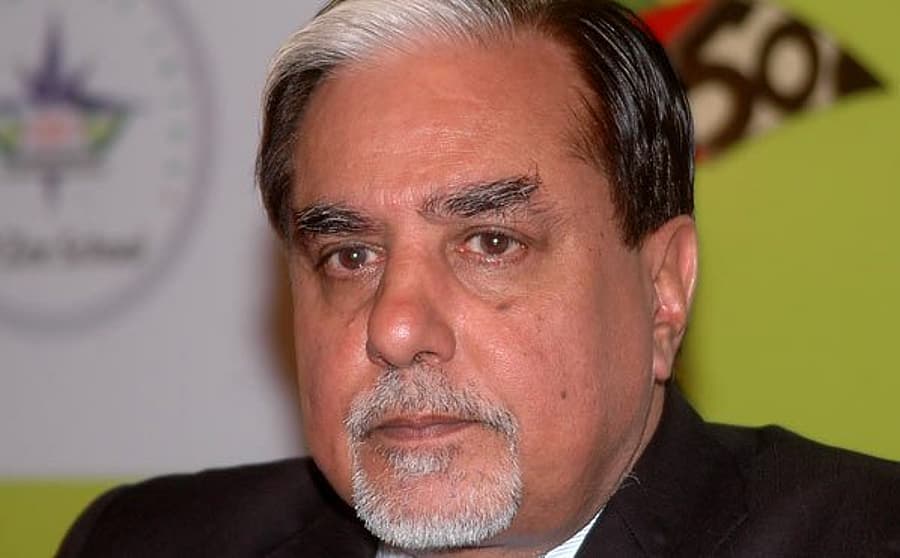
NCLT: Subhash Chandra NCLT 5-Member Bench Formed for Insolvency
Summary
- The National Company Law Tribunal (NCLT) has formed a five-member bench to decide the personal insolvency case against Zee Group founder Subhash Chandra.
- This action was taken after a two-member NCLT bench failed to reach a majority opinion on Chandra's proposed repayment plan.
- Subhash Chandra has offered to pay ₹6.25 crore against admitted claims totaling ₹22,006.57 crore.
- The previous two-member bench found that three members had taken materially different positions on the repayment plan, leading to a referral under Section 419(5).
- NCLT President Justice (retd) Anupinder Singh Grewal will head the new special bench, which is scheduled to hear the matter on September 1.
Special Bench Formed in High-Profile Insolvency Case
This development highlights the procedural complexities and potential for split verdicts within the NCLT, particularly in high-stakes personal insolvency cases.
The National Company Law Tribunal (NCLT) has established a five-member bench to adjudicate the personal insolvency proceedings against Subhash Chandra, the founder of the Zee Group. This significant development follows a deadlock within a two-member bench, which was unable to reach a majority opinion regarding Chandra's proposed repayment plan for his creditors. The formation of this larger bench underscores the procedural complexities inherent in high-stakes personal insolvency cases in India.
The core of the dispute revolves around a repayment proposal put forth by Subhash Chandra, offering to pay ₹6.25 crore to his creditors. This amount stands in stark contrast to the admitted claims against him, which total a substantial ₹22,006.57 crore. The vast disparity between the proposed repayment and the total admitted claims highlights the critical nature of the decision facing the NCLT.
NCLT President Justice (retd) Anupinder Singh Grewal has taken the lead in constituting this special five-member bench. He will preside over the proceedings, joined by Judicial Members Bachu Venkat Balaram Das and Mahendra Khandelwal, alongside Technical Members Atul Chaturvedi and Ravindra Chaturvedi. This expanded panel is scheduled to hear the matter on September 1 at 10:15 AM, indicating the urgency with which the tribunal is addressing the lack of consensus.
Procedural Impasse and Differing Opinions
The necessity for a larger bench arose from a finding by a two-member NCLT panel on August 31. This panel, comprising Judicial Member Ashok Kumar Bhardwaj and Technical Member Reena Sinha Puri, concluded that no final order could be issued based on the opinion previously delivered by a third member, Nilesh Sharma, on August 25. The two-member bench explicitly stated that the three members involved had adopted "materially different positions" concerning the proposed repayment plan, leading to an NCLT split verdict procedure.
Judicial Member Bhardwaj had initially advocated for approving the repayment plan, but only for those creditors who had expressed their support for it. His stance further suggested that dissenting creditors, including various banks and financial institutions, should retain the right to pursue their own independent legal remedies for debt recovery. This approach aimed to partially resolve the matter while allowing others to seek alternative recourse.
Conversely, Technical Member Puri took a more definitive stance, outright rejecting the repayment plan. Her decision was based on the identification of "serious defects" in the process followed by the resolution professional. Following this clear divergence in opinions, the matter was subsequently referred to Judicial Member Nilesh Sharma under Section 419(5) of the NCLT bench provisions, a mechanism designed to resolve such disagreements and ensure a conclusive decision in the absence of a majority.
Legal Context and Significance
The formation of a five-member bench in the Subhash Chandra personal insolvency India case underscores the robust, albeit sometimes complex, procedural framework of the National Company Law Tribunal. Section 419(5) of the Companies Act, 2013, which governs the NCLT, provides for such referrals to a third member or a larger bench when a division of opinion arises within a two-member bench. This mechanism is crucial for ensuring that high-stakes cases, particularly those involving prominent individuals like the Zee founder, do not remain in perpetual deadlock.
This development highlights the procedural complexities and potential for split verdicts within the NCLT, particularly in high-stakes personal insolvency cases. The resolution of this particular NCLT split verdict procedure will set an important precedent for how the tribunal handles disagreements among its members, especially when dealing with significant financial claims and repayment plans. The outcome will be closely watched by legal practitioners and financial institutions, as it could influence future strategies for both debtors and creditors in similar insolvency proceedings across the country.
Practical Implications
This development highlights the procedural complexities and potential for split verdicts within the NCLT, particularly in high-stakes personal insolvency cases. Lawyers advising on insolvency matters in India should closely monitor the special bench's decision, as it could establish important precedents regarding the resolution of NCLT disagreements and the interpretation of repayment plans for significant debtors.
Source
How does this affect you?
Get an AI analysis of this article grounded in your jurisdictions, practice areas, and any policy documents you've uploaded to Wansom.
Finish Reading the Full Story and the Expert Analysis.
Wansom is AI and can make mistakes.