
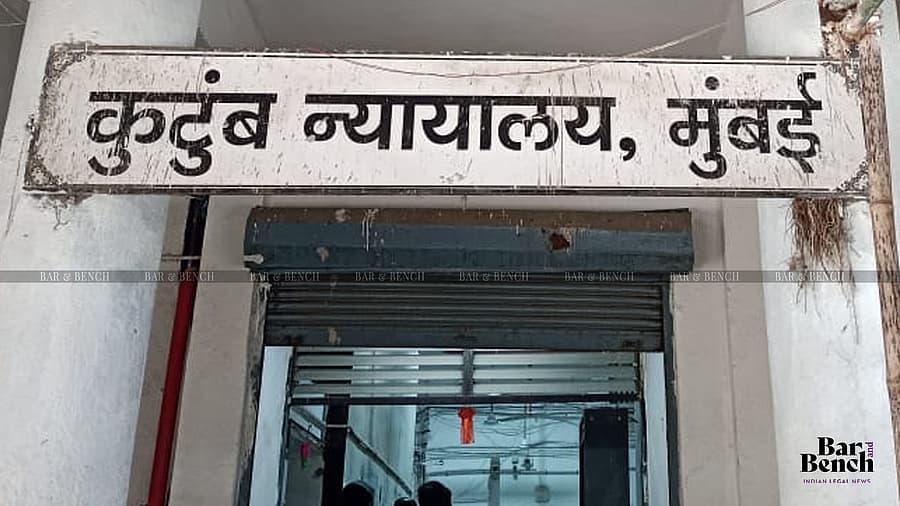
Supreme Court: Maharashtra Family Court Judges High Court Eligibility Denied
Summary
- The Supreme Court recently declined to reconsider its 2010 ruling on Maharashtra family court judges' High Court eligibility.
- This ruling maintains that these judges do not hold a "judicial office" under Article 217 for High Court appointments.
- Seven family court judges had petitioned the Court to declare their roles as judicial offices for elevation purposes.
- The Court found no sufficient factual or legal changes to justify revisiting the precedent set in *ST Joshi v. High Court of Judicature at Bombay*.
- The primary reason cited for this distinction is Maharashtra's maintenance of family court judges in an exclusive cadre, separate from the State judicial service.
Supreme Court Upholds Precedent on High Court Eligibility
The Supreme Court explicitly identified Maharashtra's maintenance of family court judges within an exclusive cadre, distinct from the broader State judicial service, as the fundamental reason for their ineligibility for High Court elevation.
The Supreme Court of India recently affirmed its long-standing position regarding the eligibility of Maharashtra family court judges for elevation to the High Court. A bench comprising Chief Justice of India Surya Kant, Justice Joymalya Bagchi, and Justice V Mohana declined a plea from seven family court judges. These petitioners had sought a declaration that their roles as presiding officers of family courts should be recognized as holding a "judicial office" for the purposes of High Court appointments under Article 217 of the Constitution, which outlines the eligibility criteria for such elevated positions.
This decision effectively maintains the existing legal hurdle for judges within Maharashtra's family court system, solidifying a precedent that has significant implications for their career progression. The apex court's refusal to revisit its previous ruling means that, for the time being, these judicial officers will continue to be deemed ineligible for High Court elevation based on their current cadre status. This outcome underscores a persistent structural distinction within the state's judicial service that directly impacts judicial appointments.
Legal Context and Arguments for Reconsideration
The petitioners, represented by Senior Advocate R Basant, had urged the Supreme Court to reconsider its 2010 judgment in the seminal case of *ST Joshi v. High Court of Judicature at Bombay*. That landmark ruling had established that judges belonging to Maharashtra's separate family court cadre do not hold a "judicial office" as defined for High Court eligibility under Article 217. This distinction has been a point of contention for over a decade, directly impacting Maharashtra family court judges High Court eligibility.
Senior Advocate Basant argued that circumstances had materially changed since the 2010 decision, warranting a fresh examination of the issue. He highlighted that for the past 36 years, Maharashtra has exclusively appointed either judicial officers or advocates to serve as family court judges, suggesting this evolution in appointment practices constituted a significant shift. However, the Supreme Court remained unpersuaded by this argument, with Chief Justice Surya Kant questioning the basis for revisiting the issue "unless and until there is any change, factually or legally." The Court found no compelling reason to overturn the established precedent, reinforcing the existing interpretation of Article 217 judicial office eligibility.
The Separate Cadre Hurdle and Its Implications
The Supreme Court explicitly identified Maharashtra's maintenance of family court judges within an exclusive cadre, distinct from the broader State judicial service, as the fundamental reason for their ineligibility for High Court elevation. This structural separation, rather than the nature of their judicial duties, creates the persistent legal challenge and differentiates Maharashtra's system from others in India.
Chief Justice Surya Kant remarked that "The problem lies in the creation of a separate cadre for family courts," pinpointing this administrative distinction as the core issue. This unique organizational structure in Maharashtra, which contrasts with systems in other states, prevents family court judges from being classified as holding a "judicial office" in the context of Supreme Court India judicial appointments. The decision reinforces that the Maharashtra family court cadre status, being separate, directly impacts the career progression and High Court eligibility of its judges, creating a distinct hurdle for those seeking elevation within the India judicial service. This structural distinction remains firmly in place, impacting judicial appointment criteria for this specific group of officers.
Practical Implications
This Supreme Court decision confirms the persistent legal hurdle for judges from Maharashtra's separate family court cadre regarding elevation to the High Court, as they are not deemed to hold a 'judicial office' under Article 217. Lawyers advising judicial officers or involved in judicial service matters in Maharashtra should be aware that this structural distinction remains firmly in place, impacting career progression and judicial appointment criteria.
Source
How does this affect you?
Get an AI analysis of this article grounded in your jurisdictions, practice areas, and any policy documents you've uploaded to Wansom.
Finish Reading the Full Story and the Expert Analysis.
Wansom is AI and can make mistakes.