
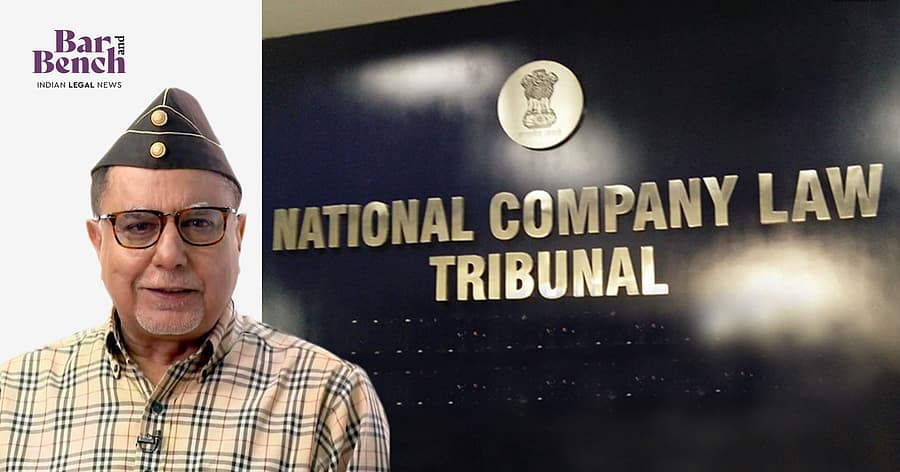
NCLT: Subhash Chandra Repayment Plan Lacks Consensus, Referred to President
Summary
- The NCLT has declared no majority verdict on Zee founder Subhash Chandra's repayment plan due to divergent opinions among tribunal members.
- The case has been referred to the NCLT President under Section 419(5) of the Companies Act, 2013, as no order could be passed.
- The original two-member bench delivered a split verdict on September 3, 2025, with one member approving conditionally and the other rejecting the plan entirely.
- A third member's 144-page opinion, initially perceived as an approval, ultimately did not create a consensus.
- This development highlights the procedural complexities and potential for prolonged resolution in high-profile personal insolvency cases in India.
What Happened
The NCLT's declaration of 'no majority view' and the subsequent referral to the NCLT President under Section 419(5) of the Companies Act, 2013, highlight a critical procedural safeguard within India's insolvency framework.
The National Company Law Tribunal (NCLT) has recently determined that no majority verdict has been reached concerning the proposed repayment plan for Zee founder Subhash Chandra. This significant development in the personal insolvency resolution process means that the tribunal cannot issue an order on the plan at this juncture. The NCLT's decision stems from a critical divergence in opinion among its members, specifically noting that the third member's assessment differed substantially from the views expressed by both members of the original bench.
Consequently, the matter, which involves creditors like India Bulls, has now been referred to the NCLT President. This referral is mandated under Section 419(5) of the Companies Act, 2013, a procedural step taken when a multi-member bench fails to achieve a consensus. The tribunal explicitly stated that "no majority view has emerged in the matter," thereby preventing any immediate resolution despite earlier widespread interpretations that a 144-page opinion delivered by the third member, Nilesh Sharma, on August 25, had approved Chandra’s repayment proposal. This latest turn underscores the complex procedural landscape of personal insolvency resolution in India.
The Divergent Opinions
The current impasse originates from a split verdict initially delivered by the two-member bench comprising Judicial Member Ashok Kumar Bhardwaj and Technical Member Reena Sinha Puri on September 3, 2025. Their individual findings presented fundamentally different approaches to Subhash Chandra's insolvency repayment plan. Judicial Member Bhardwaj had indicated his approval of the plan, but crucially, he limited its binding effect exclusively to those creditors who had actively supported it. This approach would have permitted dissenting banks and financial institutions, such as India Bulls, to pursue their own independent legal remedies for debt recovery.
In stark contrast, Technical Member Puri outright rejected the entire repayment plan. Her reasoning centered on what she identified as serious procedural violations that had compromised the personal insolvency resolution process. Furthermore, Puri raised significant questions regarding the legitimacy of including certain entities in the creditor voting process, alleging their association with Subhash Chandra. The subsequent opinion from the third member, Nilesh Sharma, on August 25, while initially perceived as a potential approval, ultimately failed to align sufficiently with either of the original members' positions, leading to the current declaration of no consensus.
Legal and Procedural Implications
The NCLT's declaration of 'no majority view' and the subsequent referral to the NCLT President under Section 419(5) of the Companies Act, 2013, highlight a critical procedural safeguard within India's insolvency framework. This mechanism is designed to address situations where multi-member benches cannot reach a unanimous or majority decision, ensuring that complex cases, particularly those involving high-profile individuals like the Zee founder, do not remain in perpetual limbo. The referral process aims to provide a definitive resolution by allowing the President to constitute a larger bench or take other appropriate steps to break the deadlock.
This development underscores the inherent complexities and potential for prolonged resolution in personal insolvency cases before the NCLT. The divergent opinions among the tribunal members, ranging from conditional approval to outright rejection based on procedural irregularities and creditor eligibility concerns, illustrate the meticulous scrutiny applied to such repayment plans. For legal practitioners and creditors involved in personal insolvency resolution in India, this case serves as a pertinent example of how a lack of consensus can significantly extend timelines and introduce further layers of judicial review.
Why It Matters
The ongoing inability to achieve a consensus on Subhash Chandra's repayment plan carries significant implications for all parties involved and for the broader landscape of personal insolvency resolution in India. For creditors, including India Bulls, the absence of a definitive NCLT order means continued uncertainty regarding the recovery of their debts, potentially leading to further delays and increased legal costs. The referral to the NCLT President, while a necessary procedural step, signifies that a final resolution is still some distance away, prolonging the financial and legal limbo for all stakeholders.
This case also sets a precedent regarding the procedural robustness required in personal insolvency matters, especially when dealing with split verdicts from the NCLT. It reinforces the importance of clear, unambiguous repayment proposals and meticulous adherence to procedural norms to avoid challenges and ensure a smoother resolution process. The NCLT Subhash Chandra repayment plan no consensus outcome emphasizes that even with extensive deliberations, the path to a final decision can be fraught with judicial disagreement, ultimately impacting the efficiency and predictability of the personal insolvency resolution framework under the Companies Act, 2013.
Practical Implications
This development highlights the procedural complexities and potential for prolonged resolution in personal insolvency cases before the NCLT, particularly when multi-member benches deliver split verdicts. Lawyers advising on insolvency matters should note the referral mechanism under Section 419(5) of the Companies Act, 2013, and prepare clients for potential delays and further escalation when consensus on repayment plans is not achieved.
Source
How does this affect you?
Get an AI analysis of this article grounded in your jurisdictions, practice areas, and any policy documents you've uploaded to Wansom.
Finish Reading the Full Story and the Expert Analysis.
Wansom is AI and can make mistakes.