
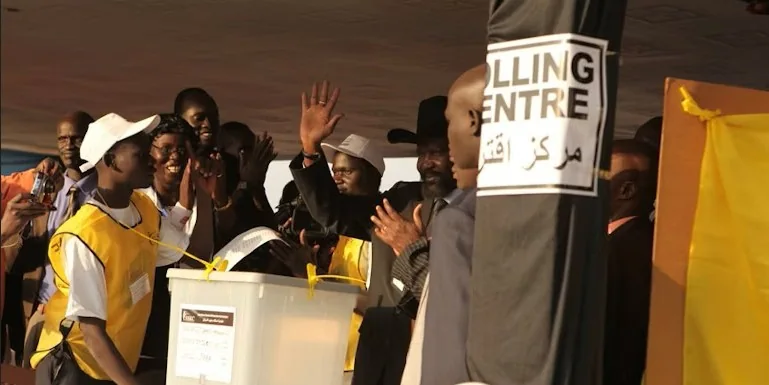
RJMEC Report: South Sudan Election Credibility at Risk Over Peace Deal Delays
The Reconstituted Joint Monitoring and Evaluation Commission (RJMEC) reported on Wednesday that South Sudan's planned December 22 elections face significant credibility risks due to unresolved political disputes, incomplete security arrangements, and delays in implementing the 2018 peace agreement. In its third-quarter report, RJMEC highlighted that several key commitments under the 2018 Revitalized Agreement on the Resolution of the Conflict in the Republic of South Sudan (R-ARCSS) remain unfulfilled, raising serious concerns about the conditions for a peaceful end to the country's transitional period. Specifically, the commission noted a lack of consensus among political parties regarding the legal and political framework for the elections, coupled with persistent security concerns that threaten public confidence in the process.
This development carries substantial legal significance for practitioners, businesses, and the public, as it underscores the fragility of the rule of law and the peace process in South Sudan. The RJMEC's criticism of the government's handling of proposed amendments to the 2018 peace agreement, particularly their submission to the Transitional National Legislature without the required endorsement by at least two-thirds of RJMEC's voting members under Article 8.4, raises fundamental questions about the legitimacy of any subsequent legislative actions. These proposed changes, aimed at ending the transitional period and dissolving the Revitalized Transitional Government of National Unity (RTGoNU) arrangements to enable elections without full signatory consensus, directly challenge the agreed-upon legal framework. Furthermore, the unilateral dissolution of the Presidency was deemed contrary to Article 1.1.4 of the peace agreement, which mandates the transitional government's continuation until elections, unless otherwise stipulated.
The legal context for this situation is primarily the 2018 R-ARCSS, which serves as the foundational legal document guiding South Sudan's transitional period and path to democratic elections. Articles 8.4 and 1.1.4 of this agreement are central to the RJMEC's findings, outlining the procedures for amending the agreement and the mandate of the transitional government, respectively. The RJMEC itself is a critical oversight body established by the R-ARCSS to monitor and evaluate its implementation. Key parties involved include the RJMEC, the Government of South Sudan, the Transitional National Legislature, various political parties, and the Revitalized Transitional Government of National Unity (RTGoNU). The outcome of this matter, specifically regarding the elections or the proposed amendments, is not yet reported in the excerpt.
For attorneys and businesses operating in or considering engagement with South Sudan, this report signals heightened political and legal instability. Practitioners must closely monitor the ongoing political and legal developments surrounding the R-ARCSS and the impending elections. The reported non-compliance with established amendment procedures could lead to significant legal challenges concerning the validity of the electoral framework, the legitimacy of any government formed, and the enforceability of contracts or agreements tied to the transitional government. Robust due diligence is essential, accounting for the increased risk of legal disputes arising from constitutional and peace agreement violations. Understanding the RJMEC's role and pronouncements is crucial for assessing the evolving legal and political landscape and advising clients accordingly.
How does this affect you?
Get an AI analysis of this article grounded in your jurisdictions, practice areas, and any policy documents you've uploaded to Wansom.
Finish Reading the Full Story and the Expert Analysis.
Wansom is AI and can make mistakes.