
Judge Alala Deng: Riek Machar Trial Video Evidence Premature
Summary
- A special court in South Sudan dismissed Dr. Riek Machar's request to play video footage during his trial.
- Presiding Judge Dr. James Alala Deng ruled the application premature because charges had not yet been framed.
- The court stated that evidence, including video, would only be considered at the appropriate procedural stage.
- Machar, a 74-year-old opposition leader, sought to use videos featuring senior government officials to support his arguments.
- The proceedings were adjourned to October 26, 2026, for the continuation of the fifth accused's examination.
Court Rejects Video Evidence Application
Judge Dr. James Alala Deng clarified that the court's rejection of the video evidence application stemmed from the fact that the proceedings had not yet reached the appropriate stage for such evidence to be considered.
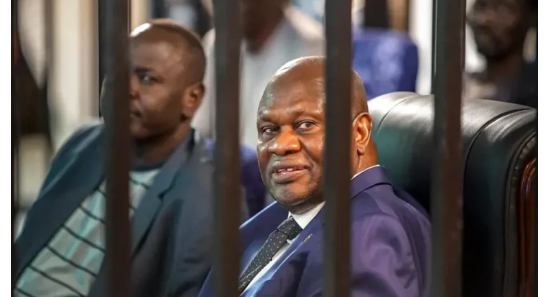
The special court overseeing the criminal proceedings against Dr. Riek Machar, the suspended First Vice President and a 74-year-old opposition leader, along with seven co-accused, recently dismissed an application by Machar to present video footage. During the 123rd session of the trial, Machar sought permission to play videos that reportedly featured senior government officials, intending to bolster his arguments in the ongoing case. However, Presiding Judge Dr. James Alala Deng ruled that the request was premature, thereby rejecting the application.
Lead prosecutor Ajo Ony’Ohisa Igele supported the court's decision, contending that the application was indeed premature. Igele argued that the fifth accused, referring to Machar, should instead focus on responding to the charges leveled against him, rather than attempting to introduce video evidence at this particular juncture of the proceedings. Conversely, defence counsel Dr. Geri Raymond Legge challenged the prosecution's stance, asserting that the court should have considered the application. Legge also refuted claims that the defence was attempting to turn the proceedings into a political rally, clarifying that the videos were intended to inform the broader public about the matter. The court subsequently adjourned the proceedings, scheduling the next session for October 26, 2026, when the examination of the fifth accused is slated to resume.
Admissibility of Evidence and Procedural Stage
Judge Dr. James Alala Deng clarified that the court's rejection of the video evidence application stemmed from the fact that the proceedings had not yet reached the appropriate stage for such evidence to be considered. He explicitly stated that the court had not yet framed the charges against the accused, rendering the application for evidence presentation premature. Deng emphasized that evidence would be taken into account at the correct procedural moment, in strict adherence to established legal procedures.
The judge instructed Dr. Riek Machar to concentrate on understanding and responding to the specific offenses he is accused of committing. He reiterated that the accused would be afforded an opportunity to respond in accordance with applicable procedures once the proceedings advanced to the evidence stage. This ruling underscores the court's adherence to a structured legal process, ensuring that all procedural steps, including the framing of charges, precede the introduction of substantive evidence like video footage in the South Sudan court.
Court Conduct and Related Investigations
Beyond the issue of video evidence, Judge Deng issued a caution against transforming the court proceedings into a political rally. He stressed the importance of treating all accused persons equally before the court and ensuring their compliance with its established rules. Deng also advised Machar to refrain from commenting on previous court decisions or matters that were not directly pertinent to the issues currently under consideration by the court. This directive aimed to maintain the focus and decorum of the judicial process.
Separately, Judge Deng informed the court that an investigation into alleged threats against Dr. Riek Machar, his defence team, and his co-accused had been concluded. He indicated that the findings of this investigation would be referred to the appropriate authorities, specifically mentioning the Attorney General and the police, for further action. This development highlights the court's attention to the safety and integrity of the participants in the Dr. Riek Machar criminal proceedings, even as it maintains strict procedural control over the admissibility of video evidence in South Sudan.
Practical Implications
This ruling clarifies that in South Sudan's special court, evidence, including video footage, must be introduced at the appropriate procedural stage, specifically after charges have been framed. Lawyers should advise clients that attempts to introduce evidence prematurely will be rejected, emphasizing the importance of adhering to the court's procedural timeline for evidence submission.
Source
How does this affect you?
Get an AI analysis of this article grounded in your jurisdictions, practice areas, and any policy documents you've uploaded to Wansom.
Finish Reading the Full Story and the Expert Analysis.
Get the latest legal & regulatory intelligence in South Sudan
Wansom is AI and can make mistakes.