
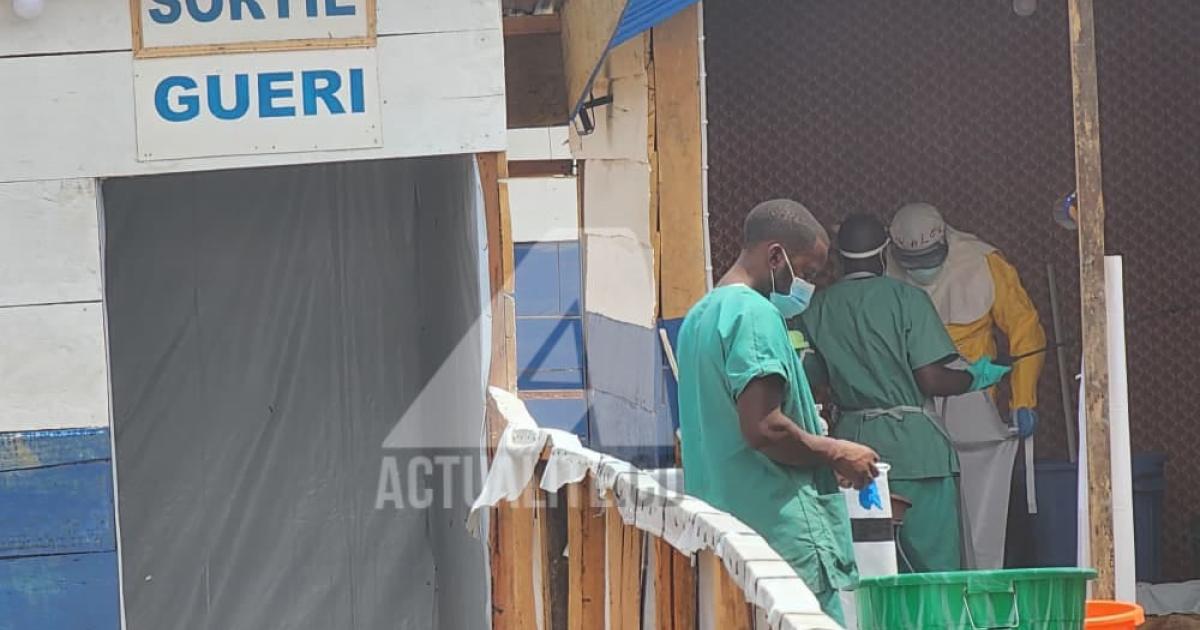
DRC: RDC Ebola Funds Mismanagement Undermines Response
Summary
- A three-month journalistic investigation uncovered significant financial irregularities within the Democratic Republic of Congo's Ebola response.
- Key issues identified included unpaid staff, the presence of fictitious personnel, and poorly traceable funds.
- These widespread financial problems reportedly weakened the overall effectiveness of the Ebola response.
- The findings suggest systemic vulnerabilities in financial oversight and accountability within public health operations in the DRC.
Investigation Uncovers Financial Mismanagement
The cumulative effect of these reported financial mismanagement issues has been a significant weakening of the overall Ebola response in the Democratic Republic of Congo.
A three-month journalistic inquiry into the management of the Ebola response in the Democratic Republic of Congo (DRC) has brought to light significant financial irregularities and operational deficiencies. The investigation uncovered instances of staff working without pay, a critical issue that can severely undermine morale and the effectiveness of public health initiatives. This problem of RDC Ebola unpaid staff suggests a fundamental breakdown in financial administration within the response efforts.
Further findings from the probe pointed to the existence of fictitious personnel, commonly known as "ghost workers," on the payrolls. This revelation indicates a potential scheme of fraud where funds allocated for legitimate human resources were likely diverted. The presence of Ebola ghost workers Congo represents a serious form of Congo Ebola response corruption, inflating operational costs while providing no actual service to the public health crisis.
The journalistic team also highlighted a pervasive issue of poorly traceable funds within the DRC Ebola response. This lack of clear financial accountability means that significant portions of the money intended for combating the epidemic could not be properly tracked to their ultimate use. Such Ebola funds traceability DRC challenges underscore a broader problem of transparency and oversight, making it difficult to ensure resources were deployed efficiently and ethically. These collective findings paint a picture of widespread DRC Ebola financial irregularities.
Impact on Public Health Efforts
The cumulative effect of these reported financial mismanagement issues has been a significant weakening of the overall Ebola response in the Democratic Republic of Congo. The presence of RDC Ebola unpaid staff can lead to demotivation, absenteeism, and a decline in the quality of care provided by frontline workers, directly impeding efforts to contain the deadly virus. When those tasked with critical public health duties are not compensated, the integrity and sustainability of the entire operation are jeopardized.
Moreover, the diversion of resources through fictitious personnel schemes means that fewer funds were available for essential supplies, equipment, and legitimate personnel needed to combat the outbreak effectively. This form of Congo Ebola response corruption not only wastes precious resources but also erodes public trust in the institutions responsible for managing the crisis. The operational capacity of the response is inevitably compromised when funds are siphoned off through fraudulent means like Ebola ghost workers Congo.
The inability to trace funds further exacerbates these problems, creating an environment ripe for further abuse and making it nearly impossible to implement corrective measures. Without clear Ebola funds traceability DRC, it becomes challenging to assess where aid is most needed and how effectively it is being utilized. These DRC Ebola financial irregularities collectively contributed to a less robust and less effective public health intervention, potentially prolonging the crisis and increasing its human cost.
Broader Context of Oversight
The findings from the three-month investigation underscore critical vulnerabilities in the financial oversight mechanisms governing large-scale humanitarian and public health operations in the Democratic Republic of Congo. The reported RDC Ebola funds mismanagement, characterized by unpaid staff, fictitious personnel, and untraceable expenditures, points to systemic weaknesses that extend beyond individual instances of malfeasance. Such widespread DRC Ebola financial irregularities suggest a need for more rigorous internal controls and external auditing processes.
The very existence of Ebola ghost workers Congo and the challenge of Ebola funds traceability DRC indicate a significant lack of transparency that can undermine international and local efforts to provide aid. When funds cannot be accounted for, it not only facilitates corruption but also deters future investment and support from donor organizations and governments. This environment of opaque financial practices ultimately hinders the country's capacity to respond to future health emergencies effectively.
This journalistic inquiry, which spanned three months, serves as a crucial reminder of the importance of independent scrutiny in ensuring accountability for public funds, particularly in crisis situations. The reported weakening of the Ebola response due to these issues highlights how financial integrity is directly linked to the success of humanitarian interventions. Addressing these deep-seated issues of Congo Ebola response corruption is paramount for strengthening future public health initiatives in the region.
Practical Implications
This news highlights significant financial irregularities and potential corruption within the DRC's Ebola response. Lawyers and compliance officers advising organizations involved in humanitarian aid or public health initiatives in the DRC should be aware of heightened risks related to fund management, procurement, and personnel oversight, necessitating stringent due diligence and robust anti-corruption compliance frameworks.
Source
How does this affect you?
Get an AI analysis of this article grounded in your jurisdictions, practice areas, and any policy documents you've uploaded to Wansom.
Finish Reading the Full Story and the Expert Analysis.
Wansom is AI and can make mistakes.