
India Government: Article 142 Invoked to Quash CJP Protest FIRs
Summary
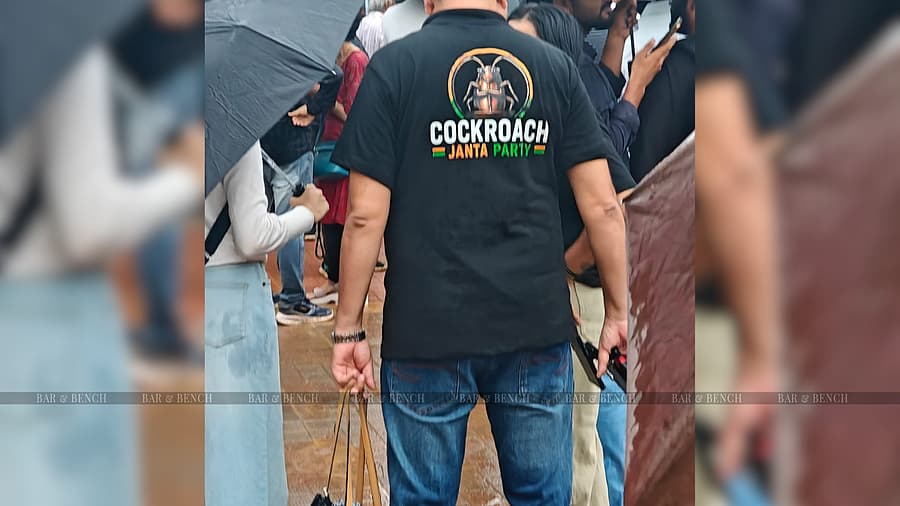
- India's central government has asked the Supreme Court to quash criminal cases against participants in recent Cockroach Janata Party (CJP) student protests at Jantar Mantar.
- Solicitor General Tushar Mehta invoked Article 142 of the Indian Constitution, seeking urgent listing of the plea before a bench led by CJI Surya Kant.
- CJI Kant indicated the court's openness to the request, stating there would be no issue if parties were reconciling.
- The CJP protests began in June over national exam paper leaks and gained momentum with activist Sonam Wangchuk's hunger fast.
- Police reportedly used lathi charges, teargas, and pellet guns during a July 20 march, with protests concluding after Education Minister Dharmendra Pradhan's resignation.
Government Seeks Quashing of Protest FIRs
The central government's decision to invoke Article 142 of the Indian Constitution in this context highlights the extraordinary powers vested in the Supreme Court to ensure complete justice, even in politically sensitive matters.
India's central government has formally petitioned the Supreme Court, requesting the quashing of criminal cases, specifically First Information Reports (FIRs), filed against individuals who participated in recent student protests led by the Cockroach Janata Party (CJP). These demonstrations took place at Jantar Mantar in Delhi. The matter was brought before a Supreme Court bench comprising Chief Justice of India (CJI) Surya Kant and Justices Joymalya Bagchi and V Mohana.
Solicitor General (SG) Tushar Mehta presented the government's plea, indicating an urgent need to file an interlocutory application. He explicitly stated the government's intention to invoke Article 142 of the Indian Constitution, which grants the Supreme Court special powers to deliver complete justice, for the purpose of quashing these FIRs. Chief Justice Kant responded positively to the request for an urgent listing, noting that the court would have no objection if the parties involved were in a process of reconciliation. SG Mehta's request for the matter to be listed the following day was subsequently granted by CJI Kant.
Background to the CJP Protests
The CJP-led student protests originated in June, sparked by a series of repeated leaks of national examination papers. The movement gained significant momentum following the involvement of climate rights activist Sonam Wangchuk, who joined the demonstrations and commenced a hunger fast in solidarity with the students.
The protests escalated on July 20 when participants attempted a 'Sansad Chalo' march towards the parliament. During this march, reports indicated that the Delhi Police and the Rapid Action Force (RAF) employed various crowd control measures, including lathi charges, teargas shelling, and the use of pellet guns, to disperse the CJP protestors. The demonstrations ultimately concluded days later, following the resignation of Education Minister Dharmendra Pradhan, a key demand put forth by the protesting students.
Article 142 and Judicial Discretion
The central government's decision to invoke Article 142 of the Indian Constitution in this context highlights the extraordinary powers vested in the Supreme Court to ensure complete justice, even in politically sensitive matters. This move to quash CJP protest FIRs through the court's special powers is a significant development, particularly given that the plea comes directly from the government itself, represented by SG Tushar Mehta. The court's willingness to consider the plea, especially CJI Kant's emphasis on reconciliation, underscores the broad discretionary authority available under Article 142.
This application for Jantar Mantar protest FIR quashing could set a precedent for how the India government Article 142 CJP FIRs cases are handled, potentially influencing future Cockroach Janata Party protest cases. The Supreme Court's exercise of Article 142 Indian Constitution special powers to intervene in criminal proceedings against protestors, particularly when reconciliation is a factor, offers a crucial insight into the evolving application of this constitutional provision.
Practical Implications
This development highlights the potential for the Indian Supreme Court to invoke its extraordinary powers under Article 142 to quash criminal proceedings, even against protestors, especially when reconciliation is indicated. Lawyers should monitor this case to understand the evolving scope and application of Article 142 in politically sensitive matters and its implications for advising clients facing similar charges or seeking to quash FIRs.
Source
How does this affect you?
Get an AI analysis of this article grounded in your jurisdictions, practice areas, and any policy documents you've uploaded to Wansom.
Finish Reading the Full Story and the Expert Analysis.
Wansom is AI and can make mistakes.