
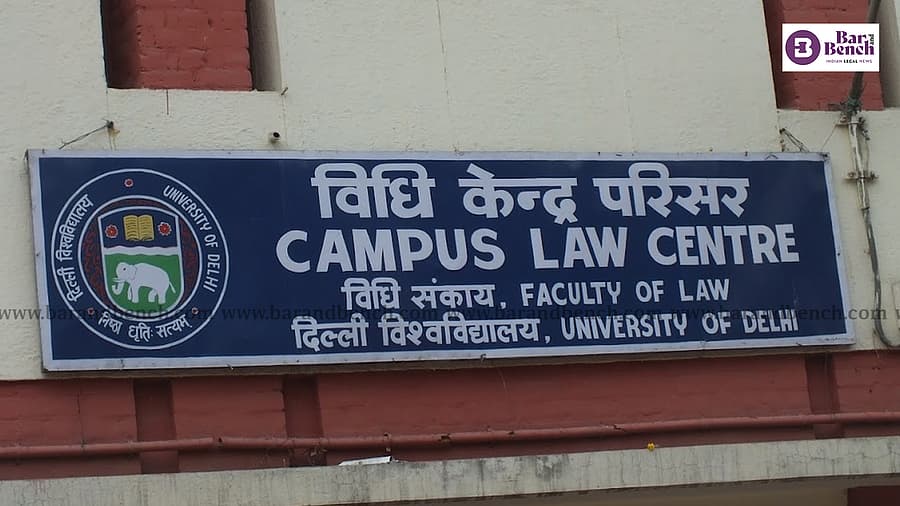
Delhi High Court: DU Student Exam Cheating Punishment Overturned
Summary
- The Delhi High Court set aside a Delhi University order cancelling an LL.B. student's semester exam papers.
- Justice Jasmeet Singh ruled the punishment was disproportionate, as active use of unfair means was not proven.
- The student was accused of cheating from a slip in a urinal during a Bharatiya Nyaya Sanhita exam on January 13, 2025.
- The University's Examination Disciplinary Committee initially debarred him, then reduced the penalty to cancelling all papers for the semester.
- The High Court found the inquiry report lacked a faculty statement confirming the student was *using* the material for cheating.
High Court Overturns Disciplinary Action Against DU Student
The Court explicitly stated that the cancellation of an entire semester's papers was not proportional, particularly because 'even on preponderance of probability, it has not been proved that the petitioner was found using the material for copying or cheating in the paper.'
The Delhi High Court recently intervened in a case involving a Delhi University (DU) LL.B. student, overturning a university order that had cancelled all his examination papers for a semester. Justice Jasmeet Singh, presiding over the matter, determined that the disciplinary measure imposed by the university was disproportionate to the alleged offense. This significant ruling underscores the judiciary's role in scrutinizing academic disciplinary actions, particularly concerning the standard of proof required for establishing misconduct.
The case originated from an incident on January 13, 2025, when the student was taking the Bharatiya Nyaya Sanhita paper. During the examination, he left the hall to use the washroom. A faculty member reportedly followed him and subsequently alleged that the student was found cheating from a slip while at the urinal. This accusation initiated a formal disciplinary process within the university system, leading to a series of actions against the student.
University's Disciplinary Process and Subsequent Appeal
Following the faculty member's allegation, the Delhi University issued a show cause notice to the student. This was followed by an inquiry conducted by the University's Examination Disciplinary Committee (EDC) into the alleged use of unfair means. Initially, the Committee decided to debar the student from all examinations until the conclusion of the subsequent semester, a sanction falling under Clause C of the applicable guidelines.
The student subsequently appealed this decision. Upon review, the Examination Disciplinary Committee reduced the punishment, applying Clause B of the guidelines, which resulted in the cancellation of all his papers for that specific semester. Dissatisfied with this revised outcome, the student escalated the matter by challenging the university's decision before the Delhi High Court. It is notable that by the time the case reached the High Court, the University had already released the student's results for all other subjects, with the exception of the paper where the unfair means case was registered.
Judicial Emphasis on Proportionality and Evidence
Justice Jasmeet Singh's ruling highlighted a critical deficiency in the university's disciplinary process, specifically concerning the evidence presented. The Court observed that the inquiry report lacked a definitive statement from the faculty member explicitly confirming that the petitioner was actually *using* the material for copying or cheating during the examination. This absence of direct evidence of active use was central to the Delhi High Court exam unfair means decision.
The Court explicitly stated that the cancellation of an entire semester's papers was not proportional, particularly because "even on preponderance of probability, it has not been proved that the petitioner was found using the material for copying or cheating in the paper." This pronouncement by Justice Jasmeet Singh's exam ruling sets a precedent regarding the high evidentiary standard required in cases of alleged academic misconduct, emphasizing that mere possession of unauthorized material may not suffice for severe penalties unless active use can be substantiated. This ruling provides crucial guidance for educational institutions in India regarding the proportionality academic punishment India and the necessity of robust proof beyond mere suspicion in disciplinary actions against students, impacting future Delhi HC DU student exam cheating punishment cases.
Practical Implications
This ruling provides a critical precedent for lawyers representing students accused of academic misconduct, highlighting the high standard of proof required to establish actual use of unfair means. It also guides educational institutions on ensuring proportionality in disciplinary actions and the necessity of robust evidence beyond mere possession.
Source
How does this affect you?
Get an AI analysis of this article grounded in your jurisdictions, practice areas, and any policy documents you've uploaded to Wansom.
Finish Reading the Full Story and the Expert Analysis.
Wansom is AI and can make mistakes.