
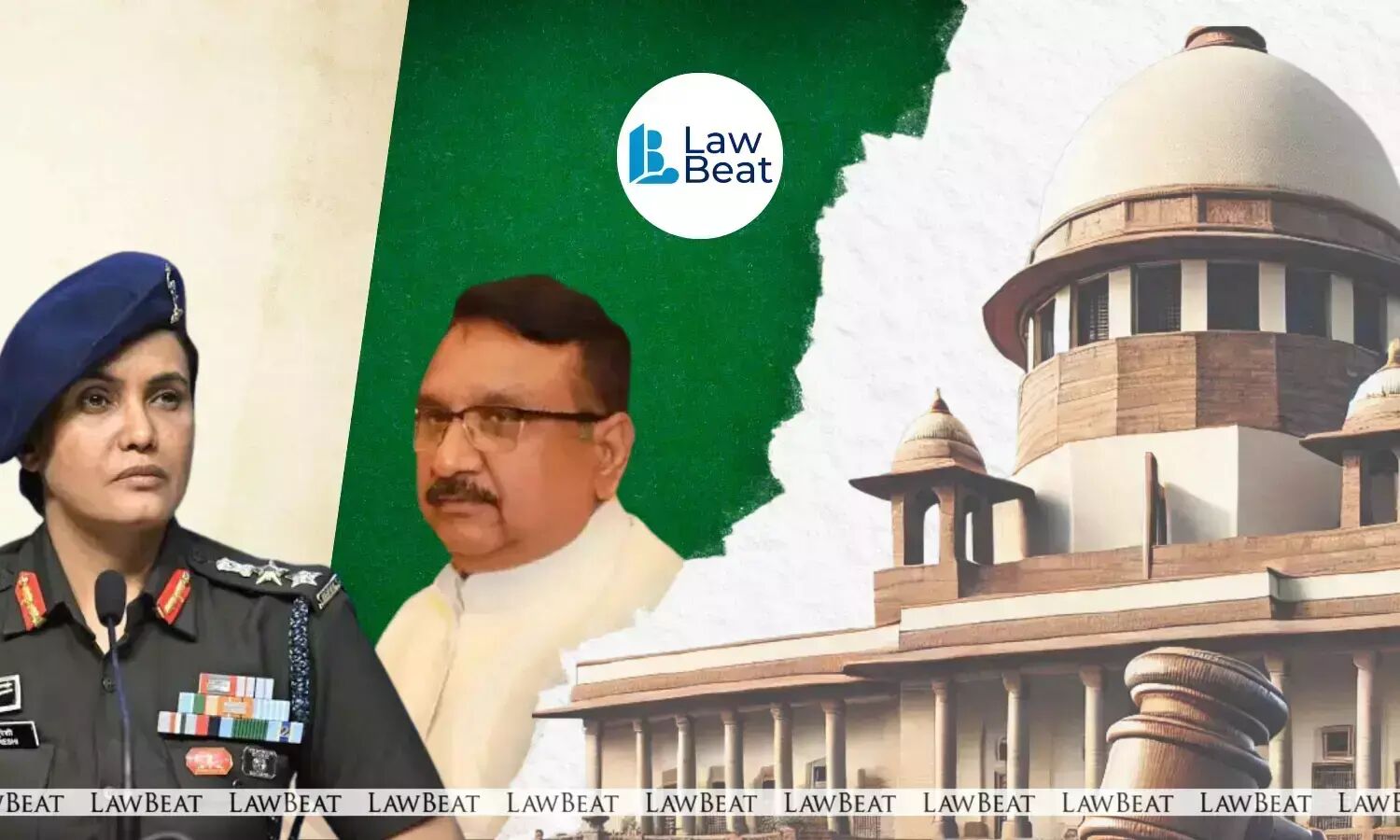
Supreme Court: Governor Sanction Vijay Shah Col Sofiya Qureshi Decision Imminent
Summary
- The Supreme Court was informed that a decision on sanction for prosecution against Minister Kunwar Vijay Shah is expected imminently.
- The case stems from Shah's controversial remarks in 2025, referring to Colonel Sofiya Qureshi as a 'sister of terrorists'.
- Shah's petitions challenge a Madhya Pradesh High Court order directing the registration of an FIR against him.
- The High Court took suo motu cognizance of Shah's comments, describing them as 'dangerous' and a threat to constitutional values.
- The Supreme Court has repeatedly questioned the timing and sincerity of Shah's apologies throughout the proceedings.
Sanction Decision Imminent for Minister Vijay Shah
The Supreme Court has consistently emphasized that apologies, particularly from public figures, must be timely and demonstrate genuine contrition, cautioning against attempts to test the court's patience.
The Supreme Court of India was recently apprised that a decision regarding the sanction for prosecution against Minister Kunwar Vijay Shah is expected shortly. This development comes as the Court continues to hear petitions filed by Shah, which challenge a suo motu order issued by the Madhya Pradesh High Court. The High Court's directive called for the registration of a First Information Report (FIR) against the minister following controversial remarks he made concerning Colonel Sofiya Qureshi.
During proceedings on August 31, 2026, a bench comprising Chief Justice of India Surya Kant, Justice Joymalya Bagchi, and Justice V Mohana was informed by Assistant Solicitor General KM Nataraj that the Governor's decision on the sanction was anticipated by the following day. The case centers on Shah's comments, made during a public event, where he referred to Colonel Qureshi as a 'sister of terrorists'. The Supreme Court had previously instructed the Madhya Pradesh government to make a determination on granting sanction for prosecution against the BJP leader within a two-week timeframe.
Court Scrutiny Over Apologies and Accountability
Throughout the legal proceedings, the Supreme Court has expressed significant reservations regarding the timing and sincerity of Minister Shah's apologies. Senior Advocate Maninder Singh, representing Shah, informed the bench that his client had publicly apologized the day after making the remarks. However, the Chief Justice of India, Surya Kant, questioned the delay, noting in May that Shah should have apologized immediately. CJI Kant also remarked on the articulate nature of politicians, suggesting they are adept at both praise and, by implication, timely apologies.
Further complicating Shah's defense, the Court had previously criticized an online apology issued by the minister in July 2025. A bench including Justices Surya Kant and Joymalya Bagchi pointedly asked, 'Where is the apology?', highlighting the lack of a public apology for the alleged defamatory statements. The Court observed that Shah's conduct was testing its patience and raising doubts about his intentions and bona fides. Despite Shah's counsel submitting that an apology had been placed on record and the minister was cooperating with the inquiry, the bench responded sharply, with the CJI stating, 'It is too late to tender any apology,' and recalling earlier comments on the nature of the submitted apology. The Supreme Court had also directed the Madhya Pradesh government to constitute a Special Investigation Team (SIT) of senior officers on May 19, with the Director General of Police subsequently forming the SIT and presenting a sealed report to the court, which was opened during a public hearing.
High Court's Strong Condemnation of Remarks
The genesis of the current legal challenge lies in the Madhya Pradesh High Court's suo motu cognizance of Minister Shah's comments on May 14, 2025. The Jabalpur Bench of the High Court initiated action after Shah's remarks, made during a public event in Mhow, referred to Colonel Qureshi in terms that were described as both communal and sexist. He implied that she was sent as 'revenge' against terrorists, prompting the High Court's intervention.
The High Court unequivocally condemned Shah's statements, characterizing them as 'dangerous,' 'disparaging,' and employing 'language of the gutters.' It concluded that these remarks amounted to prima facie offenses under stringent criminal provisions. Furthermore, the High Court emphasized that such statements not only stigmatize the Muslim community but also pose a direct threat to the constitutional values of unity and fraternity within the nation. This strong judicial stance underscored the gravity with which public officials' speech is viewed, particularly when it has the potential to incite division or prejudice.
Implications for Public Officials and Legal Process
This case, titled Kunwar Vijay Shah vs. The High Court of Madhya Pradesh, underscores the Supreme Court's rigorous scrutiny of public officials' conduct and the procedural intricacies involved in obtaining sanction for prosecution, even for high-ranking individuals. The Court's consistent questioning of Minister Shah's apologies highlights its expectation that public figures demonstrate genuine contrition and accountability for their words, especially when those words are deemed inflammatory or divisive. The repeated emphasis on the timeliness and sincerity of apologies serves as a significant precedent for how courts may assess remedial actions by public figures.
Moreover, the Madhya Pradesh High Court's proactive suo motu action demonstrates the judiciary's role in safeguarding constitutional principles and intervening when public statements threaten social cohesion. The detailed condemnation of Shah's remarks by the High Court, labeling them as a threat to unity and fraternity, reinforces the legal system's commitment to upholding secular and inclusive values. The ongoing proceedings illustrate the robust legal framework in India designed to hold even powerful political figures accountable for their public utterances, particularly when they cross into areas of communal or sexist insensitivity.
Practical Implications
This case demonstrates the Supreme Court's scrutiny of public officials' conduct and the process for obtaining sanction for prosecution, even for high-ranking individuals. Lawyers should note the Court's emphasis on timely and genuine apologies, and the potential for suo motu action by High Courts against inflammatory public statements, informing advice to clients on speech and accountability.
Source
How does this affect you?
Get an AI analysis of this article grounded in your jurisdictions, practice areas, and any policy documents you've uploaded to Wansom.
Finish Reading the Full Story and the Expert Analysis.
Wansom is AI and can make mistakes.