
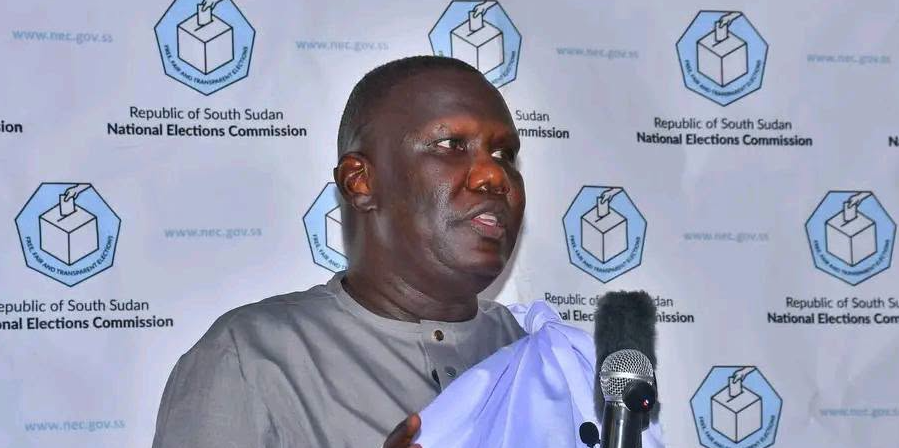
South Sudan: Gabriel Bol Deng Election Neutrality Questioned Amid Kiir Ties
Summary
- Gabriel Bol Deng, the new chairperson of South Sudan's National Elections Commission, has defended his neutrality amidst questions regarding his ties to President Salva Kiir.
- Concerns arose due to Deng sharing a community of origin with President Kiir and having previously served in a senior administrative role within the president's office.
- Deng asserted that his performance and adherence to the transitional constitution and national election law should be the basis for judgment, not his background.
- The recently signed Amended National Elections Act allows the incumbent president to retain constitutional powers during the election period and separates the vote from other constitutional processes.
- The December 22, 2026 election is scheduled to be South Sudan's first general election since gaining independence in 2011.
Scrutiny Over Election Leadership
Ultimately, the credibility of the upcoming South Sudan 2026 general election will hinge on the perceived impartiality of its leadership and the transparent application of the newly enacted electoral framework.
The recent appointment of Gabriel Bol Deng as the chairperson of South Sudan's National Elections Commission (NEC) has immediately sparked questions regarding his neutrality, raising concerns about the South Sudan 2026 general election credibility. Journalists pressed Deng on his close ties to President Salva Kiir, highlighting that both hail from the Awan Chan community in Gogrial West County, Warrap State. Furthermore, Deng previously served in a senior administrative capacity within President Kiir's office, holding the position of deputy chief administrator for finance and administration.
These connections have fueled public debate as the nation prepares for its first general election since achieving independence in 2011. President Kiir appointed Deng to lead the NEC just last week, replacing Prof. Abednego Akok Kacuol approximately three months before the scheduled December 22, 2026 vote. No public explanation was provided for the removal of the former chairperson, adding to the scrutiny surrounding the leadership transition at such a critical juncture for the South Sudan electoral process.
Chairperson Deng's Rebuttal and Record
In response to the mounting inquiries, Gabriel Bol Deng firmly defended his impartiality during a press conference in Juba. He asserted that his performance and actions in office, rather than his community of origin or tribal affiliation, should be the sole basis for judgment by the people of South Sudan. Deng emphasized his commitment to upholding the transitional constitution and the national election law, stating these would be his guiding principles in executing his duties as the South Sudan National Elections Commission chairperson.
Deng also highlighted his extensive public service record and prior experience within the electoral body itself. Before his elevation to chairperson, he served as the NEC's secretary general, describing himself as the "engine" of the institution. He argued against excluding a qualified citizen from public office simply because they share a geographical origin with the president. His personal history includes joining the Sudan People's Liberation Army's liberation struggle as a teenager in 1987, training as a member of the Red Army, and deployment in the Juba area in 1992. He later became one of the "Lost Boys," studying in Kakuma, Kenya, and subsequently in the United States, where he earned a master’s degree in mathematics education.
The Evolving Electoral Framework
Further complicating the landscape for the upcoming polls is the recently enacted Amended National Elections Act South Sudan, signed into law by President Kiir on Monday. This crucial legislation introduces significant changes to the electoral framework. Notably, it formally separates the conduct of elections from the completion of a permanent constitution and a national population and housing census, processes that have long been intertwined with the nation's political transition.
A key provision of the amended Act allows the incumbent president to remain in office and continue exercising constitutional powers throughout the election period. This aspect, coupled with the concerns surrounding Gabriel Bol Deng South Sudan election neutrality, contributes to broader South Sudan electoral process concerns. The December 22, 2026 election represents a monumental step for the young nation, marking its inaugural general election since gaining independence in 2011, making the integrity of its foundational legal and administrative structures paramount.
Weighing Electoral Neutrality and Future Stability
The confluence of Gabriel Bol Deng's appointment, his perceived Salva Kiir Gabriel Bol Deng ties, and the provisions of the Amended National Elections Act South Sudan presents a complex scenario for the legitimacy of the 2026 general election. While Deng insists his actions will speak for themselves in the coming months, the initial scrutiny underscores the deep-seated concerns about political influence over independent institutions. Lawyers advising clients on political risk or investment in South Sudan should be acutely aware of these potential challenges to the electoral outcome's legal certainty and stability.
Ultimately, the credibility of the upcoming South Sudan 2026 general election will hinge on the perceived impartiality of its leadership and the transparent application of the newly enacted electoral framework. The nation's first post-independence general election carries immense weight, and any doubts regarding the neutrality of the National Elections Commission chairperson could have far-reaching implications for governance and the future trajectory of South Sudan.
Practical Implications
Lawyers advising clients on political risk or investment in South Sudan should be aware of potential challenges to the legitimacy of the upcoming general election, stemming from concerns over the National Elections Commission chairperson's perceived neutrality and ties to the incumbent president. This situation could impact the stability and legal certainty surrounding the electoral outcome and its implications for business and governance.
Source
How does this affect you?
Get an AI analysis of this article grounded in your jurisdictions, practice areas, and any policy documents you've uploaded to Wansom.
Finish Reading the Full Story and the Expert Analysis.
Get the latest legal & regulatory intelligence in South Sudan
Wansom is AI and can make mistakes.