
EU Warns South Sudan Caretaker Government Overreach Ahead of Elections
Summary
- The European Union has warned South Sudan's incoming caretaker government against overstepping its authority ahead of December elections.
- EU delegation head Pelle Enarsson stated that a caretaker government should limit itself to routine administration, especially when checks and balances are weakened.
- President Salva Kiir is expected to dissolve the transitional government following amendments to the election law, which allow the incumbent executive to retain full powers.
- The EU currently has no funding for the elections, citing a lack of clear appeal or budget from South Sudan, and conditions future support on inclusivity and credibility.
- An upcoming inter-party dialogue is deemed crucial for political readiness, with a potential calendar change if the African Union facilitates a more inclusive process.
EU Cautions South Sudan's Caretaker Government
This warning, delivered on Tuesday, underscores concerns about potential overreach during a critical pre-election period.
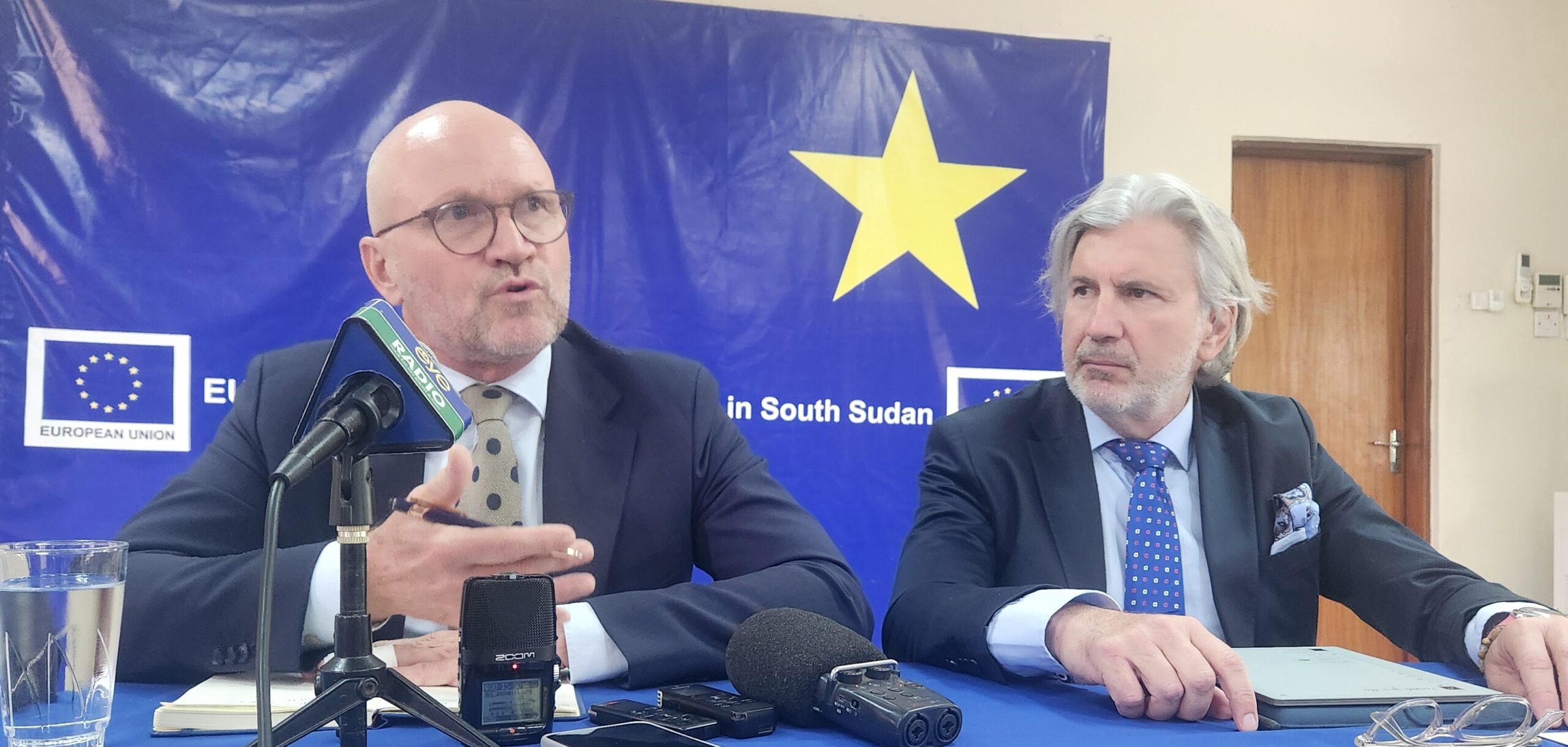
The European Union has issued a stern caution to South Sudan's incoming caretaker government, urging it to refrain from making decisions with significant political ramifications as the nation prepares for elections slated for December. This warning, delivered on Tuesday, underscores concerns about potential overreach during a critical pre-election period. Pelle Enarsson, who heads the EU delegation to South Sudan, articulated these apprehensions during a press conference in Juba, emphasizing that a caretaker administration should confine its activities to routine governance and avoid exceeding its authority, particularly when institutional checks and balances might be compromised.
Enarsson highlighted that while the existence of a caretaker government itself is not unusual in electoral contexts globally, the risk arises if the executive exploits a period of weakened oversight. He stressed the formidable challenge of conducting free and fair elections within the tight three-month timeframe remaining until the December 22 date. This caution comes amidst significant political shifts, including the anticipated dissolution of the transitional government by President Salva Kiir, following parliamentary amendments to the election law.
Legal Framework for Transitional Powers
The legal foundation for these governmental changes was established on Monday when President Salva Kiir signed into law amendments to the national election legislation. These revisions empower the president to dismiss vice presidents and dissolve the government precisely three months before the December 22 elections. Crucially, the amended law also stipulates that the incumbent executive retains full constitutional powers throughout the electoral process, continuing until a newly elected president assumes office. This provision creates a unique dynamic where the existing leadership maintains authority even as the country transitions towards new governance.
During his meeting with Caretaker Minister for East African Affairs Michael Makuei Lueth, Ambassador Enarsson was briefed on these recent parliamentary developments, including the adoption of the election law and the impending dissolution. Beyond the political and legal intricacies, Enarsson also pointed out that the caretaker administration would face the daunting task of addressing a potentially worsening humanitarian situation across South Sudan, adding another layer of complexity to its responsibilities.
Election Readiness and International Funding
Despite the approaching December 22 deadline, South Sudan's electoral preparations are grappling with substantial political, technical, and financial hurdles. Ambassador Enarsson indicated that for elections to proceed credibly, the government must significantly accelerate voter registration, provide sufficient resources, and train the necessary officials to conduct the polls. He expressed a need to assess the country's technical and political readiness for elections within the coming days.
Regarding international assistance, the EU currently lacks funding specifically designated for these elections. Enarsson clarified that this is due to the absence of a clear appeal or a detailed budget outlining the country's requirements. He advised that the South Sudanese government should first allocate its own resources, identify any remaining funding gaps, and then, in collaboration with the African Union, consider approaching the broader international community for support. Any future international contributions, he underscored, would be contingent upon factors such as the inclusivity and overall credibility of the electoral process.
Path Forward Through Dialogue
A crucial element in determining South Sudan's political preparedness for the upcoming polls is an inter-party political dialogue, which is slated to commence on Thursday. Enarsson highlighted the significance of this dialogue, particularly given that some political factions, which were not signatories to the 2018 peace agreement, have not yet accepted the planned elections.
The EU envoy suggested that if the African Union successfully establishes a mechanism to incorporate the perspectives of these groups and foster a more inclusive political environment, a reconsideration of the election calendar could become a viable option. He reiterated that the European Union is not leading this intricate process, emphasizing that the primary responsibility for navigating these political waters rests firmly with South Sudanese political parties themselves.
Practical Implications
Lawyers and compliance officers should scrutinize decisions and actions by South Sudan's caretaker government for potential overreach, especially concerning significant policy changes or contracts, given the EU's warning about weakened checks and balances during the pre-election period. This period presents heightened legal risk regarding the legitimacy and scope of executive authority.
Source
Source: Original reporting via {source}
How does this affect you?
Get an AI analysis of this article grounded in your jurisdictions, practice areas, and any policy documents you've uploaded to Wansom.
Finish Reading the Full Story and the Expert Analysis.
Get the latest legal & regulatory intelligence in South Sudan
Wansom is AI and can make mistakes.