
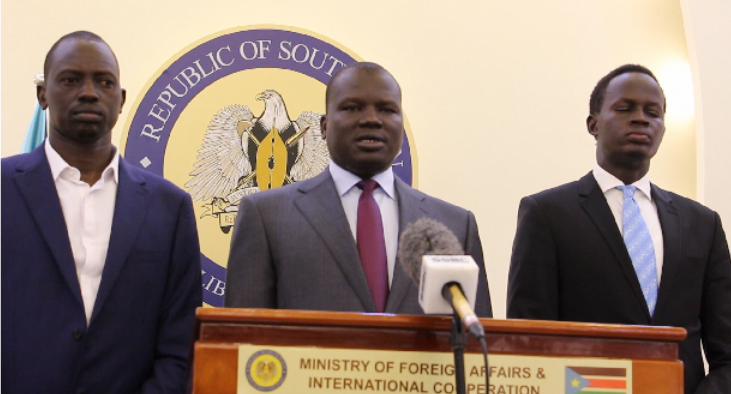
South Sudan: EAC South Sudan Political Confederation Talks Begin National Consultations
Summary
- An EAC delegation, led by Ambassador Stephen Patrick Mbundi and Amos Wako, has begun national consultations in South Sudan.
- The talks focus on South Sudan's political transition and a proposed East African Community Political Confederation.
- Consultations started with the central government and will expand to various states and stakeholder groups.
- Key discussion areas include constitutional arrangements, governance structures, funding, and regional integration models.
- The EAC adopted a Political Confederation in 2017 as a transitional step towards a full Political Federation.
Launch of Key Consultations on Political Confederation
The proposed EAC Political Confederation is expected to usher in substantial alterations to constitutional arrangements, governance structures, and legal frameworks across South Sudan and potentially the wider EAC.
A high-level delegation from the East African Community (EAC) has initiated crucial national consultations in South Sudan, focusing on the nation's political transition and the proposed EAC Political Confederation. The delegation is spearheaded by EAC Secretary-General Ambassador Stephen Patrick Mbundi, alongside senior constitutional expert Amos Wako. These East African Community political confederation consultations, as confirmed by Kawaja Kau Madol, undersecretary in South Sudan’s Ministry of East African Community Affairs, began with the central government on Wednesday.
The process is designed to be comprehensive, eventually extending to various states, including Central Equatoria, Lakes, Upper Nile, and Jonglei, ensuring broad geographical representation. Initial discussions are engaging the president’s office and caretaker cabinet, with plans to broaden participation to include political parties, civil society organizations, religious bodies, youth groups, and academic institutions. This broad engagement underscores the significance of these EAC South Sudan political confederation talks for the nation's future governance and its role within the regional bloc.
Delving into Constitutional and Governance Matters
The primary objective of these extensive consultations is to gather diverse perspectives on critical political and constitutional matters that will underpin the proposed confederation. Key discussion points encompass South Sudan constitutional arrangements EAC, exploring how the nation's existing legal framework might adapt or integrate. Furthermore, the talks delve into funding mechanisms for the proposed confederation, governance structures, and decision-making processes, alongside various models of regional integration.
Officials have actively encouraged all South Sudanese citizens and relevant stakeholders to contribute their insights, emphasizing that their views are vital in shaping the ultimate regional arrangement. The outcomes of these discussions are poised to influence the foundational legal and administrative frameworks governing South Sudan's participation in the broader East African bloc, highlighting the intricate legal work involved.
The Broader EAC Vision and Its Legal Implications
The East African Community, a robust regional bloc, currently comprises eight member states: Burundi, the Democratic Republic of Congo, Kenya, Rwanda, Somalia, South Sudan, Tanzania, and Uganda. Dedicated to advancing regional integration, the EAC adopted a Political Confederation in 2017, envisioning it as a transitional phase toward an ultimate East African Political Federation. The ongoing consultations in South Sudan are a pivotal step in realizing this long-term goal, exploring how South Sudan's unique context can integrate into the broader EAC regional integration models.
For legal professionals and compliance officers, these developments warrant close attention. The proposed EAC Political Confederation is expected to usher in substantial alterations to constitutional arrangements, governance structures, and legal frameworks across South Sudan and potentially the wider EAC. Such changes will inevitably impact cross-border legal practice, investment strategies, and regulatory compliance requirements throughout the region, necessitating careful monitoring and adaptation by legal stakeholders.
Practical Implications
Lawyers and compliance officers should monitor these consultations closely, as the proposed EAC Political Confederation will likely lead to significant changes in constitutional arrangements, governance structures, and legal frameworks across South Sudan and potentially the wider EAC, impacting cross-border legal practice, investment, and regulatory compliance.
Source
How does this affect you?
Get an AI analysis of this article grounded in your jurisdictions, practice areas, and any policy documents you've uploaded to Wansom.
Finish Reading the Full Story and the Expert Analysis.
Get the latest legal & regulatory intelligence in South Sudan
Wansom is AI and can make mistakes.