
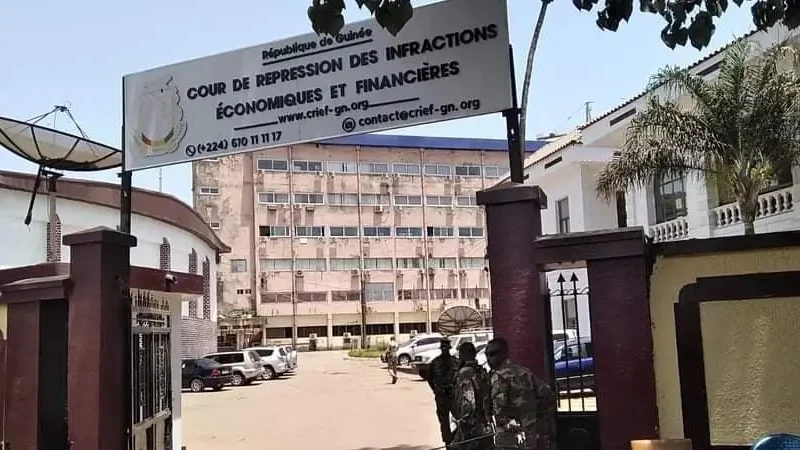
CRIEF: Abdourahmane Baldé Hit With Interdiction Sortie
Summary
- Special Prosecutor Alphonse Charles Wright of CRIEF ordered a national travel ban.
- The ban targets Abdourahmane Baldé, the current Director General of Fonij.
- Three former Directors General of Fonij—Mohamed Nabé, Ousmane Touré, and Mariama Ciré Baldé—are also subject to the travel prohibition.
- Mohamed Nabé served from 2008-2011, Ousmane Touré from 2014-2019, and Mariama Ciré Baldé from 2019-2022.
- The order was announced on Monday, November 2, 2026, based on an official source.
Judicial Action Targets Fonij Leadership
The simultaneous imposition of travel restrictions on the current and several former heads of Fonij sends a clear message that individuals entrusted with public funds will face rigorous scrutiny, regardless of their current or past positions.
In a significant development signaling intensified scrutiny over public financial management, the Special Prosecutor of the Court for the Repression of Economic Crimes and Terrorism (CRIEF), Alphonse Charles Wright, has issued a national travel ban against the current Director General of the National Fund for Youth Investment (Fonij), Abdourahmane Baldé. This measure, announced on Monday, November 2, 2026, prevents Mr. Baldé from departing Guinean territory, indicating a deepening investigation into the operations of the state-owned entity. The CRIEF interdiction sortie Abdourahmane Baldé underscores the judiciary's commitment to addressing potential irregularities within government institutions.
The directive extends beyond the incumbent, encompassing three of Mr. Baldé's predecessors at Fonij. These former leaders, now also subject to the interdiction de territoire, include Mohamed Nabé, who served as Director General from 2008 to 2011; Ousmane Touré, whose tenure spanned from 2014 to 2019; and Mariama Ciré Baldé, who held the position between 2019 and 2022. The inclusion of past directeurs in this order suggests a broad inquiry into the fund's historical administration, reflecting a comprehensive approach by the CRIEF to examine financial stewardship over an extended period. The Alphonse Charles Wright ordonnance was confirmed through official channels, highlighting the formal nature of these judicial proceedings.
CRIEF's Mandate Against Economic Crimes
The Court for the Repression of Economic Crimes and Terrorism, or CRIEF, was established with a specific mandate to combat serious financial offenses and acts of terrorism within Guinea. Its operational framework empowers special prosecutors, such as Alphonse Charles Wright, to initiate investigations and impose restrictive measures, including travel prohibitions, on individuals suspected of involvement in corruption or other economic malfeasance. This latest action against the Fonij leadership aligns directly with the CRIEF's core mission to ensure accountability and transparency in the management of public resources.
The ongoing Guinée CRIEF enquêtes represent a broader governmental effort to tackle corruption among fonctionnaires and within state-affiliated bodies. By targeting both current and former officials, the CRIEF demonstrates its capacity to delve into past administrations, signaling that no period of public service is beyond review. This proactive stance aims to deter future misconduct and restore public trust in governmental institutions. The travel ban on Mohamed Nabé Ousmane Touré Mariama Ciré Baldé, alongside the current DG, illustrates the extensive reach of these anti-corruption initiatives.
Broader Implications for Public Accountability
This recent judicial intervention by the CRIEF carries significant implications for public accountability in Guinea. The simultaneous imposition of travel restrictions on the current and several former heads of Fonij sends a clear message that individuals entrusted with public funds will face rigorous scrutiny, regardless of their current or past positions. This development reinforces the perception of a heightened judicial environment where officials are increasingly held responsible for their administrative decisions and financial oversight.
The decision to issue an interdiction de sortie du territoire national for these key figures from Fonij underscores the seriousness with which the CRIEF is approaching allegations of economic crimes. It serves as a potent reminder to all public servants that their actions are subject to review and that measures like these can be swiftly implemented as part of ongoing investigations into corruption Guinée fonctionnaires. This move is likely to encourage greater diligence and adherence to financial regulations across all state-managed entities.
Practical Implications
This development signals heightened judicial scrutiny by CRIEF on the management of public funds in Guinea. Lawyers advising current or former public officials, or entities engaging with state-owned enterprises like Fonij, should be aware of the increased risk of investigations, travel bans, and other restrictive measures, and should review compliance protocols for financial transparency and anti-corruption.
Source
How does this affect you?
Get an AI analysis of this article grounded in your jurisdictions, practice areas, and any policy documents you've uploaded to Wansom.
Wansom is AI and can make mistakes.