
All reports
Briefly Report

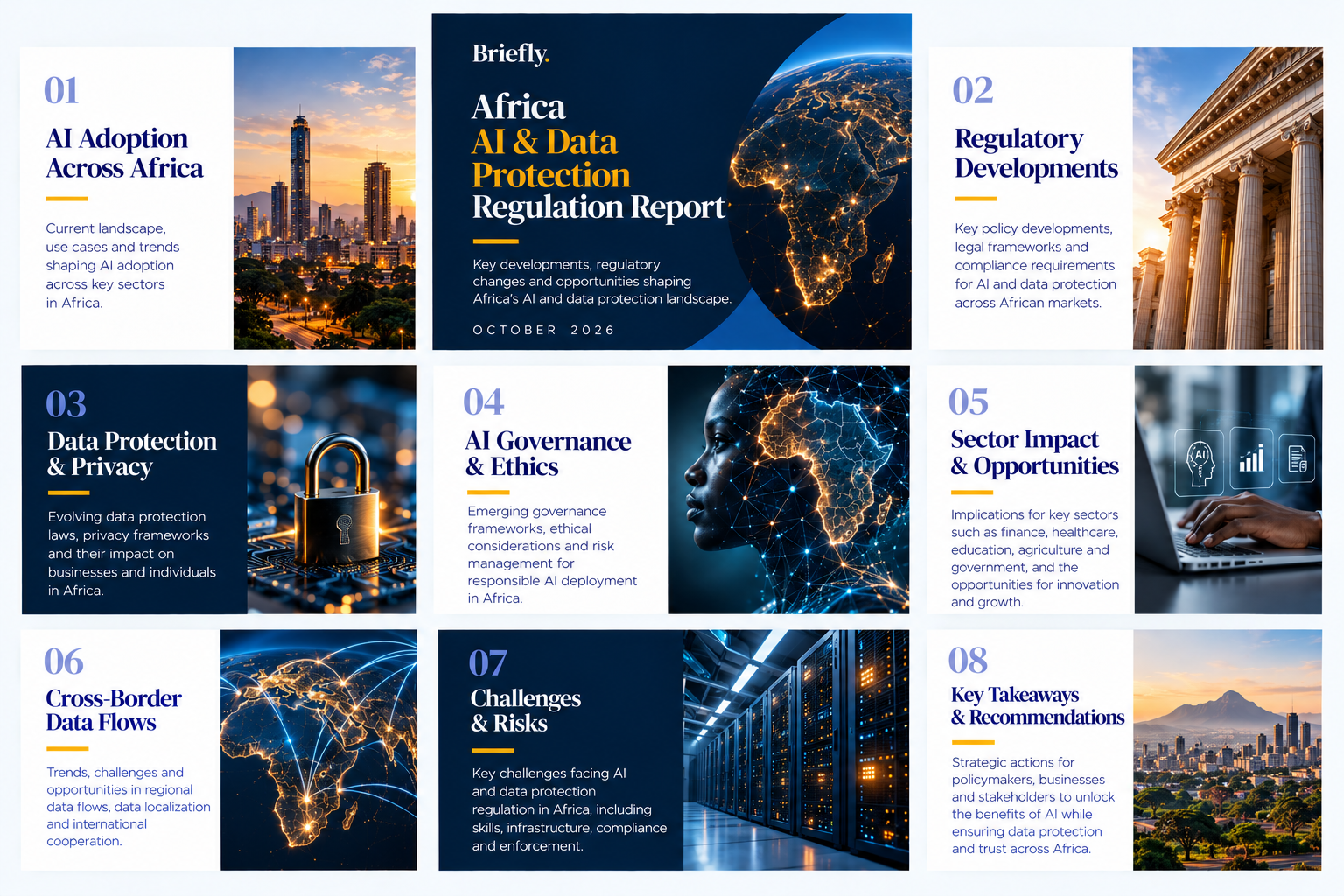
Africa AI & Data Protection Regulation Report | October 2026

·33 developments·7 markets

Across the continent, governments are discovering that regulating AI is harder than announcing a strategy. Some bills are being sent back for being too harsh. Some policies are being rewritten from scratch. Some laws are promised for “next month,” again. Meanwhile, the data protection regulators already in place have stopped warning and started fining.

The message for businesses is clear: don’t wait for an AI law to be compliant. The data law already applies.

This month’s report shows where Africa is heading, where it is stalling, and what your organisation should do before the rules arrive.

Pan-African / OHADA

Strategy Rich, Law Poor: Africa’s AI Governance Gap Is About Implementation

Across the African continent and within OHADA jurisdictions, the rapid proliferation of artificial intelligence strategies has outpaced the development of enforceable, adequately funded governance frameworks. While political ambition for AI integration remains high, the lack of corresponding regulatory infrastructure has created a widening gap between policy goals and practical accountability.

This disconnect poses significant long-term risks for the region. As the governance gap persists, the uncertainty surrounding oversight mechanisms may ultimately dictate the distribution of AI-related benefits and the allocation of systemic risks, leaving stakeholders to navigate an environment where formal rules have yet to catch up to technological reality.

19 October 2026
Technology & DigitalEducation

Egypt

Egypt’s Data Protection Deadline: What Businesses Must Do by November 2026

Egypt’s Personal Data Protection Law is reaching a critical implementation milestone as the country approaches its upcoming compliance deadline in November 2026. After a five-year period of preparation, businesses are now required to align their operations with new regulatory expectations.

The transition involves navigating new licensing requirements, stringent controls on cross-border data transfers, and the utilization of a recently launched regulatory portal. Both local and international entities are currently reassessing their internal data collection, storage, and usage practices to ensure full adherence to the law.

21 October 2026
Technology & DigitalFinancial Services

Egypt’s Draft AI Law Is Before Parliament. The Bigger Question Is Who Will Control the Risks and the Opportunities

The Egyptian Parliament is currently reviewing a draft law aimed at establishing a dedicated legal framework for artificial intelligence. This legislative effort is supported by a new national governance framework that introduces a four-tier risk model to categorize and manage AI applications.

The proposed architecture is set to influence the operational landscape for technology platforms, financial institutions, and public agencies. As the draft progresses, key discussions remain focused on balancing national sovereignty with global digital integration, particularly regarding enforcement mechanisms, accountability, and the protection of data rights.

21 October 2026
Technology & Digital

CBE Issues Personal Data Scam Warning: Protect Against Phishing

The Central Bank of Egypt (CBE) has issued a public warning regarding a rise in fraudulent activities involving phishing and social engineering. The regulator emphasized that legitimate organizations, including banks, Egypt Post, and shipping companies, do not request sensitive personal information over the telephone.

This advisory serves as a protective measure against sophisticated scams that attempt to solicit private data. The warning highlights the importance of public vigilance and underscores the potential legal and operational risks that financial institutions and e-commerce platforms face when their customers are targeted by such fraudulent schemes.

7 October 2026
Compliance & RegulatoryPrivacy & Data Protection

Egypt Expert: Warns of InstaPay AI Phishing Scam Surge

Cybersecurity expert Mostafa Rahim has issued a warning regarding a surge in AI-powered phishing scams in Egypt. These attacks are specifically targeting users of the digital payment platform InstaPay, as well as those utilizing major banking channels.

Fraudsters are increasingly leveraging advanced artificial intelligence to create highly convincing replicas of official payment interfaces, posing a significant threat to financial security. This development presents a complex challenge for both users and institutions, as the potential for identity theft and financial fraud necessitates heightened security measures and increased user awareness.

4 September 2026
Compliance & RegulatoryPrivacy & Data Protection

Ghana

Ghana’s AI and Deepfake Rules: What the New Data Protection Bill Means

Ghana is currently advancing a comprehensive digital-governance framework, characterized by the development of new rules for artificial intelligence, automated decision-making, and cross-border data transfers. This initiative coincides with a broader effort to strengthen the enforcement of the nation's existing data-protection laws.

With a national AI strategy now in place and multiple legislative bills under development, the government is signaling a shift toward more rigorous oversight of emerging technologies. The primary challenge for stakeholders remains whether this evolving framework will effectively balance the protection of citizens' rights with the need to provide clear corporate responsibilities, all while supporting Ghana’s ambition to establish itself as a regional hub for AI innovation.

22 October 2026
Technology & Digital

Bank of Ghana: New AI Financial Sector Rules Under Development

The Bank of Ghana (BoG) is in the process of drafting a directive to regulate the deployment of artificial intelligence within the country’s financial sector. Announced by Governor Dr. Johnson Pandit Asiama on October 11, 2026, the initiative aims to establish a structured approach to managing both the benefits and the inherent risks associated with AI adoption in financial services.

The proposed directive seeks to promote responsible innovation while addressing critical regulatory concerns, including data quality, model risk, cybersecurity, and consumer protection. While the central bank acknowledges AI's potential to improve operational efficiency, fraud detection, and credit assessment, the move underscores a proactive regulatory stance to mitigate the systemic risks that such technologies may introduce to the financial industry.

11 October 2026
Compliance & RegulatoryBanking & Finance

Ghana NCA: US Commerce Engages on AI Regulation Framework

On September 9, 2026, Ghana’s National Communications Authority (NCA) hosted a delegation from the U.S. Department of Commerce in Accra to facilitate high-level discussions regarding the digital sector. The primary focus of the engagement was the development of a robust regulatory environment for artificial intelligence.

This meeting highlights the importance of international cooperation in shaping Ghana’s technological landscape. By engaging with U.S. counterparts, the NCA is actively seeking to align its regulatory framework with global standards, ensuring that the country's approach to AI governance is both informed by international best practices and conducive to sustainable digital growth.

9 September 2026
Media & Telecoms

Ghana Government: Establishes AI Focal Persons Network

Minister for Communication, Digital Technology and Innovations, Sam George, announced the appointment of AI focal persons across all government ministries on October 17, 2026. This network is tasked with spearheading the national AI strategy and ensuring that public institutions are adequately prepared for the integration of these technologies.

This initiative follows a series of training programs for Cabinet ministers and planned sessions for senior civil servants, reflecting a structured governmental commitment to digital transformation. Supported by an AI readiness assessment conducted in collaboration with UNESCO, the government’s approach aims to map the preparedness of various agencies, ensuring that the deployment of AI across the public sector is both responsible and effective.

17 October 2026
AI GovernanceCompliance & Regulatory

Ghana DPC Flags Companies: Data Protection Breaches Found in 6 Firms

On October 15, 2026, the Data Protection Commission (DPC) of Ghana took enforcement action against six companies located in the Kaneshie North Industrial Area and Tudu. The entities were flagged for various non-compliance issues, including operating without the required registration, utilizing expired certificates, or failing to renew their existing registrations under national data protection laws.

This enforcement action serves as a clear signal that the DPC is actively monitoring compliance among data controllers and processors. For businesses operating in Ghana, the development underscores the necessity of maintaining rigorous data management practices, as regulatory bodies are increasingly prioritizing accountability and legal adherence to safeguard personal data.

15 October 2026
Privacy & Data ProtectionCompliance & Regulatory

Kenya

A New African AI Council Faces Its First Big Test: Protecting Democracy Before Kenya’s 2027 Election

The Africa Public Interest AI Council is positioning itself at the center of a critical debate regarding the intersection of emerging technology and democratic integrity. As Kenya approaches its 2027 general election, the council faces the immediate challenge of addressing risks that extend well beyond the threat of deepfakes, including the protection of cultural representation and public accountability.

This initiative arrives as Kenya navigates internal resistance to proposed AI legislation and the African Union simultaneously pushes for continent-wide governance standards. The central dilemma for policymakers remains whether these regulatory efforts can effectively safeguard democratic participation without inadvertently stifling the innovation necessary for economic growth.

19 October 2026
Technology & DigitalEducation

Kenya’s First AI Bill Hits a Wall: Why the Senate Committee Wants a Different Regulatory Model

Kenya’s legislative efforts to regulate artificial intelligence have hit a significant roadblock, with the Senate ICT Committee recommending the abandonment of the Artificial Intelligence Bill, 2026. The committee cited substantial concerns regarding the proposed regulatory powers, the severity of penalties, and the potential for excessive compliance costs to hinder local innovation.

This recommendation leaves the country’s legal framework for AI in a state of limbo as officials pivot toward the development of a national AI policy. The primary challenge for lawmakers moving forward is to design a regulatory model that provides necessary protections for citizens without imposing a burden that is disproportionately difficult for local technology developers to meet.

19 October 2026
Technology & DigitalEducation

Kenya Signs AI Pact With Anthropic at the UN: The Opportunity, the Data Question and the Funding Gap

The partnership agreement signed between Kenya and Anthropic in September establishes a framework for cooperation across several critical sectors, including public-sector AI, research, skills development, and safety applications in health and education. While the pact signals a commitment to international collaboration, it currently serves as a starting point rather than a comprehensive delivery record.

The practical significance of this agreement will be measured by the tangible outcomes it produces for the Kenyan public. Success will depend on the development of local AI infrastructure, the robustness of public data protection measures, and the ability of the partnership to deliver concrete benefits that extend beyond the initial signing ceremony.

19 October 2026
Technology & Digital

Kenya’s Data Protection Crackdown: Can the ODPC Enforce the Law Effectively?

The Office of the Data Protection Commissioner (ODPC) in Kenya is shifting its regulatory posture from issuing warnings to active enforcement, utilizing penalties, compensation orders, and compliance audits to influence corporate behavior. These measures are fundamentally reshaping how organizations assess and manage their data-related risks.

However, the effectiveness of this more aggressive enforcement strategy will depend on more than just the underlying legislation. The regulator must demonstrate sufficient institutional capacity, ensure transparent decision-making processes, and maintain a credible, accessible path for citizens to move from filing complaints to receiving meaningful remedies.

19 October 2026
Technology & Digital

Safaricom Kenya: Urges Robust Defenses Against AI Cybersecurity Threats

During the fourth Cybersecurity Summit in Nairobi, Safaricom emphasized the urgent need for robust cybersecurity safeguards to counter the evolving threats posed by artificial intelligence. Group Chief Executive Officer Peter Ndegwa advocated for a proactive approach, urging that security be embedded into technology development from the initial design phase rather than treated as an afterthought.

The summit highlighted the dual nature of AI, acknowledging its potential to facilitate sophisticated cyberattacks while also serving as a tool for defense. Ndegwa stressed that responsible AI adoption requires a collective effort, calling for shared standards and cross-sector collaboration to strengthen Kenya's digital ecosystem against emerging risks.

14 October 2026
Privacy & Data ProtectionAI Governance

Africa Public Interest AI Council Kenya 2027: To Scrutinize Election AI Policies

The establishment of the Africa Public Interest AI Council (APiAC) by the Samawati Collective, with support from the Open Society Foundations, marks a new effort to scrutinize the societal impact of AI policies across the continent. With a specific focus on the lead-up to Kenya’s 2027 General Election, the council aims to evaluate how AI influences democratic processes, public participation, and cultural representation.

This development underscores the growing recognition that AI governance is a critical issue for legal and policy experts. For practitioners, it signals an emerging field that requires specialized knowledge spanning technology law, human rights, and electoral processes, as stakeholders work to establish ethical frameworks that address the profound implications of AI in the African context.

14 October 2026
AI GovernanceCompliance & Regulatory

Kenya: Nairobi REAIM Summit 2027 to Host Africa's First Military AI Forum

Kenya is set to host the fourth Responsible Artificial Intelligence in the Military Domain (REAIM) Summit in Nairobi in April 2027, marking the first time this global forum will be held on the African continent. The summit will convene a diverse group of stakeholders, including government officials, defense institutions, technology firms, and civil society, to address the complex challenges of integrating AI into military and security operations.

According to Kenya's Special Envoy on Technology, Philip Thigo, hosting the summit is a strategic move to ensure that African perspectives are integrated into international discussions on military AI. By providing a platform for these deliberations, the event aims to influence the global development and application of AI in security contexts, ensuring that regional concerns are represented on the international stage.

7 October 2026
AI GovernanceInternational Trade

Mozambique

Mozambique’s AI-in-Schools Rules: What the New Guidelines Mean

Mozambique is currently developing guidelines for the use of artificial intelligence within the school system as educators and students increasingly engage with generative AI. While the proposal has received a positive assessment from the education ministry’s coordinating council, it has not yet reached the stage of formal approval.

The initiative faces several practical hurdles, including concerns regarding university autonomy, the need for public consultation, and the current level of teacher readiness. Furthermore, the potential for unequal access to technology remains a significant factor, leaving the success of these guidelines dependent on whether the final framework can be effectively implemented across diverse educational environments.

22 October 2026
Technology & DigitalPublic Sector

Mozambique’s New AI Commission Faces Its First Big Test: Turning Strategy into Action

Mozambique has established a national commission to provide oversight and guidance for the country's artificial intelligence policy. This body is currently working in tandem with the development of the nation's first comprehensive national AI strategy.

While the creation of this commission represents a significant institutional milestone, its ultimate success will be measured by its ability to translate high-level policy goals into practical, enforceable regulations. The government’s challenge lies in fostering domestic technological capacity and ensuring that these strategic efforts result in measurable economic benefits for the country.

22 October 2026
Technology & Digital

Mozambique: National Cybersecurity Strategy 2026-2030 Update Underway

Mozambique is in the process of updating its National Cybersecurity Strategy for the 2026–2030 period to ensure alignment with recent legislative changes and to improve the overall maturity of the sector. The revision is designed to establish clear targets, responsibilities, and monitoring mechanisms to strengthen the nation's digital defenses.

This update is of significant operational importance for entities operating within Mozambique, as a robust cybersecurity strategy is essential for protecting critical infrastructure and sensitive data. By formalizing these priorities, the government aims to foster greater trust in digital services, which is a fundamental requirement for the country's continued economic development and secure online environment.

12 October 2026
Compliance & RegulatoryPrivacy & Data Protection

INTIC Mozambique: Strengthens Data Protection Legislation Enforcement

Mozambique’s National Institute for Information and Communication Technologies (INTIC) has issued a formal call for the technical reinforcement of national institutions and oversight bodies. This initiative is designed to bolster the regulatory framework governing the country's digital landscape and ensure robust adherence to recently enacted data protection laws.

By prioritizing the enhancement of these oversight mechanisms, INTIC aims to create a more secure and compliant digital environment. For businesses and stakeholders operating within Mozambique, this development signals an increased focus on regulatory enforcement, necessitating a proactive review of internal data management practices to align with the evolving legislative requirements.

26 August 2026
Privacy & Data ProtectionCompliance & Regulatory

Nigeria

Nigeria’s AI Law Is Still Waiting: Inside the Digital Economy Bill Delay

Nigeria’s National Digital Economy and E-Governance Bill remains unverified as an enacted law, despite previous expectations of its imminent passage. This ongoing delay has prompted concerns regarding the transparency of the legislative process and the country's overall regulatory readiness.

As Africa’s largest economy, the absence of a clear legal framework for AI and digital governance creates uncertainty for stakeholders. The situation raises significant questions about how the nation will establish future accountability mechanisms and whether the current legislative pace is sufficient to address the rapid evolution of digital technologies.

21 October 2026
Financial ServicesTechnology & Digital

Nigeria’s Data Regulator Enters Full Enforcement Mode: What Changes Now?

The Nigeria Data Protection Commission has significantly ramped up its enforcement activities, reporting hundreds of concluded investigations and substantial revenue generated through compliance efforts. A notable milestone in this period was the imposition of a landmark penalty against MultiChoice, signaling a more aggressive approach to regulatory oversight.

However, as the commission expands its enforcement reach, stakeholders are increasingly questioning the adequacy of public-sector accountability and the availability of meaningful remedies for affected parties. These concerns, coupled with debates over regulatory funding, suggest that the commission faces ongoing challenges in balancing its enforcement mandate with the need for transparent and sustainable governance.

21 October 2026
Technology & Digital

Nigeria’s Proposed 2% Levy on Foreign AI Firms: Digital Sovereignty or a New Cost of Doing Business?

The Nigerian government is currently evaluating a proposal to impose a 2% levy on foreign data-service companies. This initiative is positioned as a strategic move toward enhancing digital sovereignty and ensuring that the nation receives fairer compensation for the data utilized by global technology firms.

While the proposal aims to capture value from the digital economy, it introduces significant uncertainty for international AI providers operating within the country. Stakeholders are closely monitoring the potential impact on service delivery, as the final tax rate, the scope of the legal framework, and the broader economic consequences remain subject to further scrutiny.

21 October 2026
Financial ServicesTechnology & Digital

Legal Alert: US issues Public Warning to Nigerians using AI-edited passport photos

The United States Mission in Nigeria has issued a formal public advisory regarding the submission of visa application materials. The warning specifically targets both immigrant and non-immigrant visa applicants, cautioning them against the use of artificial intelligence tools or digital enhancement software to generate, retouch, or alter passport photographs.

This directive serves as a clear signal that AI-modified images are considered unacceptable for official government documentation. Applicants are advised to ensure their photographs strictly adhere to standard requirements to avoid potential processing delays or the rejection of their visa applications.

1 August 2026
Immigration

Nigeria House Reps: Backs Blockchain Curriculum Review

The Nigerian House of Representatives has officially endorsed a review of the National Blockchain Education Programme curriculum. Announced by Chairman Richard Bamisile of the House Committee on Delegated Legislation, the initiative seeks to integrate more robust training in practical skills, cybersecurity, and regulatory compliance.

This legislative backing reflects a proactive government strategy to cultivate a workforce capable of navigating the digital economy. For legal practitioners and businesses, the emphasis on regulatory compliance and data protection highlights the increasing necessity for specialized expertise to manage the complex legal landscape surrounding blockchain technology.

14 October 2026
Compliance & RegulatoryLegal Education

Nigeria: Digital Postcode System Check Now Live Nationwide

The Nigerian Federal Government, through the Nigerian Postal Service, officially launched the National Digital Alphanumeric Postcode System on October 1, 2026. This nationwide initiative allows citizens to verify their home addresses and obtain a unique 11-character alphanumeric digital postcode.

This infrastructure development is expected to significantly improve logistics, commerce, and public service delivery. For the legal sector, the system offers a standardized method for location identification, which may streamline property registration, the service of court documents, and the enforcement of judgments by reducing address-related disputes.

13 October 2026
Compliance & Regulatory

South Africa

South Africa Restarts Its AI Policy: Can It Rebuild Trust After the Hallucination Scandal?

The South African government is currently recalibrating its approach to artificial intelligence regulation following the withdrawal of a previous policy draft. The earlier document was retracted after it was revealed to contain AI-generated hallucinations, a failure that undermined institutional credibility and highlighted significant gaps in internal verification processes.

With a revised draft now slated for Cabinet consideration by March 2027, the government faces the dual challenge of restoring public trust while crafting a framework that is both enforceable and conducive to innovation. The success of this new policy will depend on the state's ability to implement rigorous oversight mechanisms that prevent future technical errors while addressing the complex safety and ethical concerns inherent in AI adoption.

19 October 2026
Technology & DigitalEducation

South Africa’s Financial Regulator Is Waiting for Global AI Rules. Now What?

South African financial regulators are navigating the complexities of AI oversight by aligning local strategies with the recently published global guidance from the Financial Stability Board. This international framework provides a foundation for responsible AI adoption, but the primary hurdle remains the translation of these high-level principles into effective, localized supervision.

For the financial sector, the goal is to establish a regulatory environment that mitigates systemic risks and protects consumers without stifling technological progress. Regulators are now tasked with developing a nuanced approach that balances the need for innovation with the necessity of maintaining market stability and integrity in an increasingly automated financial landscape.

21 October 2026
Technology & DigitalEducation

South Africa: Corporate Cyber Incidents 2026 Intensify, No Sector Safe

South Africa is grappling with a surge in cybersecurity incidents that have affected a diverse range of major entities, including Hungry Lion, Bidvest Bank, Toyota South Africa, and the Furniture Bargaining Council. This trend, which has also impacted CarTrack and Serengeti Estates, indicates a systemic vulnerability in the nation's digital infrastructure.

These events have intensified calls for a more robust national policy framework, particularly as discussions regarding digital sovereignty took center stage at GovTech 2026. The current absence of comprehensive AI and cybersecurity policies leaves the country exposed, highlighting a growing disconnect between the escalating threat landscape and the current state of regulatory preparedness.

23 September 2026
Compliance & RegulatoryPrivacy & Data Protection

Western Cape: Municipal Monitoring Tender LG 02 2026-2027 Issued

The Western Cape Department of Local Government has initiated a tender process to appoint a service provider for the development of a municipal monitoring and reporting mechanism. This project aims to enhance data governance, evaluation, and knowledge management to strengthen oversight across the province's municipalities.

This initiative reflects a broader shift toward data-driven governance and increased accountability within the public sector. For legal and compliance practitioners, the move underscores the rising importance of data integrity and privacy, as the government seeks to consolidate performance information and implement automated maturity assessments to ensure more rigorous municipal oversight.

19 October 2026
Compliance & RegulatoryCorporate Governance

South Africa Insurers: AI Policy Vacuum Persists Amid Rapid Adoption

In the absence of a finalized National AI Policy, South African insurers are increasingly developing their own internal AI frameworks to manage the risks associated with rapid technology adoption. This trend follows the withdrawal of a government draft policy earlier this year, which was found to contain fictitious, AI-generated citations and prompted an internal investigation by the Department of Communications and Digital Technologies (DCDT).

While the DCDT works to rectify these fundamental errors and finalize a national policy by the 2026/2027 financial year, the insurance sector's proactive stance highlights the urgent need for clear regulatory guidance. The ongoing DCDT investigation, which has already resulted in the suspension of two officials, underscores the critical importance of expert input and rigorous verification in the future of national AI governance.

15 October 2026
Compliance & RegulatoryAI Governance

FSCA builds AI guardrails as digital regulation expands

The Financial Sector Conduct Authority (FSCA) is actively developing an artificial intelligence framework as a core component of its digital transformation strategy. This initiative is designed to establish clear guidelines for the responsible development and deployment of AI within the financial sector.

By creating these guardrails, the FSCA aims to enhance its data-driven regulatory capabilities. This move reflects the regulator's commitment to staying ahead of technological advancements while ensuring that the deployment of AI remains consistent with the principles of market conduct and consumer protection.

30 September 2026
Compliance & RegulatoryAI Governance

Take this report with you

We'll email you the PDF — exactly what you just read — 33 developments across 7 markets.