
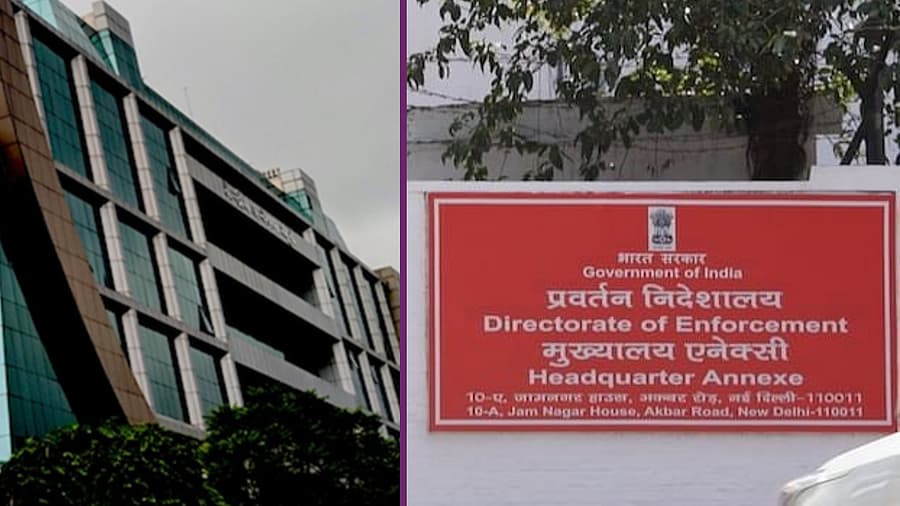
Bombay High Court: Sinhgad CBI ED Probe Ordered Over ₹400 Cr Unpaid Salaries
Summary
- The Bombay High Court ordered a multi-agency investigation by the CBI, ED, and Income Tax into the Sinhgad Technical Education Society (STES) and its trustees.
- This probe addresses over ₹400 crore in unpaid staff salaries and retirement dues owed by STES.
- The court acted after STES breached an undertaking to disburse ₹60.65 crore to employees before Diwali.
- The ruling includes freezing STES bank accounts, restraining property transfers, and ordering trustees to surrender passports.
- The State Education Department was directed to appoint an administrator for STES technical colleges and manage its schools; however, the High Court has stayed the cancellation of recognition for 13 STES schools.
Court Mandates Multi-Agency Probe
The direct involvement of central investigative agencies like the CBI, ED, and Income Tax department in a case primarily concerning unpaid staff salaries marks an aggressive judicial stance against financial irregularities in the education sector.
The Bombay High Court has initiated a comprehensive investigation into the Sinhgad Technical Education Society (STES) and its managing trustees, directing the Central Bureau of Investigation (CBI), the Enforcement Directorate (ED), and Income Tax authorities to scrutinize the institution's financial affairs. This significant directive stems from a long-standing issue of unpaid salaries and retirement benefits owed to STES staff, which collectively exceed ₹400 crore. The case, identified as Rohini Aniruddha Mohekar v. Maruti Nivrutti Navale & connected matters, highlights severe financial mismanagement within the educational group.
This decisive action by the High Court followed the STES's failure to uphold a prior commitment made on November 6. The society had undertaken to disburse ₹60.65 crore to its teaching and non-teaching employees before the Diwali festival. The breach of this undertaking prompted a special bench, comprising Justices GS Kulkarni and Advait M Sethna, to convene during the Diwali vacation to address the urgent matter. The court's intervention underscores the gravity of the situation and the institution's repeated non-compliance with its financial obligations.
Years of Unpaid Dues and Tragic Outcomes
The legal proceedings before the Bombay High Court brought to light a distressing history of financial defaults by the Sinhgad Technical Education Society, spanning nearly eight years. Over 220 petitions were filed by teaching and non-teaching personnel from the 44 institutions operating under the STES umbrella, all seeking resolution for their unpaid salaries and terminal dues. The sheer volume of these petitions underscores the widespread impact of the society's financial distress on its workforce.
During the proceedings on November 10, the Court acknowledged the profound financial hardship faced by the employees. The severity of the situation was further emphasized by reports indicating the suicidal deaths of approximately 13 employees, a tragic consequence attributed to their dire economic circumstances. This human cost deeply influenced the judiciary's perspective, with the Court observing that "The situation is so grave that it is difficult for the Court to remain a mute spectator." This statement reflects the bench's resolve to intervene forcefully given the extreme plight of the affected individuals.
Sweeping Judicial Directives
In response to the persistent non-payment and the human tragedy, the Bombay High Court issued a series of stringent orders aimed at securing the employees' dues and preventing further financial irregularities. Immediately, the Court mandated a freeze on all bank accounts belonging to the Sinhgad Technical Education Society. Furthermore, it imposed a strict prohibition on any property transfers by the society, effectively preventing the dissipation of assets that could be used to settle outstanding debts.
Beyond financial controls, the Court also imposed significant personal restrictions on the trustees of STES. They were directed to surrender their passports and were explicitly barred from leaving the city of Pune without prior intimation to the police authorities. In an effort to ensure the continuity of education and protect students, the Court instructed the State Education Department to appoint an administrator for the technical colleges operated by STES. Additionally, while the department was tasked with either taking over the STES schools directly or arranging for the absorption of their students into other educational institutions, the Bombay High Court has recently stayed the education department's decision to cancel the recognition of 13 STES schools. The Court also initiated further legal steps by issuing show-cause notices, signaling its intent to pursue accountability vigorously.
Why This Ruling Matters
This ruling by the Bombay High Court carries significant implications for the governance of educational institutions and large organizations across India, particularly concerning employee welfare and financial accountability. The direct involvement of central investigative agencies like the CBI, ED, and Income Tax department in a case primarily concerning unpaid staff salaries marks an aggressive judicial stance against financial irregularities in the education sector. This multi-agency approach signals a heightened level of scrutiny for entities that fail to meet their statutory and ethical obligations to employees.
The Court's robust intervention, including personal restrictions on trustees and administrative takeovers, establishes a strong precedent. It underscores that courts are prepared to go beyond monetary penalties to ensure justice for employees, especially when financial distress leads to severe human consequences. This case serves as a stark reminder to management and trustees of their personal liabilities and the potential for severe repercussions when financial controls are lax and employee dues are neglected, reinforcing the importance of robust compliance and ethical governance.
Practical Implications
Lawyers advising educational institutions or large organizations in India should note the aggressive stance taken by the Bombay High Court, involving multiple central agencies (CBI, ED, Income Tax) for financial irregularities and non-payment of employee dues. This sets a precedent for potential multi-agency investigations and severe personal liabilities for trustees/management in similar situations of financial distress and non-compliance. Compliance officers should review internal financial controls and employee payment schedules to mitigate such risks.
Source
How does this affect you?
Get an AI analysis of this article grounded in your jurisdictions, practice areas, and any policy documents you've uploaded to Wansom.
Finish Reading the Full Story and the Expert Analysis.
Get the latest legal & regulatory intelligence in India
Wansom is AI and can make mistakes.