
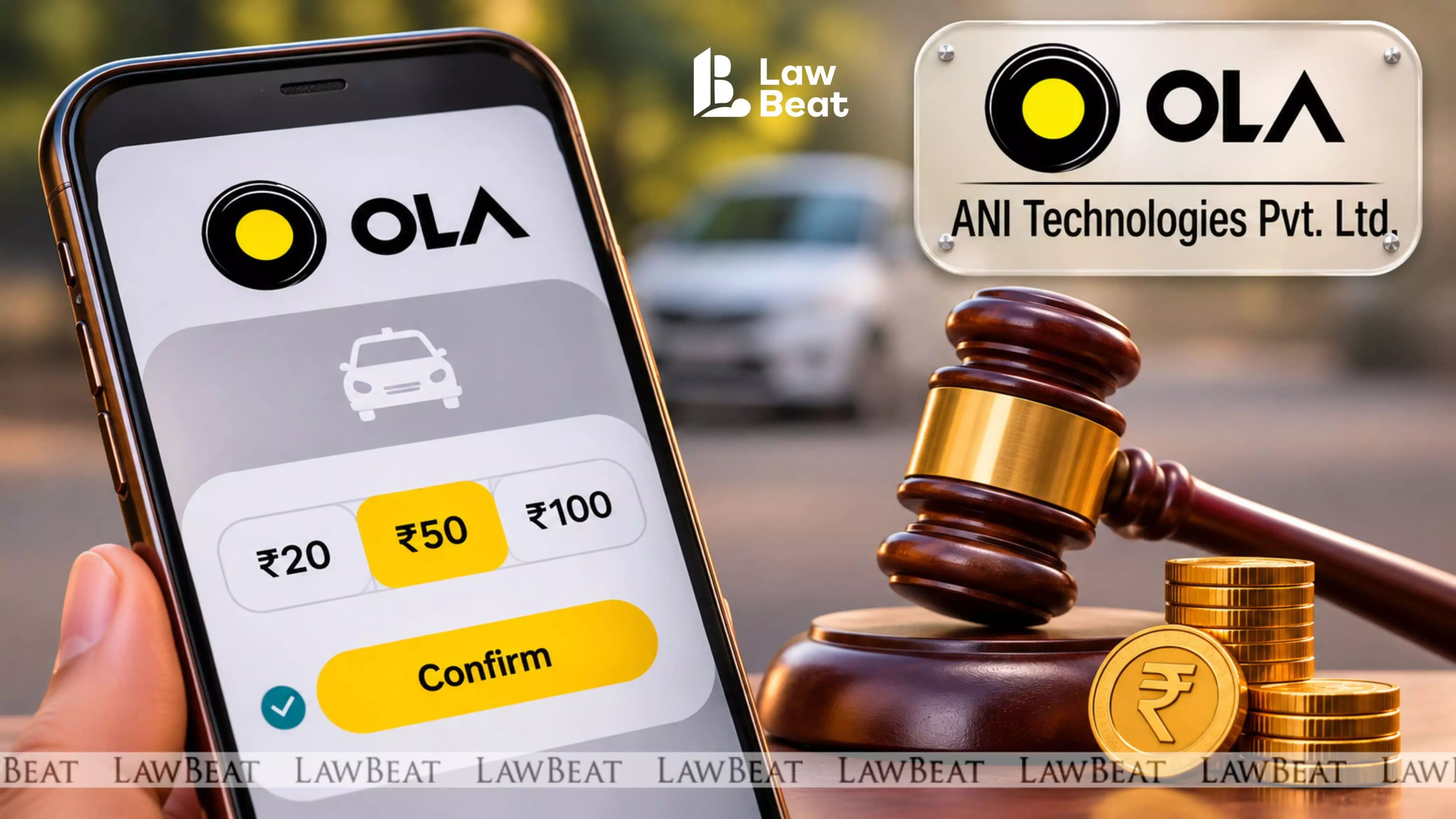
CCPA: ₹10 Lakh Penalty on Ola for Misleading Advance Tipping
Summary
- The Central Consumer Protection Authority (CCPA) fined Ola ₹10 lakh for its "advance tipping" feature.
- The CCPA ruled that Ola's practice constituted a misleading advertisement and an unfair trade practice under the Consumer Protection Act, 2019.
- Ola's user interface was found to employ "confirm shaming," a dark pattern prohibited by the Guidelines for Prevention and Regulation of Dark Patterns, 2023.
- Internal data provided by Ola contradicted its claim that advance payments improved the chances of securing a ride.
- The ruling mandates Ola to withdraw the prompts, pay the penalty, and submit a compliance report within 15 days.
What Happened
The CCPA's detailed analysis of booking data to refute a company's claims underscores the rigorous approach regulators are taking to combat misleading advertisement and dark patterns.
The Central Consumer Protection Authority (CCPA) has levied a significant penalty against ANI Technologies Pvt Ltd, the operator of the popular Ola ride-hailing application. The CCPA imposed a ₹10 lakh fine on Ola, asserting that its practice of prompting customers for an additional payment while awaiting driver acceptance constituted a misleading advertisement and an unfair trade practice. This ruling, issued on November 10, 2026, by CCPA Chief Commissioner Nidhi Khare and Commissioner Anupam Mishra, specifically targeted Ola's "advance tipping" feature, which was later rebranded as an "add-on."
The authority has mandated Ola to immediately cease these prompts, remit the penalty, and submit a compliance report within 15 days of receiving the directive. This action by the Central Consumer Protection Authority Ola underscores a firm stance against deceptive digital practices.
The Disputed Practice
The CCPA's action stemmed from a complaint filed on May 16, 2025, concerning Ola's mechanism for soliciting extra payments from riders. While the Ola app was actively searching for an available driver, it presented messages suggesting that "Adding a tip might help increase the chances of getting a ride faster."
Initially, customers were offered pre-set amounts ranging from ₹10 to ₹40. Over time, these suggested amounts were increased, with the platform eventually allowing users to input an "add-on" of up to ₹499. Ola defended this feature, arguing that the payment was entirely voluntary, was passed directly to the driver without any company deductions, and was intended to incentivize drivers for less attractive bookings, such as those requiring a long travel distance to the passenger. The company also maintained that drivers retained full discretion to accept or reject any booking, and that the additional payment did not guarantee a faster confirmation.
Regulatory Findings and Legal Context
Despite Ola's defense, the Central Consumer Protection Authority Ola conducted an analysis of the company's own booking data, which contradicted its claims. Data from June 10 to 16, 2025, revealed that approximately 55% of ride requests with an add-on were accepted, compared to about 70% of requests without one. Further data from June 1 to 15, 2026, across Delhi, Bengaluru, and Mumbai, showed similar trends: acceptance rates for requests with an add-on were 38%, 40%, and 39% respectively, while those without an add-on were 62%, 60%, and 68%.
Based on these figures, the CCPA concluded that the suggestion that an additional payment would improve a customer's chances of securing a ride was demonstrably false. The authority also highlighted an inherent inconsistency in Ola's position: simultaneously claiming the payment had no impact on driver engagement while promoting it as a means to increase ride acceptance. The CCPA reasoned that if the payment had no influence, the representation was misleading; if it did, customers who chose not to pay were unfairly disadvantaged. The CCPA penalty Ola advance tipping decision also classified the interface as employing "confirm shaming," a specific type of dark pattern explicitly prohibited under the Guidelines for Prevention and Regulation of Dark Patterns, 2023.
This practice, alongside the misleading advertisement, was deemed an unfair trade practice under the Consumer Protection Act, 2019. Furthermore, the authority rejected Ola's characterization of the payment as a "tip," noting that a gratuity is typically given after a service is rendered, whereas Ola solicited this payment before any driver acceptance or service provision.
Why It Matters
This ruling by the Central Consumer Protection Authority against ANI Technologies Pvt Ltd sets a significant precedent for digital service providers operating under the Consumer Protection Act, 2019. The CCPA's detailed analysis of booking data to refute a company's claims underscores the rigorous approach regulators are taking to combat misleading advertisement and dark patterns.
The finding that Ola's "advance tipping" mechanism constituted an unfair trade practice and involved "confirm shaming" highlights the growing scrutiny on user interface design and payment solicitation methods. This decision reinforces the regulatory stance that any practice tying additional payments to the likelihood of receiving a service, especially when contradicted by internal data, will be met with penalties. It serves as a clear warning to other platforms to ensure transparency and avoid deceptive practices that could disadvantage consumers, establishing a benchmark for compliance in the evolving digital marketplace.
Practical Implications
This ruling establishes a precedent for interpreting 'misleading advertisement' and 'dark patterns' under the Consumer Protection Act, 2019, particularly concerning digital service providers. Compliance officers should review client user interfaces and payment solicitation methods to ensure transparency and avoid practices like 'confirm shaming' that could lead to significant penalties for unfair trade practices.
Source
How does this affect you?
Get an AI analysis of this article grounded in your jurisdictions, practice areas, and any policy documents you've uploaded to Wansom.
Finish Reading the Full Story and the Expert Analysis.
Get the latest legal & regulatory intelligence in India
Wansom is AI and can make mistakes.