
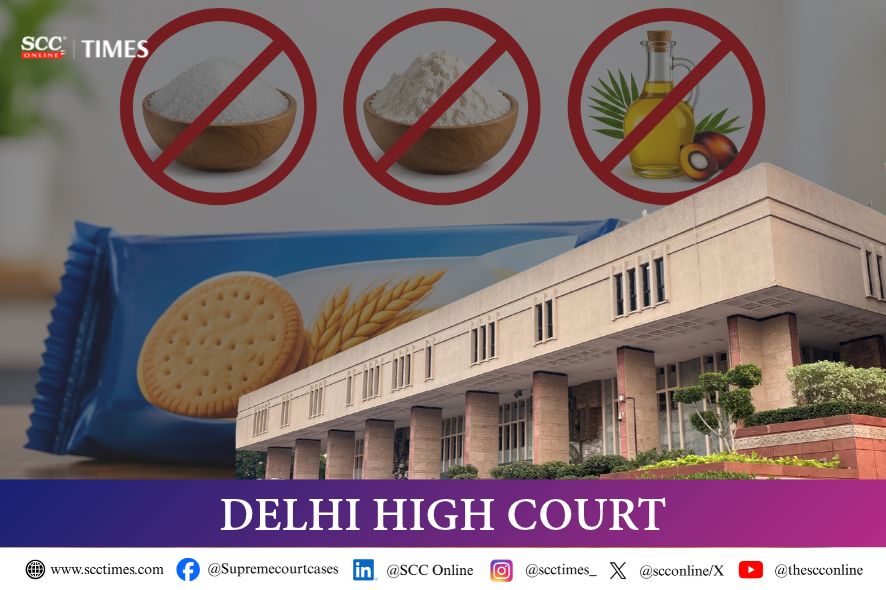
Delhi HC Stays FSSAI Biscuit Claims: 'No Added Sugar,' 'No Maida' Labels Allowed
Summary
- The Delhi High Court has temporarily stayed an FSSAI order requiring the removal of "No Added Sugar," "No Maida," and "No Palm Oil" claims from biscuit labels.
- The court prima facie agreed with the petitioner, Britannia Industries Ltd., that these "non-addition" claims are factual statements about product ingredients.
- The FSSAI had argued these claims violate the Food Safety and Standards (Advertising and Claims) Regulations, 2018, by implying other ingredients are unsafe or inferior.
- Britannia Industries Ltd. agreed to remove a "100% Millets" claim from its packaging, which the court noted.
- This interim order allows manufacturers to continue using these specific non-addition labels until the next hearing on January 15, 2027.
What Happened
The court indicated that statements regarding the non-addition of ingredients, such as No Added Sugar label claim India and No Maida label claim Delhi HC, appear to be factual descriptions of the product rather than misleading advertisements designed to undermine competitors or improperly sway consumers.
The Delhi High Court has issued an interim order, temporarily halting a directive from the Food Safety and Standards Authority of India (FSSAI) that mandated the removal of specific "non-addition" claims from biscuit labels. Justice Amit Mahajan, presiding over a Single Judge Bench, stayed an order dated October 9, 2026, which had instructed a food manufacturer to discontinue using phrases such as "No Added Sugar," "No Maida," and "No Palm Oil" on its products. This judicial intervention allows the petitioner, identified in court records as Britannia Industries Ltd., to continue marketing its biscuits with these particular declarations, pending further proceedings.
The court's decision on October 16, 2026, in the case of Britannia Industries Ltd. v. FSSAI (W.P.(C) 15649/2026), came after the petitioner challenged the FSSAI's directive. While the court granted relief for the "non-addition" claims, the petitioner had already agreed to remove another claim, "100% Millets," from its packaging. The court noted this agreement and permitted the company to produce and market products without the "100% Millets" assertion. The matter is scheduled for its next hearing on January 15, 2027.
Regulatory Objections and Petitioner's Defense
The FSSAI's original directive stemmed from concerns that claims like "No Added Sugar," "No Maida," and "No Palm Oil" violated provisions of the Food Safety and Standards (Advertising and Claims) Regulations, 2018. Specifically, the regulatory body argued that these claims could be misleading and impermissible under Regulation 6(1), and also contravened Regulations 4(1) and 10(5). The FSSAI contended that such declarations create an impression that the absent ingredients are inherently unsafe, undesirable, or inferior, thereby casting unwarranted doubt on the safety and suitability of other products containing them.
From the FSSAI's perspective, these "non-addition" claims not only raise consumer doubts but also unfairly undermine the products of other manufacturers and unduly influence consumer purchasing decisions. The petitioner, represented by Senior Advocate Sandeep Sethi and others, countered that the claims "No Added Sugar," "No Maida," and "No Palm Oil" are purely factual statements about the product's composition. They asserted that these factual declarations do not disparage competitors' products or manipulate consumer behavior in a manner prohibited by the FSSAI food labelling regulations. The petitioner also highlighted their willingness to remove the "100% Millets" claim, despite its factual accuracy, as evidenced by new packaging submitted to the court.
Court's Prima Facie View and Implications
In its interim ruling, the Delhi High Court expressed a prima facie agreement with the petitioner's arguments. The court indicated that statements regarding the non-addition of ingredients, such as No Added Sugar label claim India and No Maida label claim Delhi HC, appear to be factual descriptions of the product rather than misleading advertisements designed to undermine competitors or improperly sway consumers. This preliminary assessment suggests that factual declarations about a product's composition might not inherently violate the Food Safety and Standards (Advertising and Claims) Regulations, 2018, as interpreted by the FSSAI.
This interim order provides a significant, albeit temporary, reprieve for food manufacturers, particularly those in the biscuit industry, who utilize "non-addition" claims. The court's decision to stay the FSSAI's directive means that companies can continue to use these specific labels on their products while the writ petition proceeds. The distinction drawn by the court between factual statements and potentially misleading advertising is crucial, offering a potential precedent for how FSSAI food labelling regulations might be interpreted in future cases involving similar claims.
Practical Implications
This interim order from the Delhi High Court provides temporary relief for food manufacturers, particularly those in the biscuit industry, who use 'non-addition' claims like 'No Added Sugar', 'No Maida', and 'No Palm Oil'. Lawyers advising such companies should note that these claims can continue to be used pending the final outcome of the writ petition, and compliance officers should be aware of the court's prima facie view that such factual statements may not violate FSSAI advertising regulations.
Source
How does this affect you?
Get an AI analysis of this article grounded in your jurisdictions, practice areas, and any policy documents you've uploaded to Wansom.
Finish Reading the Full Story and the Expert Analysis.
Get the latest legal & regulatory intelligence in India
Wansom is AI and can make mistakes.