
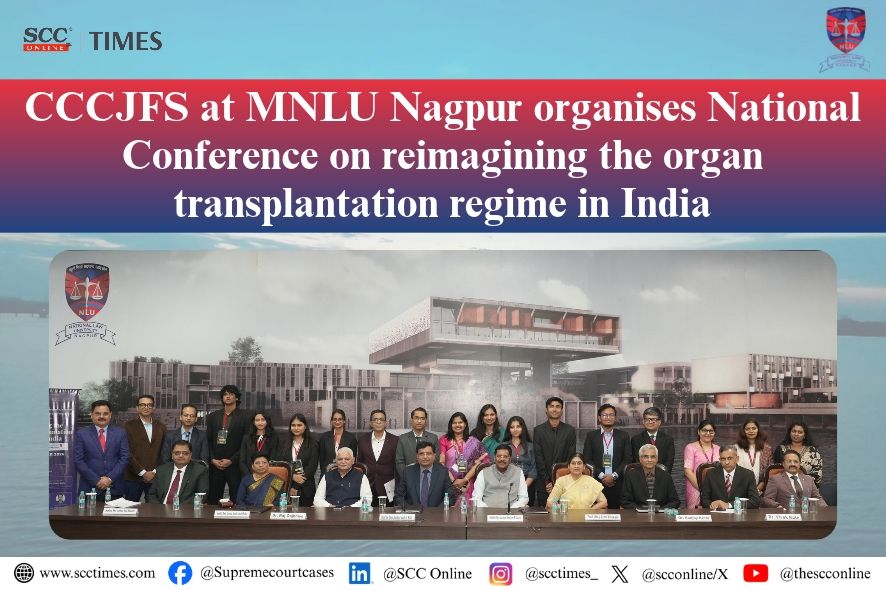
CCCJFS MNLU Nagpur: Organ Transplantation Conference on India Law Reform
Summary
- A national conference on reimagining India's organ transplantation regime was organized by CCCJFS at MNLU Nagpur.
- The conference brought together members of the judiciary and the medical fraternity to deliberate on key issues.
- Discussions focused on legal, ethical, and institutional challenges within India's organ transplantation framework.
- The event aimed to foster comprehensive deliberation on these multifaceted issues.
- The conference sought to identify problems and propose innovative solutions for the future of organ transplantation in India.
A National Dialogue on Organ Transplantation
The deliberations from the CCCJFS MNLU Nagpur organ transplantation conference carry significant implications for the future trajectory of organ transplantation in India.
The CCCJFS at MNLU Nagpur recently hosted a significant national conference, bringing together key stakeholders to address critical issues within India's organ transplantation framework. This event, titled a "National Conference on reimagining the organ transplantation regime in India," served as a crucial platform for in-depth discussions. Its primary objective was to foster a comprehensive deliberation on the multifaceted challenges currently impacting the nation's organ donation and transplantation ecosystem.
The conference distinguished itself by assembling a diverse and influential group of participants. Notably, members of the judiciary were present, underscoring the profound legal dimensions inherent in organ transplantation. Alongside them, representatives from the medical fraternity contributed their invaluable clinical and practical expertise, ensuring a holistic perspective on the complex subject matter. This unique convergence of legal and medical professionals was central to the conference's design, aiming to bridge the gap between policy, ethics, and practical implementation.
Organized by the Centre for Criminology, Criminal Justice and Forensic Science (CCCJFS) at Maharashtra National Law University (MNLU) Nagpur, this CCCJFS MNLU Nagpur organ transplantation conference specifically targeted the legal, ethical, and institutional hurdles that impede the efficiency and fairness of organ transplantation processes across the country. The focus on "reimagining" the existing regime highlights an intent to not merely identify problems but to actively seek innovative and sustainable solutions for the future.
Navigating Legal, Ethical, and Institutional Complexities
The core discussions at the conference revolved around the intricate legal, ethical, and institutional challenges that characterize India's organ transplantation framework. Legal challenges often pertain to the interpretation and enforcement of existing statutes, consent mechanisms, and the prevention of illicit organ trafficking. The involvement of the judiciary in these deliberations was therefore paramount, as their insights are crucial for developing robust legal safeguards and ensuring justice within the system.
Ethical considerations form another critical pillar of the organ transplantation discourse. These include equitable allocation of organs, donor rights, recipient responsibilities, and the moral dilemmas surrounding living and deceased organ donation. The medical fraternity's participation was essential in articulating these ethical quandaries from a clinical perspective, providing real-world context to the theoretical discussions. Addressing these ethical issues is fundamental to maintaining public trust and promoting a culture of voluntary donation.
Furthermore, institutional challenges, encompassing infrastructure, coordination among hospitals, training of medical personnel, and public awareness campaigns, were thoroughly examined. An effective organ transplantation regime requires not only sound laws and ethical guidelines but also robust institutional support to facilitate the entire process from donation to transplantation. The conference aimed to identify systemic weaknesses and propose improvements that could streamline operations and enhance the overall efficacy of the system.
Implications for India's Organ Transplant Future
The deliberations from the CCCJFS MNLU Nagpur organ transplantation conference carry significant implications for the future trajectory of organ transplantation in India. By bringing together legal and medical experts, the event fostered an environment conducive to cross-disciplinary problem-solving, which is vital for addressing complex societal issues like organ donation. The emphasis on "reimagining" the regime suggests a proactive approach towards reform, rather than merely incremental adjustments.
This national dialogue underscores the ongoing need for India organ transplant law reform and continuous evaluation of existing practices. The insights gained from such a high-level gathering can inform policy recommendations, guide legislative amendments, and inspire new initiatives aimed at strengthening the framework. A collaborative understanding between legal practitioners and healthcare providers is indispensable for creating a system that is both legally sound and medically effective.
Ultimately, the conference served as a powerful catalyst for change, highlighting the collective commitment to enhancing the accessibility, fairness, and ethical integrity of organ transplantation services across India. The discussions on legal challenges organ donation India and ethical issues organ transplant India are expected to contribute to a more transparent and efficient system, benefiting countless patients awaiting life-saving transplants.
Practical Implications
Lawyers advising healthcare providers, hospitals, or individuals involved in organ donation and transplantation in India should monitor the outcomes and discussions from this conference, as they highlight current legal and ethical challenges that may lead to future legislative or regulatory reforms in the organ transplantation regime.
Source
Source: Original reporting via SCC Times
How does this affect you?
Get an AI analysis of this article grounded in your jurisdictions, practice areas, and any policy documents you've uploaded to Wansom.
Finish Reading the Full Story and the Expert Analysis.
Get the latest legal & regulatory intelligence in India
Wansom is AI and can make mistakes.