
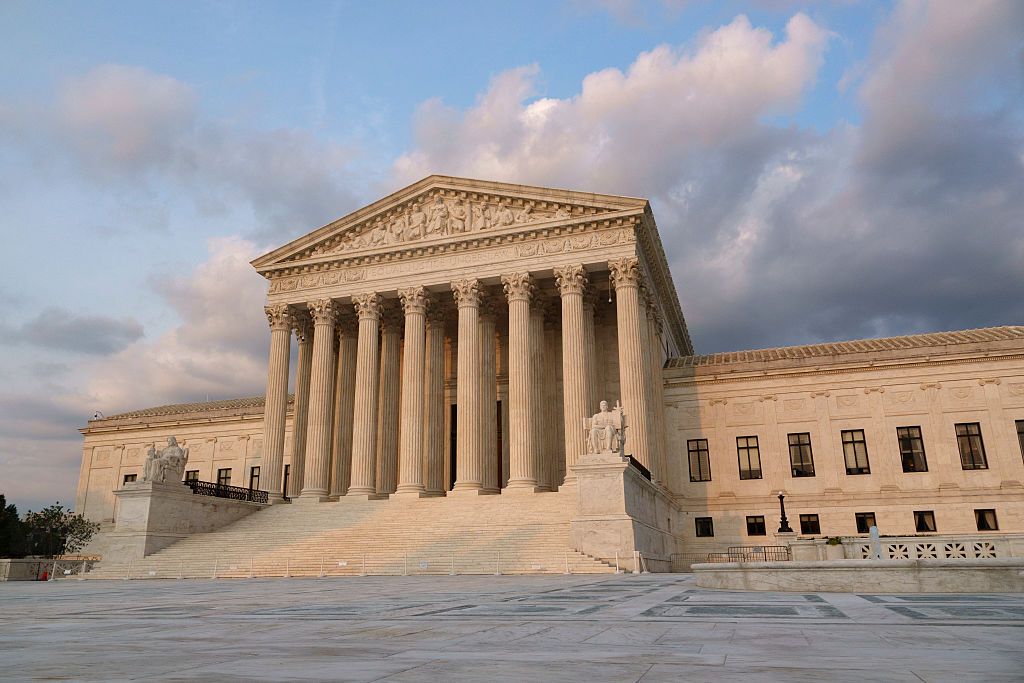
SCOTUS: Hoffmann v WBI Energy Transmission Attorney Fees Unlikely for Pipelines
Summary
- The Supreme Court recently heard arguments in Hoffmann v. WBI Energy Transmission, Inc., concerning attorney fees in eminent domain cases for interstate pipelines.
- Justices expressed significant doubt that gas companies should pay attorney fees beyond what the federal government would pay in direct condemnation.
- The Natural Gas Act of 1947 allows private companies to exercise federal eminent domain for federally approved interstate pipelines.
- Landowners argued that state laws, such as North Dakota's, should mandate attorney fee payments when a private entity condemns land.
- The Fifth Amendment's "just compensation" requirement is central to the dispute over whether these fees are included.
Supreme Court Skeptical on Pipeline Attorney Fees
During oral arguments, the justices conveyed a strong inclination against compelling a gas company to cover legal expenses that the federal government itself would not be required to pay if it were directly condemning the land.
The Supreme Court recently considered the case of Hoffmann v. WBI Energy Transmission, Inc., where the central issue revolved around the payment of attorney fees in eminent domain proceedings initiated by private companies for interstate natural gas pipelines. During oral arguments, the justices conveyed a strong inclination against compelling a gas company to cover legal expenses that the federal government itself would not be required to pay if it were directly condemning the land. This stance suggests a likely outcome that will clarify the scope of compensation in such federal eminent domain actions, potentially setting a precedent for future interstate pipeline condemnation fees.
Defining "Just Compensation" Under Federal Law
The dispute in Hoffmann v. WBI Energy Transmission attorney fees centers on the interpretation of "just compensation" as mandated by the Fifth Amendment when private property is "taken for public use." The Natural Gas Act of 1947 plays a crucial role, as it authorizes the federal government to approve interstate natural gas pipelines and permits gas companies to acquire necessary land through eminent domain, effectively exercising federal power. Landowners in the case contended that when a private pipeline company, rather than the United States directly, condemns property, state-specific rules should apply, potentially requiring greater compensation than the federal constitutional minimum. Specifically, they pointed to North Dakota eminent domain law, which might obligate the company to pay the landowners' attorney fees, thereby increasing the overall interstate pipeline condemnation fees. This argument highlights a tension between state-level protections for property owners and the federal framework governing large-scale infrastructure projects.
Implications for Landowners and Federal Projects
The Supreme Court's evident skepticism, highlighted by Justice Clarence Thomas's early doubtful questioning of Robert McNamara, who represented the landowners, underscores a potential reinforcement of a uniform federal standard for eminent domain compensation. Should the Court rule as anticipated, it would limit the ability of landowners to recover attorney fees in federal eminent domain cases, even when a private entity is the condemnor. This outcome would have significant implications for property owners whose land is acquired for federally approved projects, as it would likely confirm that "just compensation" under the Natural Gas Act eminent domain framework does not inherently include legal costs beyond the fair market value of the property itself. Such a decision would shape future SCOTUS eminent domain attorney fees considerations and influence how private companies approach land acquisition for federally sanctioned infrastructure. The air of skepticism during the arguments left little doubt about the justices' leanings on this critical issue.
Practical Implications
Lawyers advising landowners in federal eminent domain cases for interstate pipelines should anticipate that the Supreme Court is unlikely to uphold state-mandated attorney's fee awards, reinforcing the federal standard for 'just compensation' under the Natural Gas Act. This outcome would limit potential recovery for landowners beyond the property's fair market value.
Source
How does this affect you?
Get an AI analysis of this article grounded in your jurisdictions, practice areas, and any policy documents you've uploaded to Wansom.
Finish Reading the Full Story and the Expert Analysis.
Get the latest legal & regulatory intelligence in United States
Wansom is AI and can make mistakes.