
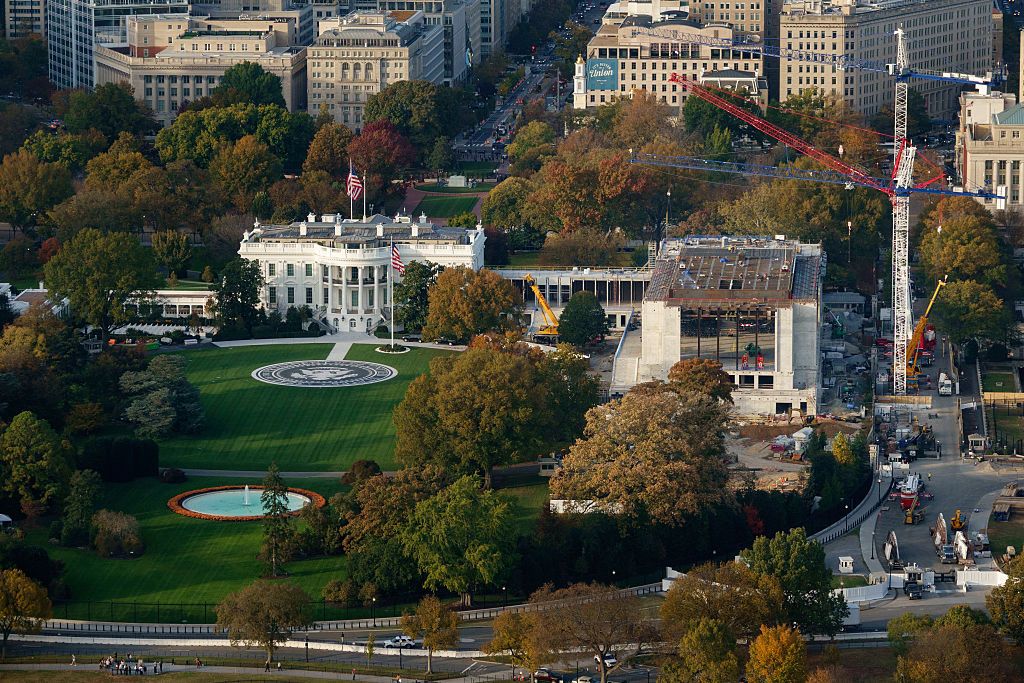
Trump White House Ballroom: Administration Petitions Supreme Court Again
Summary
- The Trump administration has asked the Supreme Court to intervene again in its White House ballroom construction project.
- U.S. Solicitor General D. John Sauer filed a petition on November 5, seeking to reverse a lower court's ruling or hear oral arguments.
- A federal judge's ruling, which would have stopped above-ground construction, was previously paused by a divided Supreme Court on August 31.
- The National Trust for Historic Preservation filed a lawsuit in December, seeking reviews and authorization for the project.
- The Trust established standing through a member who lives in Washington, D.C., and visits the construction area.
Renewed Supreme Court Intervention Sought
The Solicitor General's assertion that the project should move forward "outside the shadow of judicial superintendence" encapsulates this tension between executive action and the judiciary's role in ensuring adherence to legal and regulatory frameworks.
The Trump administration recently escalated its legal battle concerning the construction of a new White House ballroom, petitioning the Supreme Court once more to allow the project to proceed unimpeded. On November 5, U.S. Solicitor General D. John Sauer formally requested the justices either to overturn a lower court's decision entirely or to accept the case for full oral arguments, emphasizing the administration's desire to finalize the project. This latest appeal follows an August 31 intervention by a divided Supreme Court, which temporarily halted a federal judge's ruling from Washington, D.C., that would have prevented above-ground work on the controversial construction.
In his filing, Solicitor General Sauer contended that the Supreme Court's prior action had effectively resolved the central issue of the dispute, suggesting that further judicial intervention was unnecessary. He further argued that the construction of the Trump White House ballroom should proceed without the continued scrutiny of the judiciary, stating it "should be permitted to move forward outside the shadow of judicial superintendence." This latest appeal underscores the administration's persistent efforts to advance the project despite ongoing legal challenges and judicial scrutiny.
Origins of the Ballroom Controversy
The contentious White House ballroom project commenced in October of the previous year with the demolition of the East Wing, marking the beginning of significant structural changes. This initial phase set the stage for a legal challenge mounted in December by the National Trust for Historic Preservation. This private nonprofit organization, which has dedicated over 75 years to safeguarding America's historic sites and describes itself as having "led the movement to save America's historic places," initiated a lawsuit in federal court to protect the integrity of the historic area.
The National Trust for Historic Preservation lawsuit aimed to halt further construction until several critical conditions were met. Specifically, the organization sought to ensure that the National Capital Planning Commission and the Commission of Fine Arts had thoroughly reviewed the proposed plans, that the National Capital Planning Commission had granted its official approval, and that Congress had formally authorized the construction. These requirements highlight the regulatory hurdles involved in significant federal building projects, particularly those impacting historic structures within the nation's capital.
The Standing Debate and Judicial Oversight
A key aspect of the National Trust's legal challenge revolved around establishing its standing to sue historic preservation, a fundamental requirement for bringing a case in federal court. To demonstrate this legal right, the organization submitted a declaration from Alison Hoagland, one of its members. Ms. Hoagland, a resident of Washington, D.C., affirmed that she frequently visits the area where the construction is taking place, thereby asserting a direct and personal impact from the project. This declaration was crucial in arguing that the Trust had a legitimate interest in the outcome of the case.
The administration's current appeal to the Supreme Court directly challenges the authority of a federal judge in Washington, D.C., whose ruling previously threatened to impede the project's progress by halting above-ground construction. This ongoing legal saga illustrates the executive branch's attempts to navigate or circumvent judicial oversight for large-scale government construction projects, especially when historic preservation interests are at stake. The Solicitor General's assertion that the project should move forward "outside the shadow of judicial superintendence" encapsulates this tension between executive action and the judiciary's role in ensuring adherence to legal and regulatory frameworks.
Practical Implications
This case illustrates the ongoing legal challenges and executive branch efforts to circumvent judicial oversight for large-scale government construction projects, particularly when historic preservation interests are involved. Lawyers advising clients on such projects should closely monitor Supreme Court decisions regarding standing and the scope of judicial review in these contexts.
Source
How does this affect you?
Get an AI analysis of this article grounded in your jurisdictions, practice areas, and any policy documents you've uploaded to Wansom.
Finish Reading the Full Story and the Expert Analysis.
Get the latest legal & regulatory intelligence in United States
Wansom is AI and can make mistakes.