
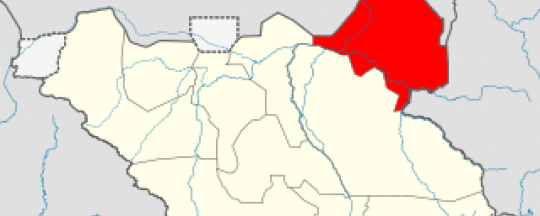
Upper Nile State: Civil Society Demands Legislative Assembly Reopening
Summary
- Residents and civil society groups in South Sudan's Upper Nile State are demanding the reopening of the state legislative assembly.
- The Upper Nile State transitional legislative assembly was reconstituted in November 2021, but concerns about its effective functioning and calls for its resumption persist.
- Key figures, including William Akol and Joseph Jacob, highlight the resulting gaps in public representation and executive oversight.
- A former assembly member, Mojok Deng Ajak, noted the closure reduces citizen engagement with state authorities.
- The state government has not provided immediate comment on the reasons for the assembly's continued inactivity.
Calls for Legislative Revival in Upper Nile State
The continued Upper Nile State assembly closure creates a significant governance gap, directly impacting legal certainty, transparency, and the crucial oversight of executive actions.
Residents and civil society organizations within South Sudan's Upper Nile State are urgently advocating for the resumption of the state legislative assembly's operations. The assembly, which holds critical responsibilities for enacting laws and supervising the state government, was reconstituted in November 2021, though concerns about its effective functioning and calls for its resumption persist, prompting widespread concern.
This prolonged Upper Nile State assembly closure has significantly curtailed public representation and diminished the essential oversight functions typically exercised over the state government. Multiple individuals, including local residents and civil society representatives, voiced these concerns to Radio Tamazuj on Thursday, emphasizing the detrimental impact on governance and accountability.
Erosion of Oversight and Citizen Engagement
The absence of a functioning legislative body has demonstrably weakened the checks and balances on the executive branch. William Akol, who serves as the secretary general for civil society organisations in Upper Nile State, explicitly stated that the assembly's inactivity has undermined oversight of the executive. He further urged the state government to allocate the necessary funding and resources to facilitate the assembly's immediate return to work, highlighting the critical need for its legislative functions to be restored.
Joseph Jacob, a local peace activist, echoed these sentiments, pressing the government to reactivate the assembly. Jacob underscored that the prolonged South Sudan legislative inactivity has created a substantial void in both public representation and governmental oversight. Furthermore, Mojok Deng Ajak, a former member of the assembly, observed that the Upper Nile State assembly closure has severely limited opportunities for citizens to interact with state authorities, advocating for its prompt resumption to effectively articulate and address citizen concerns.
Governance Gaps and Accountability Concerns
The continued Upper Nile State assembly closure creates a significant governance gap, directly impacting legal certainty, transparency, and the crucial oversight of executive actions. This environment introduces increased operational and regulatory risks for any entities or individuals operating within the region, as the absence of a functioning legislative body can lead to a less predictable and less accountable administrative landscape. The lack of active South Sudan legislative oversight means that executive decisions may proceed without the scrutiny typically provided by a representative body, potentially affecting Upper Nile State government accountability.
This situation underscores the critical importance of the Upper Nile civil society assembly call, as it seeks to restore a fundamental pillar of democratic governance. Despite the widespread calls for its reopening and the clear implications of its inactivity, the state government could not be reached for immediate comment regarding the reasons behind the assembly's ongoing closure, further exacerbating concerns about transparency and responsiveness.
Practical Implications
The continued closure of the Upper Nile State legislative assembly creates a significant governance gap, impacting legal certainty, transparency, and oversight of executive actions. Lawyers advising clients in the region should be aware of the increased operational and regulatory risks due to the absence of a functioning legislative body.
Source
How does this affect you?
Get an AI analysis of this article grounded in your jurisdictions, practice areas, and any policy documents you've uploaded to Wansom.
Finish Reading the Full Story and the Expert Analysis.
Get the latest legal & regulatory intelligence in South Sudan
Wansom is AI and can make mistakes.