
IGAD: South Sudan National Elections Act Amendment Bill Under Review
Summary
- IGAD urged South Sudan's government and peace agreement parties to engage in inclusive dialogue for the 22 December 2026 elections.
- The regional bloc emphasized that the elections must be anchored in the Revitalised Agreement on the Resolution of the Conflict in South Sudan (R-ARCSS).
- South Sudan's parliament is considering the National Elections Act Amendment Bill, which proposes significant changes to power-sharing arrangements.
- The bill suggests the incumbent president retain full powers during elections, while vice-presidents would leave office three months prior to polling day.
- IGAD also called for sustainable funding for monitoring bodies RJMEC and CTSAMVM, which oversee the 2018 peace agreement's implementation.
What Happened
The parliamentary consideration of the IGAD South Sudan National Elections Act Amendment Bill carries profound implications for the nation's political stability and the integrity of its peace process.
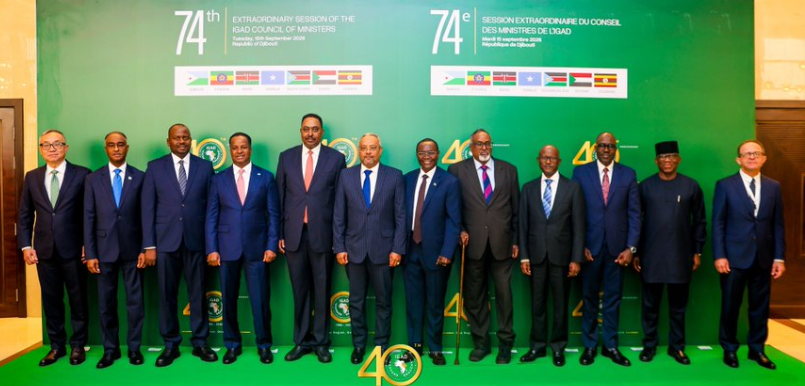
The Intergovernmental Authority on Development (IGAD), a key regional bloc, recently urged the South Sudanese government and other signatory parties to the country's peace agreement to engage in comprehensive dialogue. This call, issued in a communiqué following a meeting of its Council of Ministers in Djibouti, emphasized the necessity of such discussions to rebuild trust among the factions and forge a unified path toward the general elections slated for 22 December 2026. The regional body underscored that these crucial elections must remain firmly rooted in the Revitalised Agreement on the Resolution of the Conflict in South Sudan (R-ARCSS), which established the current transitional government.
This urgent appeal from IGAD coincides with significant legislative developments in South Sudan's parliament. Lawmakers are currently reviewing the IGAD South Sudan National Elections Act Amendment Bill, a proposed piece of legislation that could fundamentally reshape the nation's power-sharing framework in the run-up to the vote. Tabled on a Wednesday, the amendment bill contains provisions that would allow the incumbent president to retain full constitutional authority throughout the election period. Conversely, it stipulates that the first vice-president and other vice-presidents would be required to vacate their positions three months prior to polling day. The bill has since been referred to a parliamentary committee for detailed examination and has not yet been enacted into law.
Legal Context and Proposed Changes
The proposed amendments within the National Elections Act Amendment Bill directly challenge the intricate power-sharing arrangements established by the 2018 peace agreement. This foundational accord created a multi-tiered presidency, comprising a president, a first vice-president, and four additional vice-presidents. The bill's stipulation that only the incumbent president would remain in office with full powers during the electoral phase, while all vice-presidents would step down ahead of the vote, represents a substantial departure from this agreed-upon structure. Such South Sudan power-sharing changes could significantly alter the political landscape.
Adding to the complexity, Dr. Riek Machar, a principal signatory to the 2018 peace agreement and the suspended first vice-president, remains under house arrest and is currently facing treason charges. His situation highlights the delicate balance of power and the personal stakes involved in any alterations to the R-ARCSS framework. IGAD, recognizing the fragility of the peace process, explicitly reaffirmed the R-ARCSS as the indispensable blueprint for South Sudan's stability and insisted that the upcoming R-ARCSS elections must be anchored within its provisions. Furthermore, the IGAD Council of Ministers South Sudan session also called for consistent and reliable funding for critical monitoring bodies, including the Reconstituted Joint Monitoring and Evaluation Commission (RJMEC) and the Ceasefire and Transitional Security Arrangements Monitoring and Verification Mechanism (CTSAMVM), both of which oversee the implementation of key aspects of the 2018 agreement, such as the ceasefire and transitional security arrangements.
Why It Matters
The parliamentary consideration of the IGAD South Sudan National Elections Act Amendment Bill carries profound implications for the nation's political stability and the integrity of its peace process. These South Sudan electoral law amendments, particularly those concerning the power-sharing presidency, could either pave a clearer path to the 2026 elections or introduce new points of contention, especially given the history of delays in implementing the 2018 peace agreement. The regional bloc, IGAD, which has played a central role as a principal guarantor of the 2018 accord, views these developments with urgency.
The call for inclusive dialogue and a consensual South Sudan election roadmap by IGAD underscores the need for all parties to navigate these proposed changes carefully. South Sudan's Foreign Minister, James Pitia Morgan, attended the 74th Extraordinary Session of the IGAD Council of Ministers on September 15 in Djibouti, indicating the government's engagement with the regional body. IGAD has reiterated its readiness to provide support for the electoral process and has directed its Ministerial Sub-Committee on South Sudan to intensify its engagement with the government and other stakeholders, with a mandate to report back to the council. This ongoing oversight highlights the regional community's commitment to ensuring a credible and peaceful transition, despite the significant power-sharing changes being debated.
Practical Implications
Lawyers advising clients in South Sudan should closely monitor the parliamentary progress of the National Elections Act Amendment Bill, as its proposed changes to power-sharing arrangements could significantly impact political stability and regulatory certainty ahead of the 2026 elections.
Source
How does this affect you?
Get an AI analysis of this article grounded in your jurisdictions, practice areas, and any policy documents you've uploaded to Wansom.
Finish Reading the Full Story and the Expert Analysis.
Get the latest legal & regulatory intelligence in South Sudan
Wansom is AI and can make mistakes.