
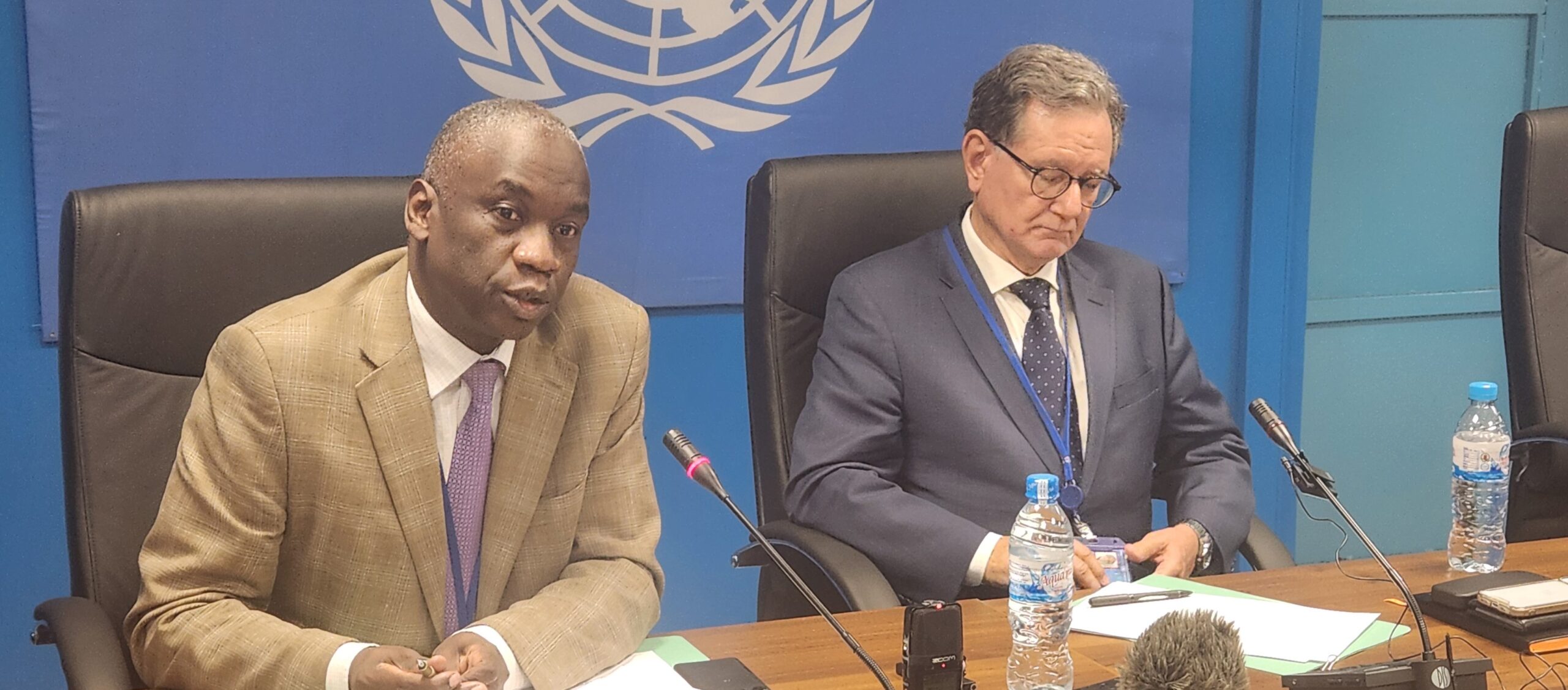
UN Human Rights Commission Warns South Sudan Elections Risk Violence
The UN Commission on Human Rights in South Sudan has warned that the countrys planned December elections could trigger further political confrontation and armed violence unless adequate security, political and human rights safeguards are put in place. The Commission also called for all political adversaries, including supporters of detained First Vice President Riek Machar, to be brought into genuine and inclusive dialogue. Speaking at a press conference in Juba on Thursday after the Commissions 14th visit to South Sudan, Commissioner Barney Afako said the country is approaching the elections amid renewed violence, deep political mistrust, shrinking civic space and weakened institutions. The Commission supports South Sudanese citizens right to elect their leaders, Afako said, noting that they had waited 15 years to exercise that right since independence. But he stressed that the Commissions concern is not with elections themselves, but with the conditions under which they would be held. “Our concern is with the conditions for elections,” Afako said. He warned that elections without adequate safeguards and genuine political dialogue could become an “arena for political confrontation and armed violence”, with the risk of atrocity crimes. The Commission said elections must allow South Sudanese to vote freely and safely through a properly prepared and adequately resourced process capable of promoting stability. It identified several minimum safeguards, including a genuine cessation of hostilities, adequate civic and political space, an independent and properly funded electoral institution, credible mechanisms for resolving electoral disputes, and measures to prevent hate speech and incitement to violence. Afako said elections alone would not resolve South Sudans political crisis and urged the government to invest in genuine and inclusive dialogue before, during and after the polls. He said the process should include political adversaries, including the SPLM-IO led by First Vice President Riek Machar. “Dialogue only makes sense when its between adversaries,” he said. Political differences, he added, should be addressed through dialogue rather than military action or purely judicial responses. Afako urged leaders to consider whether decisions surrounding the elections were creating conditions for stability or instead laying the foundations for further division. The Commission also called on regional and international partners to continue supporting South Sudan during the transition. The Commission described the electoral process as “grossly underfunded” and said the timetable was highly ambitious. Commissioner Carlos Castresana said the country had roughly 100 days to complete a large amount of electoral planning and logistical work, while electoral institutions had only a fraction of the resources they needed. The Commission also highlighted the importance of a credible voters list, which is expected to be completed by 22 October. It warned that poorly conducted voter registration could leave citizens feeling excluded and create further grievances around the elections. Castresana said parts of the country remain affected by violence and that electoral officials could be unable to reach some contested areas. Residents in those areas could also be prevented from voting. He said the Commission had not received clear answers on how such situations would be addressed. “If up to half the states of South Sudan are experiencing violence, there needs to be a strategy and some deep thinking about what to do in those circumstances,” Castresana said. He warned against a situation in which some parts of the country are able to exercise their democratic rights while others are excluded, saying this could create a “democratic deficit” and new grievances. Impunity Fuels Violence Castresana said the human rights situation had not fundamentally changed during the decade the Commission had monitored South Sudan. Civilians continue to be killed and di
How does this affect you?
Get an AI analysis of this article grounded in your jurisdictions, practice areas, and any policy documents you've uploaded to Wansom.
Finish Reading the Full Story and the Expert Analysis.
Wansom is AI and can make mistakes.