
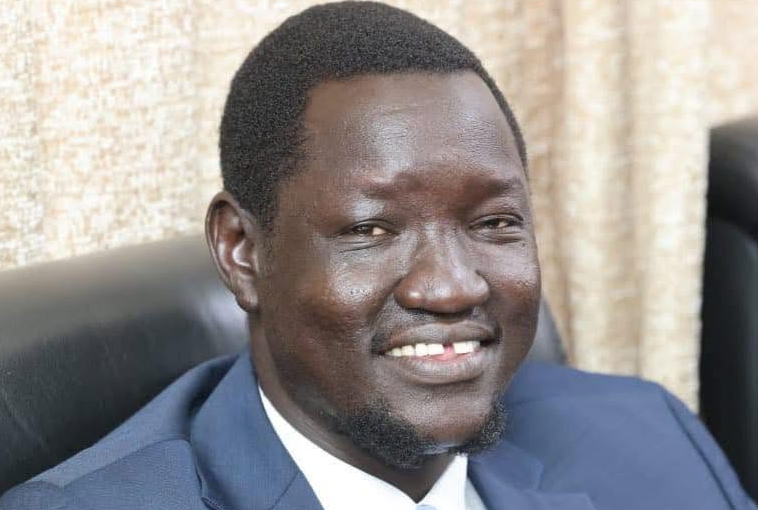
SPLM Former Detainees Chief Whip Rejects Expulsion Decision
Isaiah Hakim Garang, whose membership of SPLM Former Detainees (SPLM-FDs) was revoked on Tuesday, has rejected the decision, saying those who issued the order do not represent the group. Garang, who serves as the group’s chief whip in the transitional parliament and represents it on a committee overseeing the implementation of the 2018 peace agreement, said the Former Detainees had ceased to operate as a separate political entity after rejoining the ruling SPLM. Speaking to Radio Tamazuj on Wednesday, he said the group had implemented the Arusha agreement on the reunification of the SPLM factions and was now part of the party led by President Salva Kiir. “We are part of the SPLM, and if there are laws that can hold us accountable, they must come from the SPLM and not individuals,” Garang said. His comments came a day after three senior figures of the Former Detainees – General Gier Chuang Aluong, Madut Biar Yel and Dr. Majak D’Agoot – announced that his membership had been revoked with immediate effect. They accused him of making public statements on behalf of the group without authorisation and said his conduct violated its code of conduct and internal rules. Garang disputed their authority to suspend or remove him, arguing that General Gier and Dr. Majak don’t represent the Former Detainees leadership in Juba. He said the two men had not supported the group’s participation in the 2018 peace agreement, which was signed by Deng Alor Kuol on behalf of the SPLM Former Detainees. “When the implementation of the 2018 peace agreement started, it was only Deng Alor, the late John Luk, Madut Biar and myself. We were the ones who signed the agreement in Sudan,” he said. Garang said the group later travelled to Addis Ababa and Nairobi to establish implementation committees and agree on the distribution of government positions among members of the Former Detainees. He alleged that some members of the SPLM Former Detainees including Dr. Majak and General Gier who did not endorse the 2018 agreement later returned to Juba and reached a separate understanding with President Kiir. “Those individuals returned to Juba with a special agreement. Four individuals among the group came and met President Kiir in Juba because they were not part of the 2018 peace agreement,” he said. “So, with what right can you expel someone who is a party to the agreement while you are not part of the agreement?” Garang said his faction had nevertheless accommodated members who had opposed the 2018 peace agreement. He also accused Dr Majak and General Gier of failing to condemn what he described as “inciting remarks” by Vice-President Rebecca Nyandeng de Mabior about the country’s political leadership. “Instead of them condemning the statement made by Mama Rebecca, they supported it, and they were not happy because I revealed the truth to the ruling party and the public,” he said. Dispute over leadership Garang said the Former Political Detainees had undergone changes in leadership following the collapse of the 2015 peace agreement. He said Pagan Amum, who had previously led the group, resigned and Deng Alor subsequently became its leader on the basis of seniority. Garang also argued that, following the reunification of the SPLM under the Arusha agreement, the Former Political Detainees no longer had a separate political identity. “After reunification of the SPLM following the Arusha agreement, none of those individuals renewed their membership of the SPLM and none of them attend meetings of the SPLM,” he said. He described Deng Alor as the current leader of the Former Political Detainees in Juba and said he was next in seniority by virtue of his position as chief whip in parliament and as the group’s representative in a peace implementation mechanism. The group remains represented in the transitional government under the 2018 peace agreement, although several positions originally allocated to its members have changed hands. “The president is the only person who has
How does this affect you?
Get an AI analysis of this article grounded in your jurisdictions, practice areas, and any policy documents you've uploaded to Wansom.
Finish Reading the Full Story and the Expert Analysis.
Wansom is AI and can make mistakes.