
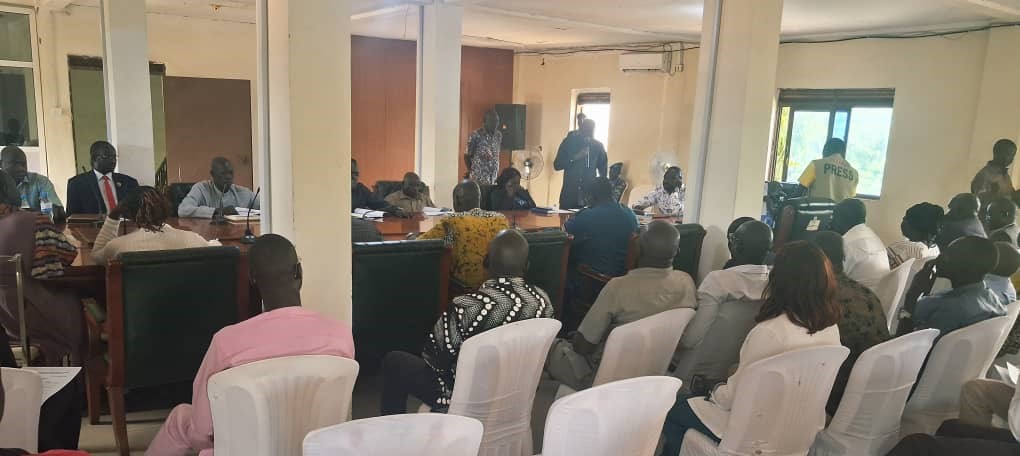
Central Equatoria Ministry: Juba Chambers of Commerce Dispute Given 3-Month Deadline
Summary
- The Central Equatoria State Ministry of Trade and Industry has given the state and Juba City chambers of commerce three months to resolve a leadership dispute.
- Failure to comply could lead to the suspension of chairpersons and the formation of an independent body to organize new elections.
- An investigation committee found that a lack of regulations, financial contribution disagreements, and an unestablished state-level board contributed to the conflict.
- The committee also criticized the use of security forces to arrest chamber officials, deeming it an abuse of office.
- Recommendations include peaceful resolution, operational independence, and vacating government premises, with a new committee overseeing implementation.
Government Issues Ultimatum Amidst Leadership Tensions
The absence of clear regulations directly fuels disagreements concerning meeting protocols and the precise responsibilities of leaders.
The Central Equatoria State Ministry of Trade and Industry has imposed a three-month deadline on the state and Juba City chambers of commerce to implement recommendations aimed at resolving a protracted leadership dispute. This directive, issued on a recent Wednesday, carries a stern warning: failure to comply could result in the suspension of the two rival chairpersons and the establishment of an independent body. This new entity would be tasked with organizing fresh elections, commencing at the grassroots level and extending up to the state chamber.
This significant intervention follows an extensive investigation into the escalating conflict between the Central Equatoria State Chamber of Commerce and the Juba City Chamber of Commerce. The dispute has intensified in recent months, marked by mutual accusations between leaders and the concerning deployment of security forces to effect arrests of officials. The Ministry of Trade and Industry had previously formed an investigation committee specifically to ascertain the root causes of the disagreement and to evaluate how the two chambers should function under their existing constitutional framework.
Governance Gaps and Financial Discrepancies Identified
Presenting the committee's findings in Juba, chairperson Emmanuel Chandiga Abias highlighted critical deficiencies within the chambers' legal and administrative structures as primary contributors to the ongoing conflict. He noted that while the chamber of commerce operates under a constitution, which was revised in 2017 and is currently under review for further amendments, and is intended to guide the operations of both the two specific chambers and the broader South Sudan chamber of Commerce, a crucial element is missing.
Chandiga explained that this constitution was designed to be supplemented by detailed regulations governing the day-to-day management of the chambers, yet these essential regulations have never been developed. The absence of clear regulations directly fuels disagreements concerning meeting protocols and the precise responsibilities of leaders. The committee also scrutinized financial contributions, observing that while the state chamber remits 40% of its collections to the national chamber, no clear documentation mandates the Juba City Chamber of Commerce to contribute a similar proportion to the state chamber, leading to disputes where the city chamber asserts no obligation for such payments.
Furthermore, the investigation strongly condemned the involvement of security forces in the dispute, characterizing the arrests of chamber officials as an abuse of office. Chandiga underscored that the constitution contains explicit articles for conflict resolution, rendering the use of organizational resources to mobilize forces for the arrest of colleagues an unacceptable overreach. The committee also uncovered that a board, explicitly required by the chambers' constitution to operate at the state level, had not been established. This board, intended to include representatives from county chambers and the Juba City Chamber of Commerce, is meant to oversee chamber activities before reporting to the general assembly.
Ministry Demands Independence and Accountability
Mawa A. Moses, the current Central Equatoria State Minister of Roads and Bridges, articulated the core recommendations stemming from the investigation. He urged the chambers to peacefully resolve their differences and cease interfering in the affairs of institutions operating at distinct administrative tiers. A key directive is for the chambers to operate with full independence, which includes vacating any government premises they currently occupy. The minister emphasized that the committee specifically recommended their immediate relocation from government institutions to ensure their autonomy.
Minister Moses confirmed that the government has established a separate committee to oversee the diligent implementation of these recommendations. He issued a clear warning, stating that the government would not tolerate the dispute continuing to destabilize security within the state. The minister reiterated that if the chambers fail to implement the recommendations within the three-month timeframe, the government will take decisive action.
Practical Implications
Lawyers advising businesses or business associations in South Sudan, particularly those affiliated with the Juba or Central Equatoria chambers, should review their internal governance documents and dispute resolution mechanisms. This development underscores the critical need for clear regulations and adherence to constitutional frameworks to prevent leadership conflicts and potential government intervention, including the formation of new bodies or suspension of leaders.
Source
How does this affect you?
Get an AI analysis of this article grounded in your jurisdictions, practice areas, and any policy documents you've uploaded to Wansom.
Finish Reading the Full Story and the Expert Analysis.
Get the latest legal & regulatory intelligence in South Sudan
Wansom is AI and can make mistakes.