
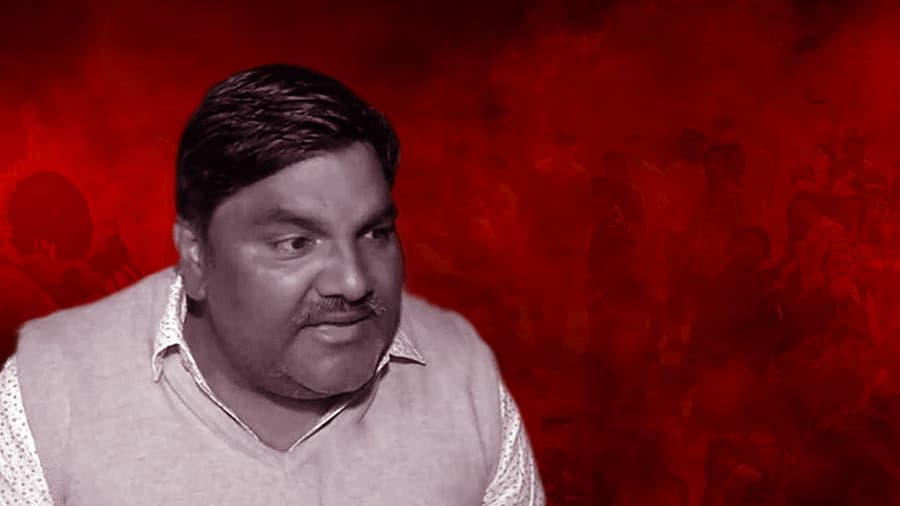
Karkardooma Court: Tahir Hussain Convicted for Delhi Riots Abetment
Summary
- Former AAP councillor Tahir Hussain, who is currently imprisoned after being sentenced to life for the murder of an Intelligence Bureau officer, was convicted of abetment to rioting by a Delhi court.
- Additional Sessions Judge Praveen Singh of the Karkardooma Court delivered the verdict.
- Hussain was acquitted of all other charges, and seven co-accused were fully acquitted.
- The case involved allegations of a shop being looted and set on fire on February 24, 2020, causing significant financial losses.
- Rioters were reportedly heard raising slogans in support of Tahir Hussain, who was identified by constables.
Conviction in Delhi Riots Case
The conviction of Tahir Hussain for abetment to rioting underscores the judiciary's stance on the responsibility of individuals who incite or aid public disorder, particularly when such actions lead to widespread destruction.
A Delhi court has found former Aam Aadmi Party (AAP) councillor Tahir Hussain, who is currently imprisoned after being sentenced to life for the murder of an Intelligence Bureau officer, guilty of abetment to rioting, a significant development stemming from the widespread unrest in the capital. The verdict was delivered by Additional Sessions Judge Praveen Singh at the Karkardooma Court. While Hussain faced various allegations, the court specifically convicted him for his role in instigating or facilitating the riots, while simultaneously acquitting him of all other offenses.
This ruling also extended to several co-accused individuals, including Md Shadab, Shah Alam, Riyasat Ali, Gulfam, Md Rihan, Arshad Qayyum, and Irshad Ahmed, all of whom were fully acquitted of all charges leveled against them. The court's detailed order outlining the reasoning behind these decisions is currently pending release.
Origins of the Allegations
The legal proceedings against Tahir Hussain and others originated from an FIR registered at the Dayalpur police station, encompassing a range of serious charges under the Indian Penal Code (IPC). These included sections 147 (punishment for rioting), 148 (rioting, armed with deadly weapon), 149 (every member of unlawful assembly guilty of offence committed in prosecution of common object), 427 (mischief causing damage to the amount of fifty rupees), 436 (mischief by fire or explosive substance with intent to destroy house, etc.), and 120B (criminal conspiracy).
The case was propelled by complaints from individuals directly impacted by the violence. One complainant, Irshad Ali, reported that his shop suffered extensive damage and and was set ablaze on February 24, 2020. This incident alone resulted in substantial financial losses, estimated at ₹17–18 lakh for stolen goods and an additional ₹10 lakh due to property destruction. Another complainant, Mohd Zahid, provided testimony indicating that rioters were heard chanting slogans in support of Tahir Hussain, a detail corroborated by two constables who identified Hussain during the subsequent investigation.
Legal Context of Abetment
The conviction of Tahir Hussain for abetment to rioting underscores the judiciary's stance on the responsibility of individuals who incite or aid public disorder, particularly when such actions lead to widespread destruction. Abetment, under the Indian Penal Code, refers to instigating, engaging in conspiracy for, or intentionally aiding the commission of an offense. In this instance, the Karkardooma Court's decision highlights that even without direct participation in the physical acts of rioting, an individual can be held criminally liable for encouraging or enabling such events.
This specific application of abetment charges in the context of the Delhi riots, involving a former public figure, sets a notable precedent. The court's careful distinction between abetment and other charges, leading to acquittals on multiple counts for Hussain and all charges for his co-accused, suggests a focused assessment of the evidence pertaining to his specific role in instigation. The State was represented by Special Public Prosecutor Madhukar Pandey, while Advocate Rajiv Mohan appeared on behalf of Tahir Hussain throughout the proceedings.
Significance of the Verdict
The verdict against Tahir Hussain carries considerable weight, particularly given his past position as an elected official. It reinforces the principle that public figures are not immune from accountability for actions that contribute to civil unrest. The court's decision, even with the detailed order still awaited, provides a clear signal regarding the legal consequences for those found to have abetted violence during periods of communal disturbance.
This outcome is crucial for understanding the legal landscape surrounding the Delhi riots abetment charges. It demonstrates the judicial system's capacity to dissect complex cases of public disorder, distinguishing between various levels of involvement and culpability. The conviction of Tahir Hussain for abetment to rioting, while acquitting him of other offenses, indicates a precise legal finding based on the specific evidence presented regarding his role in the events of February 2020.
Practical Implications
This conviction provides a specific precedent for the application of abetment charges in riot-related cases, particularly involving public figures. Lawyers handling criminal defense or prosecution in similar matters should note the court's reasoning and the evidence considered, especially regarding the role of individuals in inciting or facilitating public disorder.
Source
How does this affect you?
Get an AI analysis of this article grounded in your jurisdictions, practice areas, and any policy documents you've uploaded to Wansom.
Finish Reading the Full Story and the Expert Analysis.
Get the latest legal & regulatory intelligence in India
Wansom is AI and can make mistakes.