
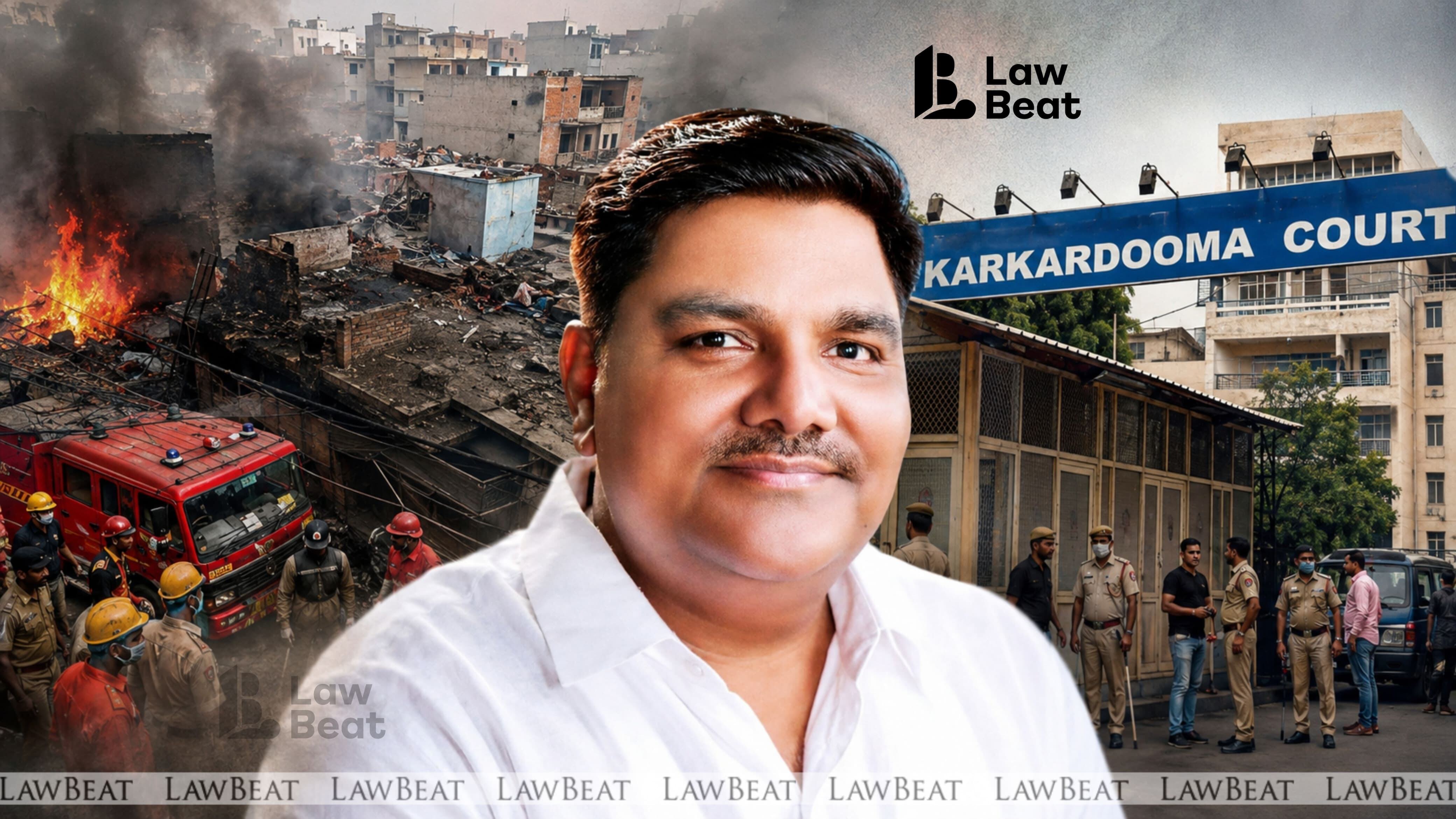
Karkardooma Court: Tahir Hussain Convicted for Abetting Rioting in Dayalpur
Summary
- Ex-AAP councillor Tahir Hussain was convicted of abetment to rioting in a 2020 Delhi riots case from the Dayalpur area.
- Additional Sessions Judge Praveen Singh of Karkardooma Court found Hussain guilty under IPC Section 147 read with Section 109.
- All twelve co-accused in this specific case were acquitted of all charges, while Hussain was acquitted of other charges he faced in this matter.
- This marks Hussain's second conviction related to the Delhi Riots 2020, following an earlier conviction in the Ankit Sharma killing case.
- Arguments on the quantum of sentence for Tahir Hussain are scheduled for November 16, with the detailed court order still pending.
What Happened
This conviction marks the second time Tahir Hussain, an ex-AAP councillor, has been found guilty in connection with the Delhi Riots 2020.
A Delhi court has found former Aam Aadmi Party (AAP) councillor Tahir Hussain guilty of abetment to rioting in a case stemming from the 2020 northeast Delhi riots in the Dayalpur area. Additional Sessions Judge Praveen Singh of Karkardooma Court delivered the verdict, convicting Hussain under Section 147 (punishment for rioting) read with Section 109 (abetment) of the Indian Penal Code (IPC).
While Hussain faced conviction for these specific charges, he was acquitted of other accusations in this particular case. Notably, all twelve co-accused in the matter—Mohammad Shadab, Shah Alam, Riyasat Ali, Gulfam, Rashid, Mohammad Rihan, Mohammad Abid, Arshad Qayyum, Irshad Ahmed, Deepak Singh Saini, Navneet, and Mehak Singh—were acquitted of all charges they had faced. The court has set November 16 for arguments concerning the quantum of sentence to be imposed on Hussain, with the detailed order explaining the reasons for both the conviction and the acquittals still pending.
Legal Context and Charges
The conviction of Tahir Hussain under IPC Section 147, combined with Section 109, signifies the court's finding that he not only participated in rioting but also actively instigated or aided its commission. Section 147 specifically addresses the punishment for rioting, while Section 109 deals with abetment of an offense, making this legal combination central to the Karkardooma Court riot verdict.
The distinct outcome for Hussain compared to his co-accused highlights the court's assessment of individual culpability. While Hussain was found guilty of abetment, the twelve other men, who were charged with a range of offenses including rioting, causing damage to property, mischief by fire, and criminal conspiracy, were fully acquitted. This split verdict underscores the nuanced approach taken by Additional Sessions Judge Praveen Singh in evaluating the evidence presented against each defendant. The forthcoming detailed order is expected to shed light on the specific evidentiary basis that led to Hussain's conviction for abetment while simultaneously clearing the other defendants of all accusations.
Broader Implications and Prior Convictions
This conviction marks the second time Tahir Hussain, an ex-AAP councillor, has been found guilty in connection with the Delhi Riots 2020. His first conviction occurred in July, alongside four other individuals, in a separate case concerning the killing of Intelligence Bureau officer Ankit Sharma. The Ankit Sharma killing case originated from an FIR filed at the Dayalpur police station, based on a complaint by Sharma's father, Ravinder Kumar. Following the emergence of his name in this case, Hussain was suspended from the Aam Aadmi Party.
In the Ankit Sharma case, the court found Hussain guilty of a multitude of serious offenses, including those punishable under Sections 188, 153A read with 149, 147 read with 149, 148 read with 149, 365 read with 149, and 302 read with 149 of the Indian Penal Code. However, he was acquitted of charges under Sections 120B, 505, 109, and 114 IPC in that specific matter. The other convicts in the Ankit Sharma case, Nazim, Kasim, and Anas, were also found guilty of offenses such as murder, kidnapping, rioting, promoting enmity, and unlawful assembly, though they were acquitted of criminal conspiracy under Section 120B IPC, with Nazim also cleared of Arms Act charges.
Forensic investigators, inspecting Hussain's building in Khajuri Khas on February 28, 2020, recovered significant evidence, including stones, bricks, a catapult, petrol bombs, glass bottles stuffed with cloth, bullets, and burnt articles from the terrace and surrounding areas. The court observed that this building was allegedly utilized by rioters for stone-pelting and hurling petrol and acid bombs during the communal violence. Eyewitnesses, including Vikalp Kochar who specifically identified Hussain and co-accused Anas in Ankit Sharma's murder, further implicated Hussain and others, stating they were involved in rioting and arson at his instigation.
Why It Matters
The recent Tahir Hussain abetting rioting conviction in Dayalpur is a significant development in the ongoing legal proceedings related to the Delhi Riots 2020. It underscores the judiciary's continued efforts to address the widespread violence that resulted in 53 fatalities, numerous injuries, and extensive property damage across northeast Delhi in February 2020.
This Karkardooma Court riot verdict, particularly the conviction of an ex-AAP councillor for abetment under IPC Section 147 and 109, highlights the legal system's capacity to differentiate individual roles within complex riot scenarios, as evidenced by the simultaneous acquittal of twelve co-accused. The fact that this is Tahir Hussain's second criminal conviction related to the Delhi Riots 2020, following his earlier conviction in the Ankit Sharma killing case, reinforces the gravity of the charges and the sustained legal scrutiny faced by individuals implicated in the violence. The upcoming sentencing arguments will be a crucial next step in this high-profile case.
Practical Implications
This conviction provides a case study on the application of IPC Sections 147 (rioting) and 109 (abetment) in complex riot cases involving public figures. Lawyers should note the court's reasoning for a split verdict, convicting the primary accused while acquitting co-accused, and how forensic and eyewitness evidence is weighed in establishing abetment.
Source
How does this affect you?
Get an AI analysis of this article grounded in your jurisdictions, practice areas, and any policy documents you've uploaded to Wansom.
Finish Reading the Full Story and the Expert Analysis.
Get the latest legal & regulatory intelligence in India
Wansom is AI and can make mistakes.