
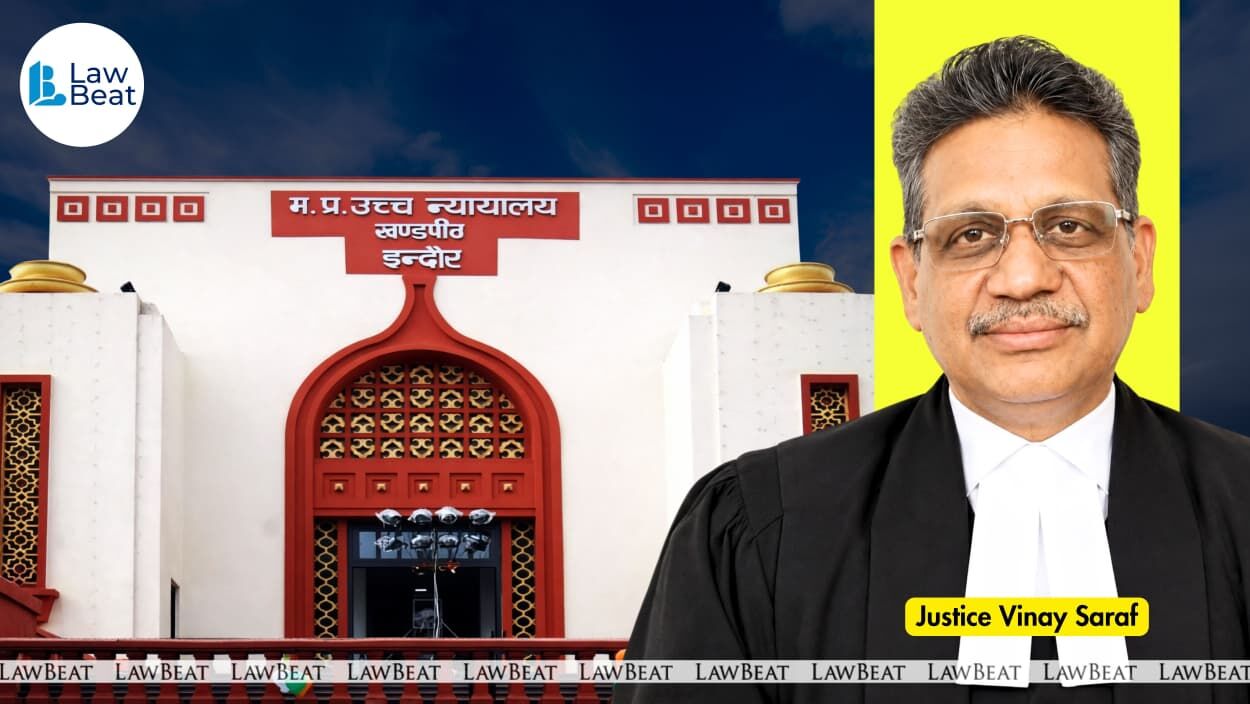
Madhya Pradesh High Court: Condonation of Delay for Lawyer Error
Summary
- The Madhya Pradesh High Court condoned a 1,093-day delay in challenging an ex parte specific performance decree.
- The court ruled that a litigant should not suffer for their lawyer's mistake, especially when the lawyer failed to advise on challenging the decree.
- Justice Vinay Saraf stated that the "length of delay is no matter," with the acceptability of the explanation being the sole criterion for condonation.
- Deepak Afle's civil revision was partly allowed, remanding the case for a decision on the merits of his Order IX Rule 13 CPC application.
- The High Court imposed costs of Rs 50,000 payable to the plaintiff, Dharam Developers and Finvest Limited.
Case Background and Initial Proceedings
Length of delay is no matter, acceptability of the explanation is the only criteria.
In a significant ruling, the Madhya Pradesh High Court at Indore recently addressed a substantial delay in challenging an ex parte decree, emphasizing that litigants should not be penalized for their legal counsel's oversights. The case involved Deepak Afle, who faced an ex parte decree for specific performance of a land sale agreement. The dispute originated in 2017 when Dharam Developers and Finvest Limited initiated legal action against Afle, seeking to enforce an agreement from April 24, 2012, concerning the sale of 0.169 hectares of land in survey number 573/17, located in village Machal, Depalpur tehsil. The developer claimed to have paid Rs 10 lakh as partial consideration, with the remaining balance due by March 31, 2013.
Initial attempts to serve summons on Afle were unsuccessful, leading the trial court to authorize service through publication in the daily newspaper Nai Dunia. As a result of his non-appearance, proceedings against Afle were declared ex parte on August 24, 2017. This culminated in an ex parte decree being issued on August 8, 2019. Afle stated that he only became aware of this decree in November 2019, upon receiving an execution notice. His then-lawyer appeared in the execution proceedings on November 27, 2019, but crucially, never advised Afle about the option to challenge the ex parte decree under Order IX Rule 13 of the Code of Civil Procedure. This critical omission set the stage for the subsequent legal battle over the delay.
Lower Court Decisions and Appeal
The situation escalated when Afle's initial lawyer relocated to Kerala in July 2022. Subsequently, new counsel was engaged, who, on November 17, 2022, filed an application to set aside the ex parte decree, accompanied by a plea under Section 5 of the Limitation Act to condone the significant delay. The trial court, however, rejected this condonation plea on April 13, 2024, citing Afle's conduct as "grossly negligent" and lacking "good faith." The court relied on the Supreme Court's decision in Lanka Venkateswarlu v. State of A.P. to support its refusal.
Afle's subsequent appeal to the District Judge also proved unsuccessful, with the appeal being dismissed on February 28, 2025. These consecutive rejections meant that Afle's application to challenge the ex parte decree could not be heard on its merits, effectively leaving him without recourse against the judgment. Faced with these setbacks, Afle filed a civil revision petition before the Madhya Pradesh High Court, seeking intervention against the lower courts' decisions.
High Court's Analysis and Key Principles
Justice Vinay Saraf, presiding over the civil revision, critically examined the lower courts' findings. The High Court acknowledged that superior courts typically refrain from disturbing findings related to condonation of delay. However, citing N. Balakrishnan v. M. Krishnamurthy, Justice Saraf asserted that a revisional court retains the authority to re-evaluate the grounds for condonation when lower courts have refused it. The court underscored a fundamental principle, stating that "the rules of limitation are not meant to destroy the right of the parties."
Central to the High Court's reasoning was the finding that a litigant should not suffer for a lawyer's mistake. The court observed that Afle was "always dependent upon the Lawyer" and found his explanation for the delay credible, particularly noting that his first lawyer had indeed appeared in the execution proceedings. The High Court explicitly rejected the notion that the sheer length of a delay should be the sole determining factor, declaring that "Length of delay is no matter, acceptability of the explanation is the only criteria." Furthermore, the court considered that the original summons were served solely through publication and that a portion of the delay coincided with the period between March 15, 2020, and March 28, 2022, which the Supreme Court had excluded from limitation calculations due to the COVID-19 pandemic.
The Ruling and Its Implications
In its order delivered on October 8, 2026, the Madhya Pradesh High Court partly allowed Deepak Afle's civil revision. The court condoned the 1,093-day delay in challenging the ex parte specific performance decree, subject to Afle paying costs of Rs 50,000 to the plaintiff, Dharam Developers and Finvest Limited. The matter was then remanded to the trial court with instructions to decide Afle's application to set aside the ex parte decree on its merits.
Justice Saraf concluded that the trial court had approached the matter "in a highly technical manner" and that the appellate court had failed to recognize the "irreparable loss" Afle would suffer if his plea was dismissed, which would render him "remediless in respect of the ex parte judgment and decree." This ruling provides a significant precedent, reinforcing the principle that a litigant should not be made to suffer due to the errors or omissions of their legal counsel, especially when a credible explanation for the delay is presented. It highlights the judiciary's commitment to ensuring justice over strict adherence to procedural technicalities, particularly in cases involving an ex parte specific performance decree challenge.
Practical Implications
This ruling provides a significant precedent for lawyers arguing for condonation of delay, particularly when the delay is attributable to a previous lawyer's oversight or failure to advise on challenging an ex parte decree. Lawyers should cite this judgment to demonstrate that courts may prioritize a litigant's right to justice over technicalities, especially when a credible explanation for the delay, such as reliance on counsel, is provided.
Source
How does this affect you?
Get an AI analysis of this article grounded in your jurisdictions, practice areas, and any policy documents you've uploaded to Wansom.
Finish Reading the Full Story and the Expert Analysis.
Get the latest legal & regulatory intelligence in India
Wansom is AI and can make mistakes.