
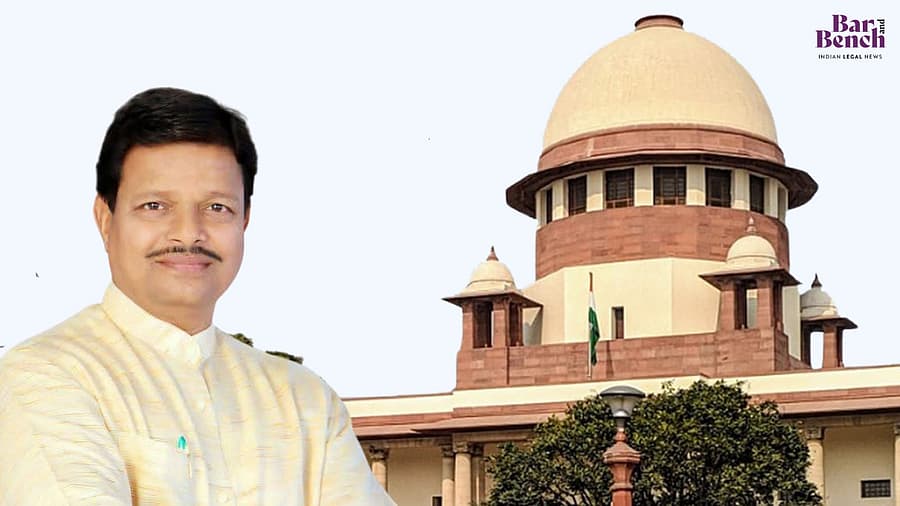
Supreme Court Ramesh Mhatre Bail Cancellation: Doctors Assault Case
Summary
- The Supreme Court has orally indicated its strong inclination to cancel the bail granted to Shiv Sena corporator Ramesh Mhatre.
- Mhatre's bail pertains to a case involving an assault on doctors and hospital staff in Dombivli.
- The Bombay High Court had previously lifted a stay on Mhatre's bail on August 7, imposing stringent conditions including requiring him to stay outside Maharashtra.
- Mhatre had approached the Supreme Court to challenge these bail conditions.
- The Supreme Court stated it would await a formal plea from the Maharashtra government seeking bail cancellation before issuing a final verdict.
Supreme Court Signals Intervention
The Supreme Court has orally expressed a strong inclination to revoke the bail previously granted to Shiv Sena corporator Ramesh Mhatre in a case involving an assault on doctors and hospital staff in Dombivli.
The Supreme Court has orally expressed a strong inclination to revoke the bail previously granted to Shiv Sena corporator Ramesh Mhatre in a case involving an assault on doctors and hospital staff in Dombivli. This development emerged during preliminary submissions heard by a bench comprising Justices Vikram Nath, Sandeep Mehta, and Augustine George Masih. The apex court's remarks suggest a potential overturning of a High Court decision that had allowed Mhatre's release from judicial custody.
Despite its clear stance, the Supreme Court indicated it would defer a final verdict on the `Supreme Court Ramesh Mhatre bail cancellation` until the Maharashtra government formally files an appeal seeking the revocation of Mhatre's bail. One of the justices on the bench explicitly stated that, after reviewing the case file, they were prepared to uphold the Bombay High Court's initial order that had stayed Mhatre's bail and set aside the subsequent order that facilitated his release. This highlights the court's readiness to scrutinize and potentially reverse High Court rulings in significant cases.
The Bail Controversy's Genesis
The legal saga surrounding Ramesh Mhatre's freedom began with a trial court's decision to grant him bail in the `Dombivli doctors assault case bail`. However, the Bombay High Court initially intervened, issuing a stay on this bail order. This initial stay prevented the `Shiv Sena corporator bail doctors assault` accused from being released.
Subsequently, on August 7, the High Court reversed its position, lifting the stay and permitting Mhatre's release from judicial custody. This decision, however, came with a set of stringent conditions. Among these conditions, Mhatre was directed to remain outside the state of Maharashtra until the police filed a chargesheet in the case. The High Court also imposed specific timelines for the completion of both the investigation and the subsequent trial, aiming to expedite the legal process. It is these directives and conditions that Mhatre himself challenged by approaching the Supreme Court, leading to the current review of `Ramesh Sukrya Mahatre vs High Court bail`.
Implications for State Appeals and Judicial Scrutiny
The Supreme Court's oral observations underscore a significant willingness to engage with and potentially overturn High Court bail orders, particularly when serious charges and public figures are involved. The bench's decision to await the `Maharashtra bail cancellation Supreme Court` plea from the state government, represented by standing counsel Siddharth Dharmadhikari, signals a procedural expectation for the state to formally pursue the matter. This approach emphasizes the state's role in challenging bail grants it deems inappropriate.
This situation also brings into focus the `Supreme Court bail conditions review` aspect, as Mhatre's petition initially sought to challenge the conditions imposed by the High Court. However, the Supreme Court's response has shifted the focus from the conditions themselves to the very validity of the bail grant. The apex court's proactive stance, even before a formal appeal from the state, indicates a heightened level of judicial scrutiny in such cases, suggesting that bail orders, even those with stringent conditions, are not immune to higher judicial intervention.
Practical Implications
This development signals the Supreme Court's willingness to intervene and potentially overturn High Court bail orders, especially in cases involving public figures and serious charges. Lawyers handling bail applications or appeals should note the increased scrutiny from the apex court and prepare robust arguments, particularly when the State is likely to challenge a grant of bail.
Source
Source: Reporting from legal sources
How does this affect you?
Get an AI analysis of this article grounded in your jurisdictions, practice areas, and any policy documents you've uploaded to Wansom.
Finish Reading the Full Story and the Expert Analysis.
Wansom is AI and can make mistakes.