
India Supreme Court: Quashes CJP Protest FIRs Under Article 142
Summary
- The Supreme Court quashed multiple First Information Reports (FIRs) against CJP protestors in Delhi, Bihar, Maharashtra, West Bengal, and Assam.
- A bench including CJI Surya Kant invoked Article 142 of the Constitution to ensure 'complete justice' for young protestors.
- The Court directed that similar FIRs in other States and Union Territories should not be pursued or investigated.
- No new FIRs are to be registered for protests occurring between July 20 and 25.
- The ruling also ordered compensation for families of students who committed suicide related to NEET 2026, pending a pan-India policy.
Supreme Court Intervenes in Protest Cases
The Court articulated its rationale, stating that it deemed it appropriate to exercise its powers under Article 142, particularly considering "the future prospects of the young protesters who came to participate in a peaceful protest to raise their voice in support of certain demands," underscoring a commitment to ensuring comprehensive justice for all parties involved.
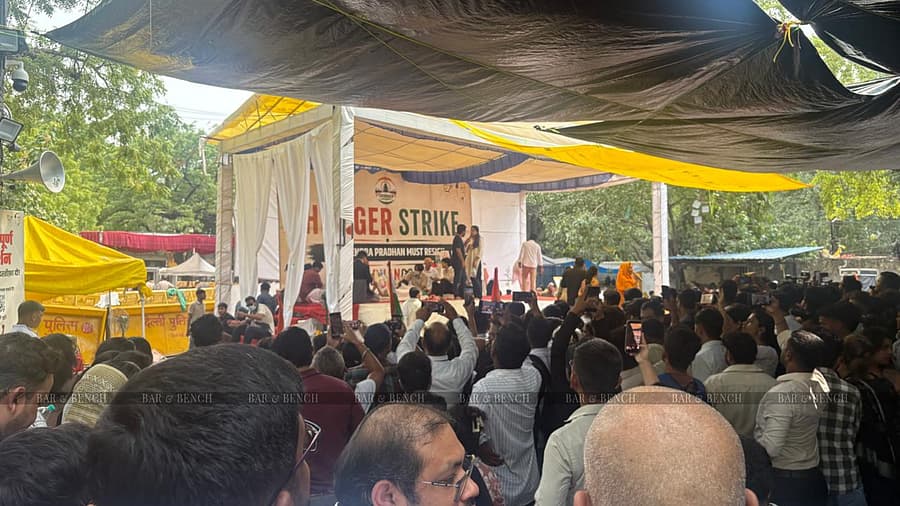
India's Supreme Court recently moved to set aside numerous First Information Reports (FIRs) that had been lodged against individuals involved in protests led by the Cockroach Janta Party (CJP). These demonstrations centered on critical academic issues, including widespread paper leaks, and had prompted police action in several states. The Court's intervention specifically addressed FIRs registered by law enforcement agencies in Delhi, Bihar, Maharashtra, West Bengal, and Assam.
Beyond these named states, the apex court issued a broader directive, instructing that similar FIRs filed in any other State or Union Territory across the country should not be pursued or investigated further. This effectively means these cases are to be considered closed for all practical purposes. The ruling also explicitly prohibited the registration of any new FIRs pertaining to protests that occurred between July 20 and 25, ensuring no further legal action for events within that specific timeframe.
Judicial Rationale and Article 142 Invocation
The landmark decision was delivered by a bench comprising Chief Justice of India (CJI) Surya Kant, Justice Joymalya Bagchi, and Justice V Mohana. Central to their ruling was the invocation of Article 142 of the Constitution, a unique provision granting the Supreme Court expansive powers to issue any decree or order necessary for doing 'complete justice' in any cause or matter pending before it. This extraordinary constitutional authority was utilized to nullify the criminal proceedings against the protestors.
Significantly, the quashing of these cases was not solely a suo motu action by the Court; both the Central government and the respective state governments had submitted applications requesting the dismissal of the cases. The Court articulated its rationale, stating that it deemed it appropriate to exercise its powers under Article 142, particularly considering "the future prospects of the young protesters who came to participate in a peaceful protest to raise their voice in support of certain demands," underscoring a commitment to ensuring comprehensive justice for all parties involved.
Broader Directives and Future Precedent
In addition to addressing the immediate FIRs, the Supreme Court's order extended to other critical areas. It mandated that no new FIRs should be registered concerning the protest activities that took place during the specific window of July 20 to July 25. This directive aims to prevent any further criminalization of these particular past events.
Furthermore, the Court issued a significant order concerning compensation for the families of students who tragically died by suicide in connection with the NEET 2026 examinations. It directed that compensation be paid to these families within three months, contingent upon the formulation of a comprehensive pan-India policy. This aspect of the ruling highlights the Court's broader engagement with the underlying issues that fueled the student agitations, moving beyond just the immediate legal consequences of the protests themselves and establishing a potential precedent for future protest-related cases in India.
Practical Implications
This ruling establishes a significant precedent for the Indian Supreme Court's use of Article 142 to quash FIRs against protestors, particularly in cases involving student agitations. Lawyers should advise clients on the potential for similar relief in protest-related criminal matters, noting the court's emphasis on the 'future prospects of young protesters' and the directive against registering new FIRs for specific past events.
Source
How does this affect you?
Get an AI analysis of this article grounded in your jurisdictions, practice areas, and any policy documents you've uploaded to Wansom.
Finish Reading the Full Story and the Expert Analysis.
Wansom is AI and can make mistakes.