
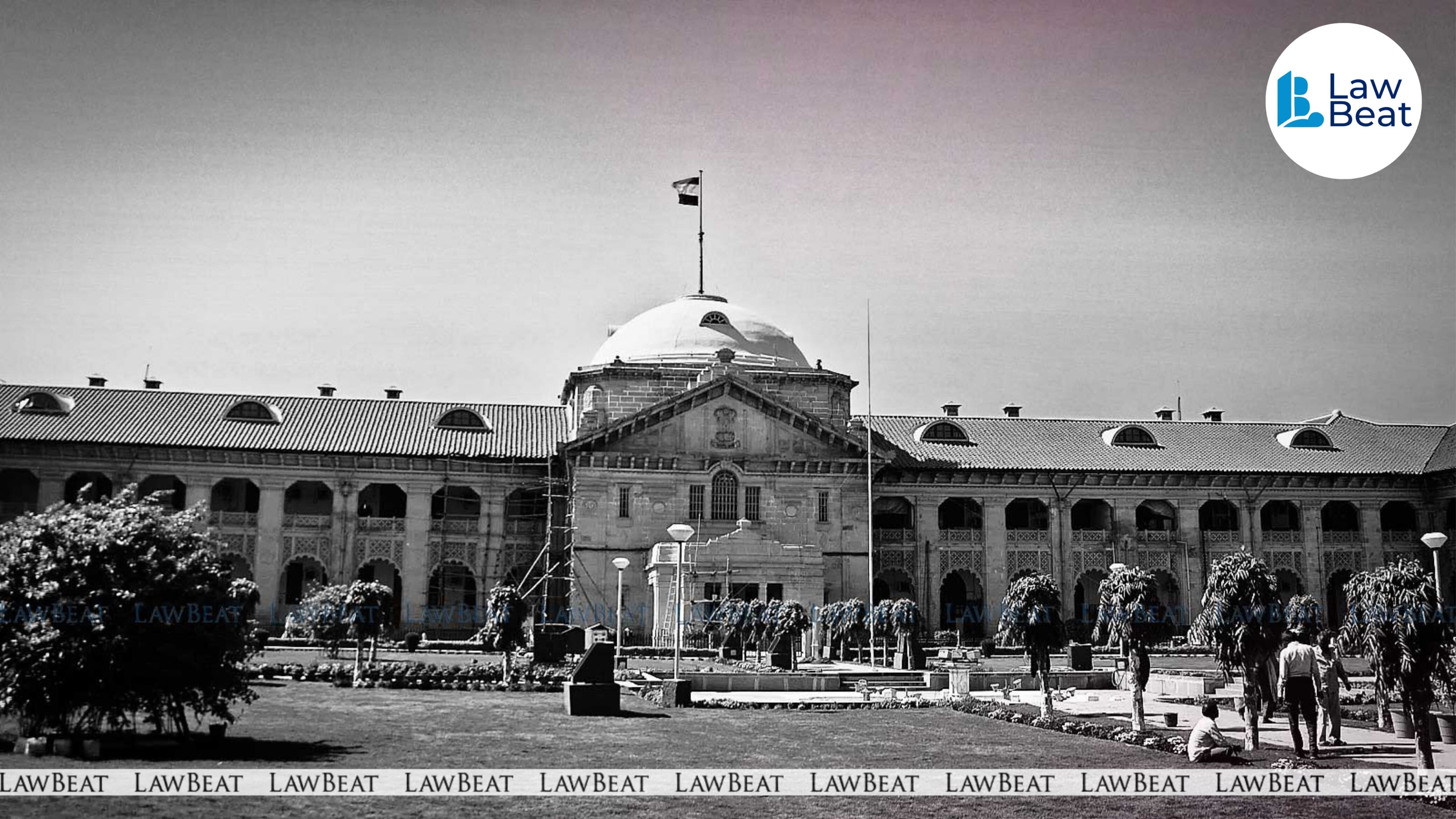
Allahabad HC: SBI MMGS-II Placement Merit Cap Affirmed
Summary
- The Allahabad High Court upheld SBI's 10% merit cap for MMGS-II placement, ruling that meeting minimum marks only grants eligibility, not entitlement.
- The court distinguished between confirmation in service and placement in a higher grade, citing the discretionary language in SBI Officers' Service Rules, 1992.
- The judgment overturned a single judge's order that had found SBI's 2020 policy arbitrary for the 2019 batch of trainee officers.
- SBI introduced the merit cap after observing that a large majority of officers from previous batches, placed under the old minimum merit policy, lacked sufficient leadership suitability.
- The ruling emphasizes that an employer's policy can include discretionary elements like a merit cap to ensure suitability for future leadership roles.
High Court Upholds SBI's Merit-Based Promotion Policy
The court emphasized that the bank retains the discretion to assess an officer's suitability for future leadership roles.
The Allahabad High Court recently affirmed the State Bank of India's (SBI) policy of capping placements in the Middle Management Grade Scale-II (MMGS-II) to the top 10% of a batch based on merit. This significant ruling clarifies that merely achieving a prescribed minimum score does not automatically guarantee a higher-grade placement for SBI trainee officers; rather, it only establishes eligibility for consideration. The court emphasized that the bank retains the discretion to assess an officer's suitability for future leadership roles.
A division bench comprising Justices Saumitra Dayal Singh and Swarupama Chaturvedi delivered this judgment on August 21, effectively overturning a November 2024 order by a single judge. The earlier ruling had deemed the December 16, 2020 Training and Confirmation Policy arbitrary and void for the 2019 batch, directing SBI to place affected officers in MMGS-II under a previous policy with notional benefits. The High Court's decision underscores the principle that an employer's merit-based promotion policy can incorporate discretionary elements without infringing upon vested rights, thereby introducing objectivity into the selection process.
The Genesis of the Dispute
The legal challenge originated from the 2019 batch of SBI Trainee Officers, who had advanced to their positions through an internal promotion process after serving as Assistants and successfully clearing an all-India examination. Their initial appointment letters stipulated that their service would be governed by the SBI Officers' Service Rules, 1992, and that confirmation following training would adhere to the "extant policy" in place at the time.
Under the policy effective April 23, 2019, officers underwent continuous assessment during their training period. Confirmation into Junior Management Grade Scale-I (JMGS-I) required securing at least 50% marks in the overall assessment, with a reduced threshold of 45% for SC/ST and PwD candidates. Crucially, the policy stated that officers achieving 75% or more, or 70% for SC/ST candidates, would be *considered* for placement in MMGS-II. The officers who initiated the lawsuit contended that by surpassing the 75% threshold, they were automatically entitled to MMGS-II placement under the policy prevalent at their appointment.
Legal Interpretation: Eligibility Versus Entitlement
The High Court decisively rejected the officers' interpretation, drawing a critical distinction between confirmation in service and actual placement in the MMGS-II grade. The bench highlighted Rule 16 of the SBI Officers' Service Rules, 1992, which stipulates that an officer would be confirmed after satisfactorily completing training. However, a specific proviso within this rule states that the Bank “may” confirm and grant placement in MMGS-II based on an officer's merit and suitability for a future leadership role. This discretionary language was central to the court's finding that mere confirmation does not automatically confer a right to the higher grade.
Further reinforcing this distinction, the court meticulously examined the wording of the 2019 policy itself. Clause 5G(i) explicitly stated that officers meeting the lower threshold “shall be confirmed,” employing mandatory language. In contrast, Clause 5G(ii) specified that officers meeting the 75% threshold “shall be considered” for MMGS-II, indicating a process of evaluation rather than an automatic right. The bench underscored that "rules of grammar exist and are actively and purposefully employed" to convey different meanings, concluding that these two expressions could not be treated as equivalent. Ultimately, the court held that "minimum merit (at training), alone would never be enough to claim placement/fitment in MMGS-II."
Rationale Behind the 10% Merit Cap
The High Court also delved into the rationale behind SBI's introduction of the 10% merit cap, examining the bank's experience with previous batches. Under the older policy, which relied solely on a minimum merit threshold, a significant majority of trainee and probationary officers were placed in MMGS-II. For instance, in the 2017 batch, 807 out of 816 Trainee Officers and 1,445 out of 1,592 Probationary Officers secured MMGS-II placements. Similarly, for the 2018 batch, 1,497 out of 1,524 Trainee Officers were placed in the same grade.
These high placement rates, based on the minimum merit threshold, led to feedback within SBI suggesting that a substantial number of officers placed in MMGS-II lacked sufficient qualities for leadership roles. The introduction of the 10% merit cap, therefore, was a strategic move by the bank to enhance the quality of its leadership pipeline. The court found that this cap did not divest trainee or probationary officers of any vested rights but instead served to inject greater objectivity into the bank's exercise of discretion, ensuring that only the most suitable candidates were advanced to critical managerial positions.
Practical Implications
This ruling clarifies that meeting minimum eligibility criteria for promotion does not automatically create an entitlement to a higher grade, especially when an employer's policy incorporates discretionary elements like merit caps or suitability assessments. Lawyers advising on employment law or drafting promotion policies should ensure clear distinctions between eligibility and entitlement, and that discretionary clauses are robustly defined to withstand challenges.
Source
Source: Original reporting via Live Law
How does this affect you?
Get an AI analysis of this article grounded in your jurisdictions, practice areas, and any policy documents you've uploaded to Wansom.
Finish Reading the Full Story and the Expert Analysis.
Wansom is AI and can make mistakes.