
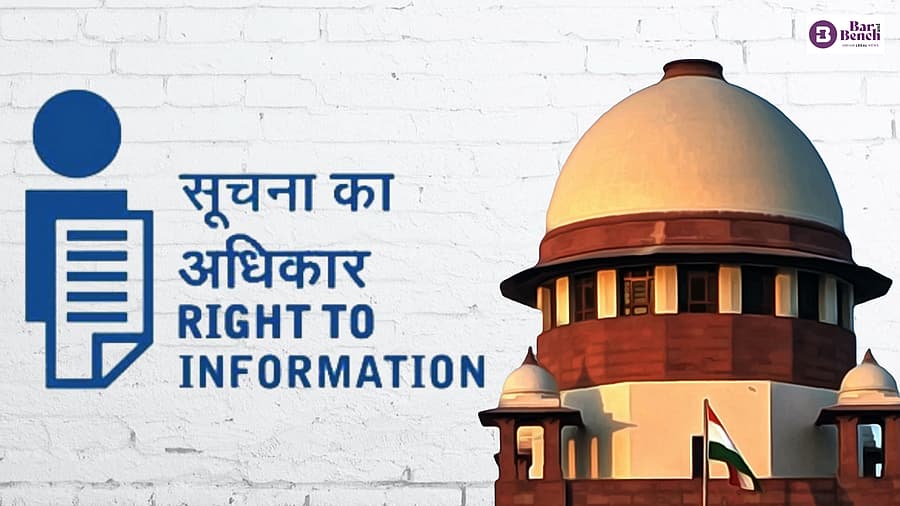
Supreme Court: No Blanket Ban on RTI Disclosure
Summary
- The Supreme Court is hearing petitions challenging the amendment to Section 8(1)(j) of the RTI Act.
- A blanket prohibition on disclosure of personal information may be imposed, but the Court must balance citizens' right to information and the fundamental right to privacy.
- The outcome has significant implications for lawyers and their clients, potentially leading to new compliance exposures.
What Happened
The central constitutional issue before the Court is whether there can be a blanket prohibition on disclosure of all digital personal information.
The Supreme Court has taken up petitions challenging the amendment to Section 8(1)(j) of the Right to Information (RTI) Act. The amendment, made through the Digital Personal Data Protection (DPDP) Act, removed the public interest clause for disclosure of personal information. A Bench of Chief Justice Surya Kant and Justices Joymalya Bagchi and V Mohana is examining whether a blanket prohibition on disclosure of personal information can be imposed.
The Court has observed that a careful balance must be struck between citizens' right to information and the fundamental right to privacy. The central constitutional issue before the Court is whether there can be a blanket prohibition on disclosure of all digital personal information.
Legal Context
The RTI Act operates in a much larger domain, covering all forms of information, not just digital information. In contrast, the DPDP Act operates in a narrower scope, but it now covers the majority of information. The State's approach to expanding protection for personal information under the amended law will be scrutinized by the Court.
The Court will examine whether parliament's actions satisfy constitutional standards. Justice Bagchi noted that the question is not just about digital information, but also about proportionality in legislation. The State's cautionary approach may be tested against constitutional requirements.
Why It Matters
The outcome of this case has significant implications for lawyers and their clients. A blanket ban on RTI disclosure could impact the ability to access information, potentially leading to new compliance exposures. The Court's decision will set a precedent for how personal information is handled in India.
The case highlights the tension between citizens' right to information and the fundamental right to privacy. The Supreme Court must carefully balance these competing interests while examining the constitutionality of the amended law.
Practical Implications
Lawyers should watch for the potential implications of a blanket ban on RTI disclosure, as it could impact their clients' ability to access information and potentially lead to new compliance exposures.
Source
Source: Original reporting via [Source]
How does this affect your business?
Get an AI analysis of this article grounded in your jurisdictions, practice areas, and any policy documents you've uploaded to Wansom.
Wansom is AI and can make mistakes.