
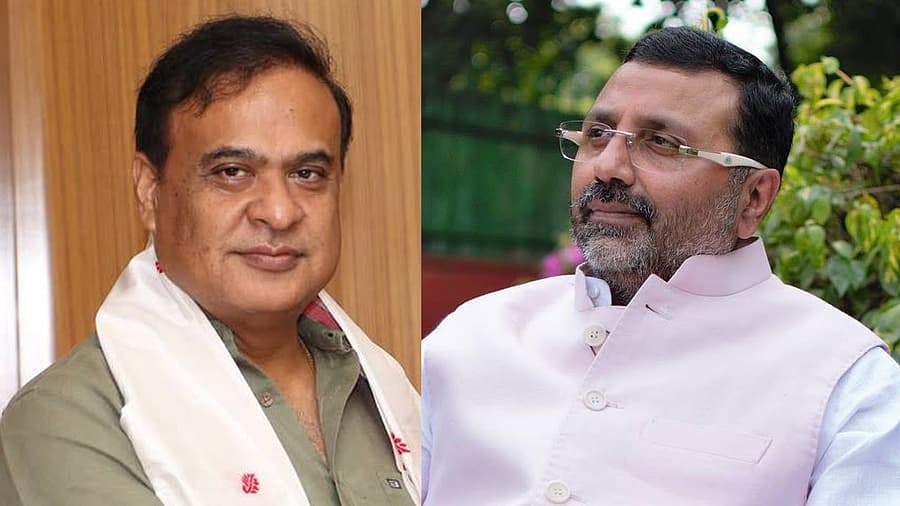
Delhi Court Seeks Police Report in Harsh Mander Hate Speech Plea Against Himanta Biswa Sarma and Nishikant Dub
Summary
- A Delhi court has sought a report from the Delhi Police regarding a plea filed by activist Harsh Mander.
- The report is centered around allegations of hate speech made by Assam Chief Minister Himanta Biswa Sarma and BJP MP Nishikant Dubey against Muslims and former Chief Election Commissioner SY Quraishi.
- The court's query is guided by the guidelines set out in Lalita Kumari v. Govt. Of U.P., a landmark Supreme Court case on hate speech complaints.
Delhi Court's Request for Police Report
The court has asked the Delhi Police to determine whether the complaint received at the police station discloses the commission of any cognizable offense and if so, whether an FIR was registered and action/inquiry conducted as per the directions/guidelines of the Hon'ble Supreme Court.
A Delhi court has sought a report from the Delhi Police regarding a plea filed by activist Harsh Mander, who is seeking action against Assam Chief Minister Himanta Biswa Sarma and BJP MP Nishikant Dubey. The court's request comes after Mander alleged that both individuals made hate speech comments against Muslims and former Chief Election Commissioner SY Quraishi. The Delhi Police has been asked to inform whether any complaint was made by Mander against the two individuals and whether any cause of action arose in their jurisdiction.
The court's query is centered around the guidelines set out in Lalita Kumari v. Govt. Of U.P., a landmark Supreme Court case that established the framework for police investigations into hate speech complaints. The court has asked the Delhi Police to determine whether the complaint received at the police station discloses the commission of any cognizable offense and if so, whether an FIR was registered and action/inquiry conducted as per the directions/guidelines of the Hon'ble Supreme Court.
Background on the Allegations
The allegations against Himanta Biswa Sarma pertain to his comments about Muslims and the payment of money to Muslim priests by the Delhi government. In a statement, Sarma said that he would start paying monthly stipends to Hindu priests, implying that Muslim priests were being favored in the past. This comment has been interpreted as an attempt to polarize communities along religious lines.
Nishikant Dubey is accused of targeting former Chief Election Commissioner SY Quraishi based on his religion. The allegations against both individuals are serious and have sparked widespread condemnation from civil society groups.
The case highlights the need for strict adherence to guidelines set out in Lalita Kumari v. Govt. Of U.P., which emphasizes the importance of prompt action by law enforcement agencies in hate speech cases.
Legal Context and Implications
The Delhi court's request for a police report is significant, as it sets the stage for a thorough investigation into the allegations against Himanta Biswa Sarma and Nishikant Dubey. The case will also have implications for lawyers and compliance officers, who must navigate the complex landscape of hate speech laws in India.
The guidelines set out in Lalita Kumari v. Govt. Of U.P. provide a framework for police investigations into hate speech complaints. However, the implementation of these guidelines has been patchy at best, leading to widespread criticism from civil society groups.
The case is set to be heard next on August 31, and it remains to be seen how the court will rule on the allegations against the two individuals.
Practical Implications
Lawyers and compliance officers should watch for the potential implications of this case, particularly in relation to the guidelines set out in Lalita Kumari v. Govt. Of U.P., which may inform their advice on handling similar complaints in the future.
Source
Source: Original reporting via [Source]
How does this affect your business?
Get an AI analysis of this article grounded in your jurisdictions, practice areas, and any policy documents you've uploaded to Wansom.
Wansom is AI and can make mistakes.