
Supreme Court: Murder Homicidal Act Proof Needs Concrete Evidence
Summary
- The Supreme Court of India ruled that post-incident conduct alone, such as fleeing or concealing a death, cannot prove murder without evidence of a homicidal act.
- Two men, including Taher Vajiyuddin Rangwala, were acquitted in a 2006 drowning case where their friend's death was deemed accidental.
- Medical evidence, including the post-mortem report and doctor's testimony, did not support the prosecution's claim of a homicidal drowning.
- The Court noted a significant four-month delay in filing the FIR and the prosecution's reliance on circumstantial evidence like motive and the "last-seen-together" theory.
- This decision clarifies that robust proof of the actual homicidal act is essential for a murder conviction under Section 300 IPC (and Section 101 BNS).
Supreme Court Clarifies Murder Proof Standards
The Supreme Court of India recently delivered a significant ruling, clarifying that an individual's post-incident actions, such as fleeing a scene or attempting to conceal a death, are not sufficient on their own to establish a murder charge.
The Supreme Court of India recently delivered a significant ruling, clarifying that an individual's post-incident actions, such as fleeing a scene or attempting to conceal a death, are not sufficient on their own to establish a murder charge. This pivotal decision led to the acquittal of two men, including Taher Vajiyuddin Rangwala, who had been convicted in connection with the drowning death of their friend. The Court emphasized that for a conviction under Section 300 of the Indian Penal Code (IPC), which corresponds to Section 101 of the Bharatiya Nyaya Sanhita (BNS), there must be concrete evidence of a homicidal act itself, beyond mere suspicious conduct.
The case originated from an incident in July 2006, when the two accused individuals had taken their friend to a river in Gujarat under the pretense of traveling to Ankleshwar for a volleyball game. The friend was subsequently found drowned. According to the defense, the deceased had accidentally drowned while swimming, prompting the two men to flee the scene in a state of panic before later going to watch a movie. Villagers eventually discovered the deceased's clothes and belongings on the riverbank, and his body was recovered the following day.
The Absence of Homicidal Evidence
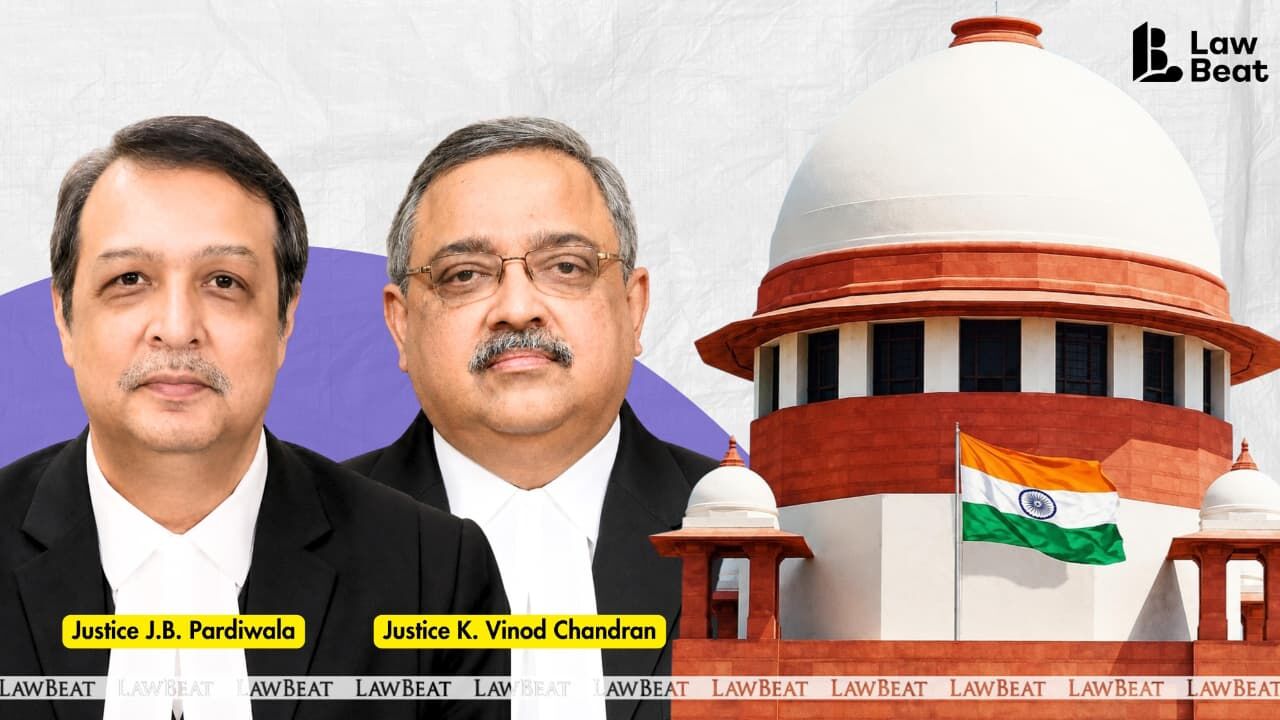
A crucial aspect of the Supreme Court's deliberation, presided over by Justices J B Pardiwala and K Vinod Chandran, centered on the lack of medical evidence supporting a homicidal act. The post-mortem report indicated that the cause of death was "asphyxia due to drowning." While the report noted three non-grievous injuries—a contused lacerated wound on the frontal bone above the left eyebrow, an abrasion between the left eye and left ear, and an abrasion on the right mid-clavicular region—the doctor who conducted the examination testified in cross-examination that these injuries could have been sustained either while the deceased was bathing in the river or as his body was dragged by the current, coming into contact with a hard object like a sharp-edged stone.
The prosecution had alleged that the deceased was struck with a soda bottle, fragments of which were purportedly found at the scene. However, the Court observed that this alleged broken soda bottle, reportedly containing blood stains, was never sent for forensic examination. Consequently, the Bench concluded that a thorough review of the post-mortem report, alongside the doctor's testimony, could not lead to a finding that the death was homicidal. The medical evidence, in fact, aligned more closely with the defense's assertion of accidental drowning, directly contradicting the prosecution's theory that the deceased was hit on the head, rendered unconscious, and then deliberately drowned.
Weaknesses in the Prosecution's Case
Further weakening the prosecution's case was a significant and unexplained delay in filing the First Information Report (FIR). The incident occurred in July 2006, but the FIR was not registered until November 3, 2006, nearly four months later. The Court noted that even after the accused had admitted to being present at the river and the deceased's body had been recovered, no allegations were leveled against them until the First Information Statement was formally recorded.
The prosecution's argument heavily relied on circumstantial evidence, including an alleged motive—that the deceased was in a relationship with the first accused's sister, which continued after her marriage and supposedly enraged the first accused. Other elements cited were the "last-seen-together" theory, the presence of the accused near the scene, their silence, and their post-incident conduct, including an alleged lie told to the deceased's sister. However, the Supreme Court found that this collection of circumstantial evidence, particularly the post-incident conduct, was insufficient to prove murder without direct evidence of a homicidal act.
Broader Legal Implications
This landmark ruling from the India Supreme Court underscores a critical principle in criminal jurisprudence: while suspicious post-incident conduct, such as fleeing or concealing a death, may be reprehensible, it cannot serve as the sole basis for proving murder. The Court's decision in the Taher Vajiyuddin Rangwala acquittal case firmly establishes that the prosecution must present robust evidence of the actual homicidal act for a conviction under Section 300 IPC. Without concrete proof of the actus reus, circumstantial evidence of behavior after an incident, however incriminating it may seem, is inadequate to meet the high standard required for murder proof. This precedent clarifies that the burden remains on the prosecution to demonstrate a deliberate homicidal act, not merely suspicious post-incident actions.
Practical Implications
This ruling clarifies that mere post-incident conduct, such as fleeing or concealing a death, is insufficient to prove murder under Indian law without concrete evidence of a homicidal act. Lawyers must ensure prosecution cases rely on robust evidence of the actus reus, not just suspicious behavior, and can use this precedent to challenge convictions based solely on circumstantial conduct.
Source
How does this affect you?
Get an AI analysis of this article grounded in your jurisdictions, practice areas, and any policy documents you've uploaded to Wansom.
Finish Reading the Full Story and the Expert Analysis.
Wansom is AI and can make mistakes.